Eriodictyon, Genus, californicum, Species,
- Genus & species
California yerba santa
Overview
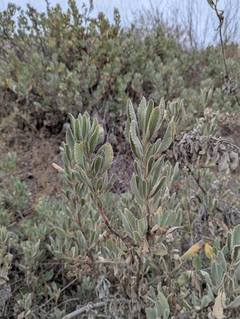
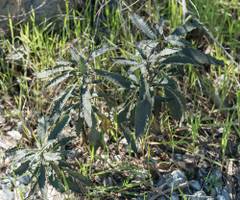
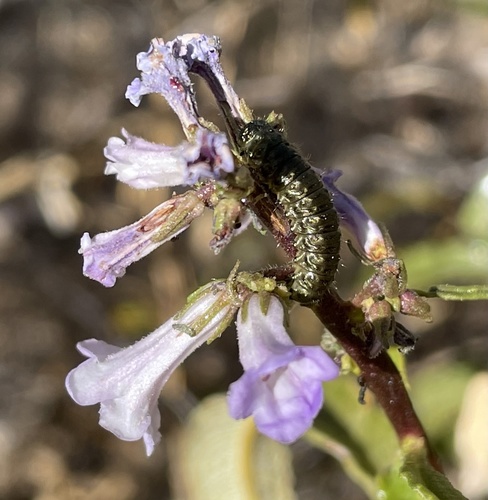
Eriodictyon californicum is an evergreen shrub in the borage family, growing 3-8 feet (0.9-2.4 m) tall and spreading by underground rhizomes to form colonies. The stems are upright and brittle, covered in a sticky resin, and the lance-shaped leaves are 2-6 inches (5-15 cm) long, dark green and glossy above with a felted, paler underside and toothed margins. The foliage is strongly aromatic and resinous when crushed. Clusters of funnel-shaped flowers, each about 0.4-0.6 inch (10-15 mm) long and lavender to whitish, open at the branch tips from late spring into summer. It grows on dry slopes, ridges, road cuts, and disturbed ground in the chaparral and foothill woodland of California and southern Oregon, often appearing in abundance after fire. The rhizomatous habit lets it spread into bare ground and stabilize slopes. Flowers attract bees and butterflies, and the resinous leaves have a long history of use in herbal teas. Older plants become woody and open at the base, and the colony can spread beyond its intended space in small gardens. It tolerates drought and poor soil but declines with summer irrigation and in heavy, wet ground.
Native Range
Native to California and southern Oregon, where it grows in chaparral, foothill woodland, and disturbed slopes below about 6,000 feet (1,800 m).Suggested Uses
Used in native and habitat gardens, dry slopes, and erosion control on sunny banks. Planted in chaparral restoration and pollinator plantings. Its spreading habit suits large, informal spaces rather than small borders.How to Identify
Appearance
Size & Dimensions
Height3' - 8'
Width/Spread4' - 10'
Bloom Information
Detailed Descriptions
Flower Description
lavender to whitishFoliage Description
dark green above, pale felted beneathGrowing Conditions
Sun Requirements
Requires 6-10 hours of direct sunlight daily
• Full Sun: 6+ hours of direct sunlight
• Partial Shade: 3-6 hours of direct sunlight
• Full Shade: Less than 3 hours of direct sunlight
Care & Maintenance
Care Guide
Grows in full sun and dry, fast-draining soil, matching its native chaparral slopes. Once established, it is strongly drought tolerant and needs no summer water, and irrigation during the dry season promotes root and crown rot. It spreads by rhizomes, so it suits open slopes and large native plantings rather than confined beds. No fertilizer is needed in lean soils. Pruning after flowering keeps older plants dense, as they grow woody and bare at the base with age. Propagation is from rhizome segments or seed, which germinates more readily after fire or smoke treatment.Pruning
Light pruning after flowering removes spent stems and keeps the shrub compact. Older, woody stems can be cut back hard in late winter to encourage fresh growth from the base. Spreading rhizomes can be cut back at the colony edge to limit its spread.Pruning Schedule
Prune: February & June–July
summerwinter