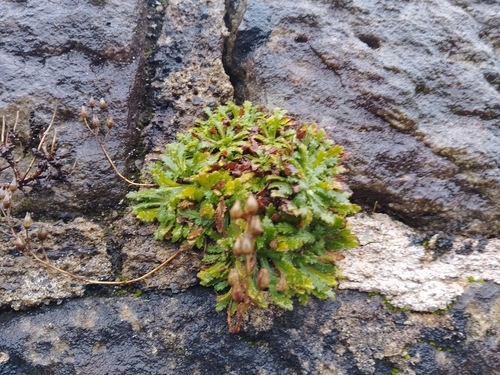
Erinus, Genus, alpinus, Species,
- Genus & species
fairy foxglove
Mountains of western and central Europe
Overview
Erinus alpinus is a small, short-lived evergreen perennial of the plantain family, forming a tufted rosette 2–4 inches (5–10 cm) tall and 4–6 inches (10–15 cm) wide. The leaves are spoon-shaped to lance-shaped, 0.4–1 inch (1–2.5 cm) long, slightly toothed, and gathered into low, dark green rosettes. From April to July it produces upright stems carrying loose clusters of small, five-lobed flowers about 0.3 inch (8 mm) across in shades of rose-pink to magenta, with white-flowered forms in cultivation. It grows naturally in rock crevices, cliff faces, scree, and old walls in the mountains of western and central Europe, rooting into thin pockets of gritty, lime-rich soil. The plant is short-lived but renews itself freely by self-sown seed, colonizing cracks in stonework and paving. It needs sharp drainage and is intolerant of heavy, wet soils and prolonged summer heat, which shorten its already brief life. Foliage stays green through mild winters and may brown in hard frost.
Native Range
Erinus alpinus is native to the mountains of western and central Europe, including the Alps, Pyrenees, and ranges of Spain and France. It grows in rock crevices, scree, and cliff faces on lime-rich substrates.Suggested Uses
Used in rock gardens, dry stone walls, troughs, gravel gardens, and crevices in paving where drainage is sharp. Suited to alpine and trough plantings and to seeding into vertical stonework.How to Identify
Appearance
Size & Dimensions
Height2" - 4"
Width/Spread4" - 6"
Bloom Information
Detailed Descriptions
Flower Description
rose-pink to magentaFoliage Description
dark greenGrowing Conditions
Sun Requirements
Requires 5-10 hours of direct sunlight daily
• Full Sun: 6+ hours of direct sunlight
• Partial Shade: 3-6 hours of direct sunlight
• Full Shade: Less than 3 hours of direct sunlight
Care & Maintenance
Care Guide
Grows in full sun to light shade on thin, gritty, sharply drained soil that includes lime or limestone chippings. It roots well in wall crevices, rock gardens, troughs, and gravel, where excess water drains away quickly. Heavy, wet, or fertile soils cause rot and shorten the plant's short life further. Watering is rarely needed once established, and plants tolerate drought on cool rock. Self-sown seed keeps a colony going even as individual plants fade. It is hardy in zones 4 to 7.Pruning
No pruning is needed. Spent flower stems can be trimmed to tidy the rosettes, though leaving some allows seed to set and self-sow. Old, woody rosettes can be replaced by young seedlings.Container Growing
Suitable for container growing