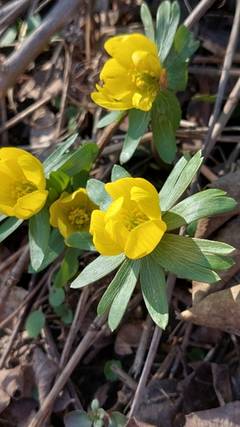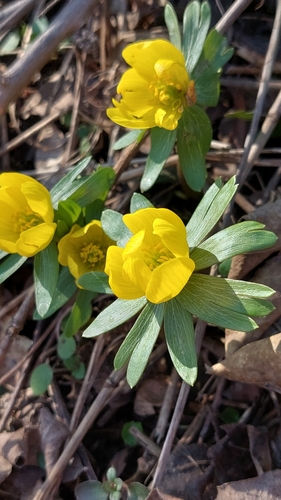
Eranthis, Genus, spp., Multiple species,
- Genus
- Multiple species
Overview
Eranthis is a genus of about eight low, tuberous perennials in the buttercup family, Ranunculaceae, native to woodlands of Europe and temperate Asia. Known as winter aconites, they are among the earliest plants to flower, often pushing through frozen or snow-covered ground in late winter. Each plant grows only 3 to 6 in (8 to 15 cm) tall from a small knobbly tuber, opening a single cup-shaped flower, usually bright yellow, set above a ruff of deeply cut green bracts. E. hyemalis is the species usually grown, spreading into golden carpets under deciduous trees, while E. cilicica and hybrids extend the range of forms. The flowers open in sun and close in cold or dull weather, and supply early nectar for bees emerging from winter. The plants die back to dormant tubers by late spring. All parts are poisonous if eaten, containing cardiac glycosides like other members of the family.
Native Range
Native to southern Europe and temperate Asia, from France and the Balkans through the Caucasus to Siberia, Japan, and the Himalayas, growing in deciduous woodland, scrub, and on shaded slopes.Suggested Uses
Planted in drifts under deciduous trees and shrubs, in rock gardens, and in lawns for very early colour, often with snowdrops and crocuses. The early flowers give nectar to bees on mild late-winter days. Once established, the tubers naturalise into spreading sheets of yellow.How to Identify
Appearance
Size & Dimensions
Height3" - 6"
Width/Spread3" - 6"
Bloom Information
Detailed Descriptions
Foliage Description
GreenGrowing Conditions
Sun Requirements
Requires 3-8 hours of direct sunlight daily
• Full Sun: 6+ hours of direct sunlight
• Partial Shade: 3-6 hours of direct sunlight
• Full Shade: Less than 3 hours of direct sunlight
Care & Maintenance
Care Guide
Winter aconites grow in humus-rich, moisture-retentive but well-drained soil in full sun to part shade, doing well under deciduous trees that are bare during their late-winter flowering. A neutral to alkaline pH from about 6.0 to 7.5 suits them. The tubers are planted in autumn and grow most freely where soil stays moist in winter and spring; dry, baked summer ground is tolerated during dormancy. Bought dry tubers can be slow to establish, so freshly lifted plants moved while in growth establish more readily. They are hardy to about USDA zone 4 and naturalise by seed once settled. All parts are toxic if eaten.Pruning
No pruning is needed. The foliage is left to die down naturally after flowering so the tubers can build reserves for next year. Self-sown seedlings can be left to spread or thinned as wished.Container Growing
Suitable for container growing
Minimum container size: 1 gallons