Image 1 of 12
1 / 12
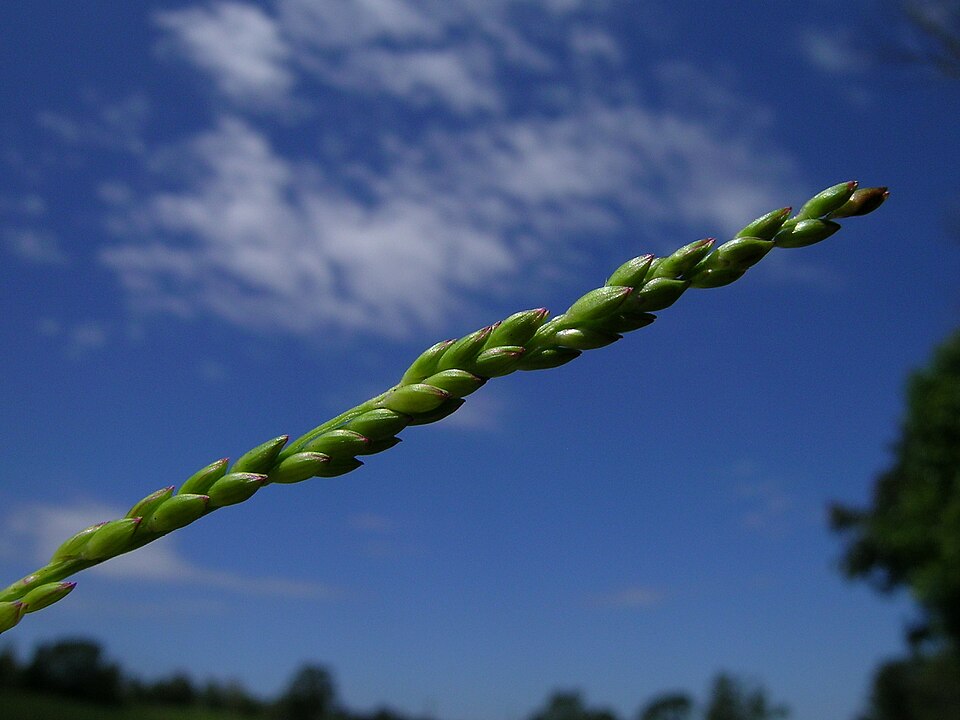
© Harry Rose from South West Rocks, Australia, some rights reserved (CC-BY) · Wikimedia Commons
Entolasia, Genus, stricta, Species,
- Genus & species
wiry panic
Overview
Entolasia stricta is an evergreen tufted perennial grass reaching 0.3-0.8 m (12-31 in) tall, forming slender, wiry, erect to spreading clumps from a short rhizome. The leaf blades are flat to inrolled, 5-15 cm (2-6 in) long and 2-4 mm wide, green to grey-green, with rough margins. The flowering stems carry narrow open panicles 5-15 cm (2-6 in) long bearing small spikelets about 2-3 mm long, green to purplish, ripening to straw colour. Flowering occurs mainly in spring and summer. Growth is moderate, and clumps build up slowly over 2-3 years. The species grows in heath, dry sclerophyll woodland, and on sandy and rocky soils, often in nutrient-poor sites. It tolerates low fertility and periodic dryness but does not persist in heavily shaded or waterlogged ground. It regenerates from the base and from seed after fire or grazing.
Native Range
Native to eastern Australia, from Queensland through New South Wales to Victoria, in heath, woodland, and open forest on sandy and rocky low-fertility soils from the coast to the ranges.Suggested Uses
Grown in native grass plantings, heath and woodland restoration, and low-fertility embankments, spaced 0.3-0.5 m (12-20 in) apart. It binds sandy soil on slopes and supports habitat and food for native insects and seed-eating birds. The wiry habit suits informal and naturalistic plantings.How to Identify
Appearance
Size & Dimensions
Height1' - 2'7"
Width/Spread1' - 1'8"
Bloom Information
Detailed Descriptions
Flower Description
green to purplishFoliage Description
green to grey-greenGrowing Conditions
Sun Requirements
Requires 5-10 hours of direct sunlight daily
• Full Sun: 6+ hours of direct sunlight
• Partial Shade: 3-6 hours of direct sunlight
• Full Shade: Less than 3 hours of direct sunlight
Care & Maintenance
Care Guide
Grow in full sun to part shade on free-draining sandy or rocky soil of low to moderate fertility. Water through the first season; established clumps tolerate extended dry periods. High soil fertility and rich garden beds reduce its persistence, as it is adapted to nutrient-poor ground. Waterlogged or heavily shaded sites cause decline. Clumps can be cut back in late winter to remove old growth before spring regrowth. The grass regenerates from the base after fire and light grazing.Pruning
Cut clumps back to about 10 cm (4 in) in late winter to clear old foliage before new growth. The grass reshoots from the base after cutting, fire, or grazing. Spent flowering stems can be removed as seed sheds.Pruning Schedule
Prune: July–August
winter
Container Growing
Suitable for container growing
Minimum container size: 2 gallons