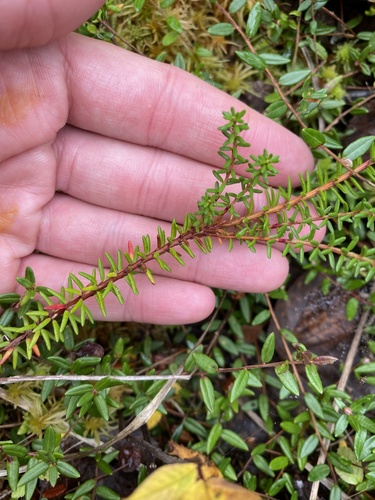
Empetrum, Genus, nigrum, Species,
- Genus & species
black crowberry
Overview
Empetrum nigrum is a low, evergreen, mat-forming shrub growing 4-10 inches (10-25 cm) tall and spreading 1-3 feet (30-90 cm) wide, with trailing, rooting branches that build dense carpets. The leaves are needle-like, 0.1-0.3 inch (3-7 mm) long, crowded along the stems and rolled under at the edges so they resemble tiny heath or spruce needles, dark green and turning bronze in winter. Small purplish-pink flowers without showy petals open at the leaf bases in spring; plants may be male, female, or bisexual. Female and bisexual plants set round berries 0.2-0.4 inch (5-10 mm) wide that ripen from green to glossy black and persist through winter. The fruit is edible and watery. Growth is slow, with mats creeping outward a few inches per year. The shrub needs cool conditions and declines where summers are hot.
Native Range
Circumboreal across the Northern Hemisphere, in arctic tundra, northern bogs, heaths, and alpine slopes of North America, Europe, and Asia. It grows on acidic, peaty, or rocky soils, often where snow lies late and summers stay cool.Suggested Uses
Grown in rock gardens, alpine troughs, and cool acidic heath plantings as a low evergreen groundcover, spaced 12-18 inches (30-45 cm) apart. The black berries draw birds and are gathered for jams and drinks in northern regions. Heat and dry soil limit its use to cool climates.How to Identify
Appearance
Size & Dimensions
Height4" - 10"
Width/Spread1' - 3'
Bloom Information
Flowers in spring, mainly May to June, with tiny purplish-pink flowers tucked among the leaves that are easy to overlook. Berries form through summer and ripen black by late summer, persisting on the plant into winter and the following spring.
Detailed Descriptions
Foliage Description
dark greenGrowing Conditions
Sun Requirements
Requires 4-10 hours of direct sunlight daily
• Full Sun: 6+ hours of direct sunlight
• Partial Shade: 3-6 hours of direct sunlight
• Full Shade: Less than 3 hours of direct sunlight
Care & Maintenance
Care Guide
Grows in full sun to part shade on cool, acidic, moist but well-drained peat or sandy soils. It needs cool summers and steady moisture; it browns and thins where heat and dryness build up. Established mats tolerate wind, poor soil, and hard winter cold. Root disturbance and lime both cause decline. It is slow to recover from transplanting once settled. Few pests affect it in suitable climates.Pruning
No routine pruning is needed. Stray or dead stems can be trimmed in spring. Mats spread on their own and rarely need cutting back.Pruning Schedule
Prune: April
spring
Container Growing
Suitable for container growing
Minimum container size: 2 gallons