Overview
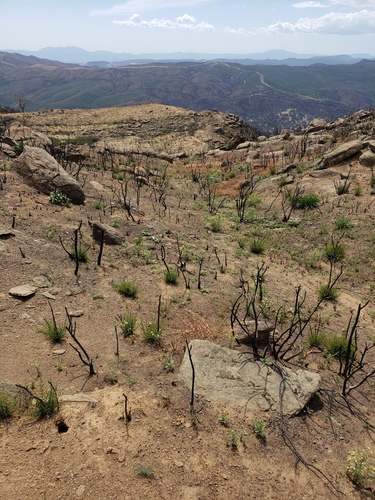
Emmenanthe is a genus in the family Boraginaceae containing the single species E. penduliflora, known as whispering bells, an annual wildflower of the deserts and chaparral of southwestern North America. Plants grow 8 to 24 in (20 to 60 cm) tall, with sticky, glandular, finely divided leaves that give off a strong scent. From spring into early summer they carry nodding, bell-shaped flowers in cream to pale yellow, each about 0.4 to 0.6 in (10 to 15 mm) long. As the flowers age they do not fall but dry to a thin, papery texture and remain on the plant, rustling audibly in the wind and giving the plant its common name. The species is a fire-follower: its seed lies dormant in the soil for years and germinates in large numbers after wildfire, partly in response to chemicals in smoke. Plants complete their life cycle in a single season and then die. Outside its narrow desert range and fire cycle it is rarely seen.
Native Range
Native to the southwestern United States and northwestern Mexico, including California, Nevada, Arizona, and Baja California, where it grows in deserts, chaparral, and dry slopes, often on recently burned ground.Suggested Uses
Grown in native-plant, desert, and wildflower gardens of the arid Southwest, and used in post-fire restoration seed mixes. It is suited to gravel gardens and dry banks where summer water is withheld. Self-sown stands can persist where conditions stay open and dry.How to Identify
Appearance
Size & Dimensions
Height8" - 2'
Width/Spread4" - 1'
Bloom Information
Detailed Descriptions
Flower Description
Cream to pale yellowFoliage Description
Green, glandularGrowing Conditions
Sun Requirements
Requires 6-12 hours of direct sunlight daily
• Full Sun: 6+ hours of direct sunlight
• Partial Shade: 3-6 hours of direct sunlight
• Full Shade: Less than 3 hours of direct sunlight
Care & Maintenance
Care Guide
Whispering bells is a desert annual grown from seed sown in autumn or winter on lean, sharply drained sandy or gravelly soil. It needs full sun and only the moisture supplied by cool-season rains, with no summer irrigation. Germination is improved by exposure to smoke or smoke-treated water, reflecting its fire-follower biology. A soil pH near neutral, from about 6.0 to 7.5, suits it. The plants need no fertiliser and do poorly in crowded or rich ground. After seed set the plants die and are cleared.Pruning
No pruning is needed for this short-lived annual. Spent plants can be left in place so the dry seed heads shed seed, or cleared once seed has dropped. Removing plants before seed set prevents self-sowing.Toxicity: Not assessed
UnknownPlanting Guide
Planting Methods & Timing
Planting Method
direct sow
Direct Sow Timing
Sow in autumn or winter for cool-season germination
Days to Maturity
60–120 days
Plant Spacing
6 inches
