Image 1 of 12
1 / 12
Plant Reference
Embothrium, Genus, coccineum, Species,
- Genus & species
Chilean fire tree
Chile and Argentina along the Andes, from Santiago south to Tierra del Fuego; temperate rainforest margins and disturbed volcanic slopes
Overview
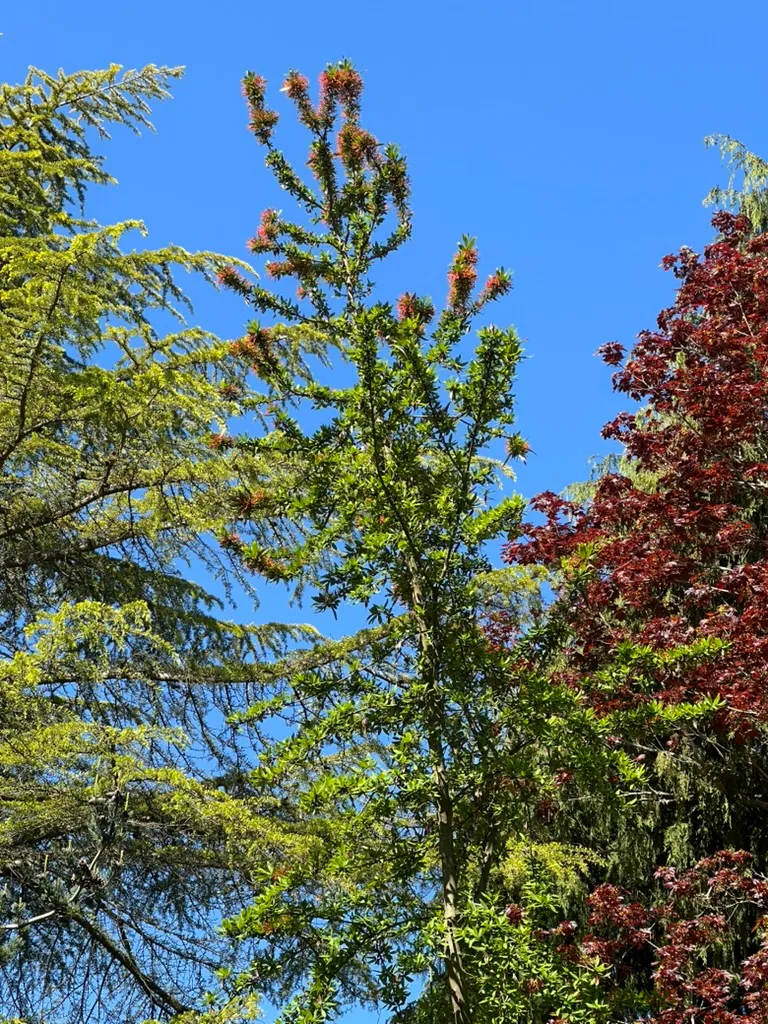
Embothrium coccineum is Chilean fire tree (Chilean fire bush), a semi-evergreen tree growing 15-30 feet (4.5-9 m) tall and 10-20 feet (3-6 m) wide. Scarlet-orange tubular flowers 1.5-2 inches (4-5 cm) in dense upright racemes 3-5 inches (7-13 cm) covering the branch tips in May-June. Dark blue-green leathery lanceolate leaves 3-6 inches (7-15 cm). Semi-evergreen — retains foliage through mild winters but drops leaves in cold winters. In Proteaceae — the same family as proteas and banksias. Native to Chile and Argentina along the Andes from Santiago to Tierra del Fuego. The Llanquihue provenance (from 41°S in Chile) is the hardiest, surviving to approximately 5°F (-15°C). Limited cold hardiness is the primary limitation — flower buds and foliage damaged below 10°F (-12°C). Sensitive to phosphorus — do not use phosphorus-rich fertilizers. Requires acidic well-drained soil (pH 5.5-6.5). Not drought-tolerant. Suckers from the roots. Deer-resistant. Non-toxic. Zones 7-9. Full sun to partial shade. Growth rate is moderate to fast.
Native Range
Native to Chile and Argentina along the Andes, from Santiago south to Tierra del Fuego. Found on temperate rainforest margins and disturbed volcanic slopes.Suggested Uses
Grown as a specimen tree in mild-climate gardens (zones 8-9, sheltered zone 7) spaced 10-20 feet (3-6 m). Scarlet-orange spring bloom. Seek Llanquihue or Norquinco provenances for cold hardiness. Phosphorus-sensitive (Proteaceae). Non-toxic. Zones 7-9.How to Identify
Appearance
Size & Dimensions
Height15' - 30'
Width/Spread10' - 20'
Colors
Bloom Information
Detailed Descriptions
Flower Description
Scarlet-orange, tubular, 1.5-2 inches (4-5 cm) long, in dense upright racemes 3-5 inches (7-13 cm) covering the branch tipsFoliage Description
Dark blue-green, leathery, lanceolate, 3-6 inches (7-15 cm) long; semi-evergreen — retains foliage through mild winters (zones 8-9), drops leaves in cold winters (zone 7)Growing Conditions
Sun Requirements
Requires 4-10 hours of direct sunlight daily
• Full Sun: 6+ hours of direct sunlight
• Partial Shade: 3-6 hours of direct sunlight
• Full Shade: Less than 3 hours of direct sunlight
Care & Maintenance
Care Guide
Full sun to partial shade (4-10 hours). Acidic well-drained soil pH 5.5-6.5. Do not use phosphorus-rich fertilizers (Proteaceae — phosphorus-sensitive). Not drought-tolerant. Cold-hardy to approximately 5°F (-15°C) from the hardiest provenances. Suckers from roots — remove unwanted suckers. Prune in late winter. Deer-resistant. Non-toxic. Zones 7-9.Pruning
Prune in late winter (February-March) to remove dead or damaged wood. Remove root suckers to control spread. The upright columnar form is natural. Minimal pruning needed on healthy trees.Pruning Schedule
Prune: February–March
early spring