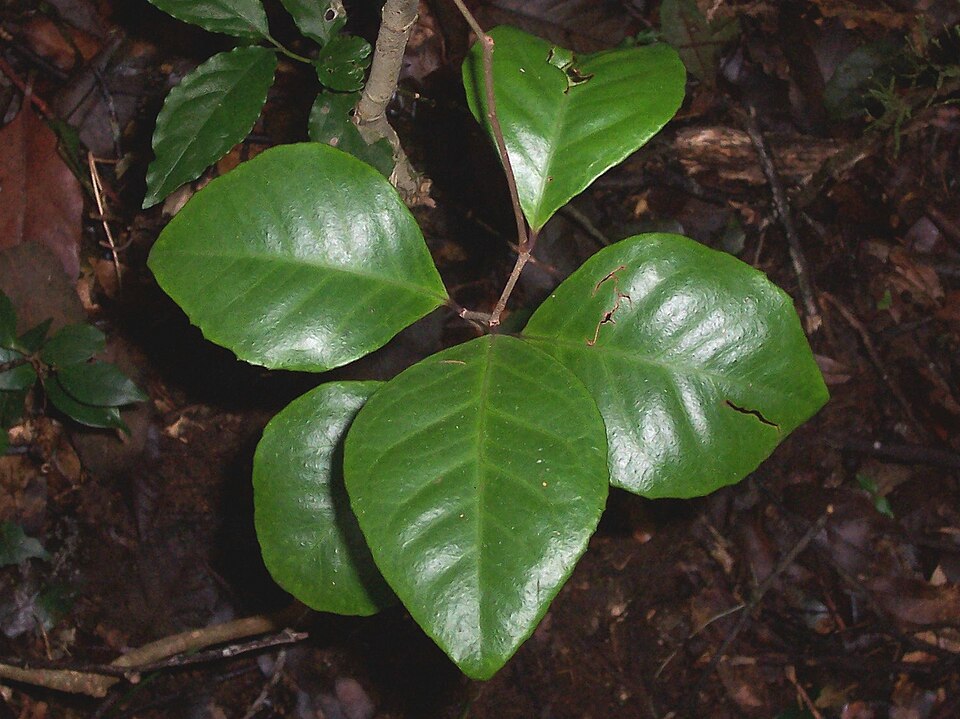
Embelia, Genus, spp., Multiple species,
- Genus
- Multiple species
Overview
Embelia is a genus of roughly 100 evergreen shrubs, scrambling woody climbers, and occasional small trees in the family Primulaceae, native to the tropics and subtropics of Africa, Asia, Australia, and the Pacific. Many species climb or sprawl over other vegetation to 10 to 30 ft (3 to 9 m), while others stand as freestanding shrubs. The alternate, leathery leaves are often dotted with tiny resin glands that show as dark specks when held to the light. Small five-petalled flowers in white, cream, or pink are carried in slender racemes or panicles, followed by small one-seeded berries that ripen red to purple-black and are also gland-dotted. E. ribes, known as false black pepper, is harvested across India for its peppercorn-like fruit, long used in traditional medicine as a vermifuge. The fruits of several species are eaten by birds, which spread the seed. Most species are frost-tender plants of warm, humid forest margins. As scramblers, some can grow rampantly and need support or regular cutting back in cultivation.
Native Range
Native to the Old World tropics and subtropics, from sub-Saharan Africa and Madagascar through India, southern China, and Southeast Asia to northern Australia and the Pacific Islands.Suggested Uses
Grown in tropical and subtropical gardens as informal climbers on supports or as screening shrubs. E. ribes is cultivated as a medicinal and spice crop in parts of Asia. The berry-bearing species draw fruit-eating birds.How to Identify
Appearance
Size & Dimensions
Height10' - 30'
Width/Spread3' - 10'
Bloom Information
Flowering occurs chiefly in spring and the early wet season, varying with local climate across the wide range of the genus. The small pale flowers are easy to overlook. Fruit develops over the following months and can persist on the stems.
Detailed Descriptions
Flower Description
White to pinkFoliage Description
Dark greenGrowing Conditions
Sun Requirements
Requires 3-6 hours of direct sunlight daily
• Full Sun: 6+ hours of direct sunlight
• Partial Shade: 3-6 hours of direct sunlight
• Full Shade: Less than 3 hours of direct sunlight
