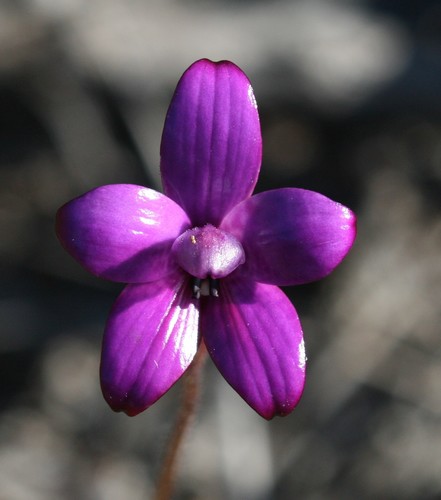
Elythranthera, Genus, spp., Multiple species,
- Genus
- Multiple species
Overview
Elythranthera, the enamel orchids, is a small genus of two terrestrial orchid species endemic to the South West of Western Australia. Each plant grows from an underground tuberoid and sends up a single, narrow, hairy basal leaf followed by a slender flowering stem 4 to 16 in (10 to 40 cm) tall. The one to several flowers are the defining feature: the sepals and petals have a glossy, hard, enamel-like surface in deep purple (E. brunonis) or pink (E. emarginata), often with darker spotting on the reverse. Plants are dormant through the dry summer and emerge with autumn and winter rains, flowering in spring from September to November. Flowering is often heaviest in the season after a bushfire. Like most terrestrial orchids, the enamel orchids depend on specific soil fungi for germination and growth, which makes them very difficult to cultivate or transplant and confines them almost entirely to their native heath and woodland.
Native Range
Endemic to the South West botanical province of Western Australia, where the two species grow in seasonally moist heath, shrubland, and open eucalypt woodland on sandy soils.Suggested Uses
Grown only occasionally by specialist native-orchid enthusiasts in pots under controlled conditions. In the wild the species form part of Western Australian heath and woodland communities and are studied for their fire-stimulated flowering. They have no role in general garden planting.How to Identify
Appearance
Size & Dimensions
Height4" - 1'4"
Width/Spread2" - 4"
Bloom Information
Flowering runs through spring, mostly from September to November in the Southern Hemisphere. Each stem opens one to several glossy flowers in succession. Blooming is often far more profuse in the first spring after a summer bushfire, a response shared with many Australian terrestrial orchids.
Detailed Descriptions
Flower Description
Glossy purple to pinkFoliage Description
Green, hairyGrowing Conditions
Sun Requirements
Requires 3-6 hours of direct sunlight daily
• Full Sun: 6+ hours of direct sunlight
• Partial Shade: 3-6 hours of direct sunlight
• Full Shade: Less than 3 hours of direct sunlight
