Elsholtzia, Genus, spp., Multiple species,
- Genus
- Multiple species
Overview
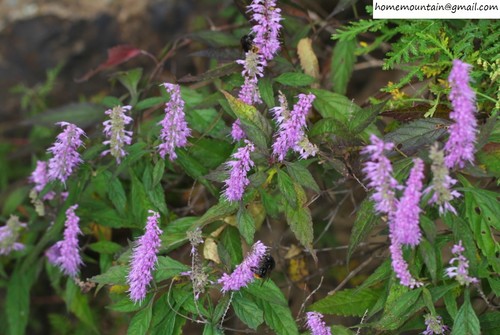
Elsholtzia is a genus of about 40 aromatic annual herbs, perennials, and low shrubs in the mint family, Lamiaceae, native mainly to eastern and central Asia and extending into Europe. Plants carry the square stems and paired, toothed leaves typical of the family, and the foliage is strongly scented when crushed. Small flowers are packed into dense, often one-sided spikes in shades of pink, lilac, and pale purple, opening from late summer into autumn when many other plants have finished. Heights range from low annuals about 12 in (30 cm) tall to woody-based shrubs near 5 ft (1.5 m). E. stauntonii, the mint-shrub, is a deciduous subshrub grown for its late lilac spikes and mint-scented leaves, while E. ciliata is an annual herb used as a culinary and medicinal plant across East and Southeast Asia. The flowers draw bees and other late-season insects. Most species are short-lived and can self-seed freely, sometimes spreading beyond where they are planted.
Native Range
Native to temperate and subtropical Asia, with the greatest diversity in China, and reaching into the Himalayas, Japan, Korea, Southeast Asia, and parts of Europe.Suggested Uses
Grown in late-season borders, gravel gardens, and pollinator plantings for autumn flower spikes. E. ciliata is also raised in herb gardens and vegetable plots for its scented, edible leaves. The shrubby kinds combine with ornamental grasses and other autumn perennials.How to Identify
Appearance
Size & Dimensions
Height1' - 5'
Width/Spread1' - 4'
Bloom Information
Detailed Descriptions
Flower Description
Pink to lilac-purpleFoliage Description
GreenGrowing Conditions
Sun Requirements
Requires 4-8 hours of direct sunlight daily
• Full Sun: 6+ hours of direct sunlight
• Partial Shade: 3-6 hours of direct sunlight
• Full Shade: Less than 3 hours of direct sunlight
Water & Climate
Water Needs
Care & Maintenance
Care Guide
Most species grow in full sun to light shade in moist but well-drained soil of average fertility, at a pH from about 6.0 to 7.5. The shrubby species such as E. stauntonii tolerate cold to around USDA zone 5 and are cut back hard each spring because they flower on new growth. Annual and tender species are grown from seed sown after the last frost. The genus withstands short dry spells once established but grows more strongly with steady moisture. Light, free-draining soil reduces the risk of winter rot in the woody species. The aromatic foliage leaves the plants largely untouched by deer and rabbits.Pruning
Shrubby species are pruned hard in early spring to within a few inches of the base, since flowers form on the current season shoots. Spent flower spikes can be removed after blooming or left for winter structure. Annual species need no pruning.Pruning Schedule
Prune: March–April
early spring
Container Growing
Suitable for container growing
Minimum container size: 3 gallons
