Elaeodendron, Genus, australe, Species,
- Genus & species
red-fruited olive plum
Overview
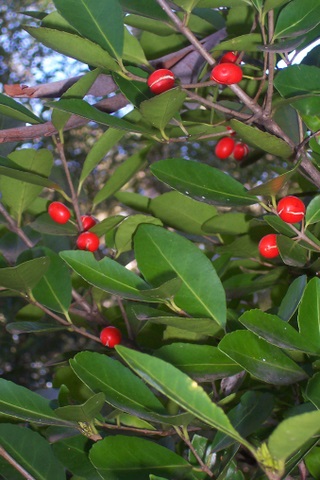
Elaeodendron australe is an evergreen shrub or small tree in the family Celastraceae, growing 6-20 feet (2-6 m) tall and 5-12 feet (1.5-3.5 m) wide, with a dense, bushy crown. The leaves are leathery, narrow to oblong, 1.5-4 inches (4-10 cm) long, glossy dark green above, with toothed to nearly smooth margins, arranged opposite or nearly so along the stems. Small greenish flowers about 0.1-0.2 inch (3-5 mm) across are carried in clusters in the leaf axils in spring and summer, fairly inconspicuous against the foliage. The flowers are followed by oval fleshy fruits about 0.6-1 inch (1.5-2.5 cm) long that ripen bright red, each holding a single hard stone; the fruit is reported to be toxic if eaten. Growth is slow to moderate, and plants are long-lived. The species tolerates coastal exposure and dry periods once established but is sensitive to hard frost.
Native Range
Native to eastern Australia, mainly coastal and near-coastal New South Wales and Queensland. It grows in dry rainforest, vine thickets, and open forest, often on rocky or sandy soils near the coast.Suggested Uses
Used as a screen, hedge, and coastal shrub in gardens and parks, spaced 4-8 feet (1.2-2.5 m) apart. Its salt and drought tolerance suits seaside and low-water plantings. The toxic fruit makes it less suited to areas used by young children.How to Identify
Appearance
Size & Dimensions
Height6' - 20'
Width/Spread5' - 12'
Bloom Information
Small greenish flowers appear in spring and summer (September to January), clustered in the leaf axils. They are inconspicuous and open over several weeks. Red fruits ripen from late summer into autumn and can hang on the plant for some time.
Detailed Descriptions
Foliage Description
glossy dark greenGrowing Conditions
Sun Requirements
Requires 4-9 hours of direct sunlight daily
• Full Sun: 6+ hours of direct sunlight
• Partial Shade: 3-6 hours of direct sunlight
• Full Shade: Less than 3 hours of direct sunlight
Care & Maintenance
Care Guide
Grows in full sun to part shade on freely draining sandy, rocky, or loamy soils, including exposed coastal sites. Young plants need occasional water through the first year or two; established plants tolerate dry periods and salt-laden wind. Hard frost damages foliage and limits the plant to mild and coastal climates. It needs little feeding and is generally free of serious pests. The red fruits are reported toxic to people, so the plant is a concern where fallen fruit is within reach of children. Growth is slow, and plants hold a dense form with minimal care.Pruning
Light pruning or hedging in late winter keeps the dense crown compact and shapely. The shrub reshoots well from cut wood, tolerating regular trimming. Dead or crossing branches are removed as they appear.Pruning Schedule
Prune: August
winter
Container Growing
Suitable for container growing
Minimum container size: 10 gallons