Ehretia, Genus, spp., Multiple species,
- Genus
- Multiple species
ehretias
Tropical and subtropical Asia, Africa, Australia, and the Americas
Overview
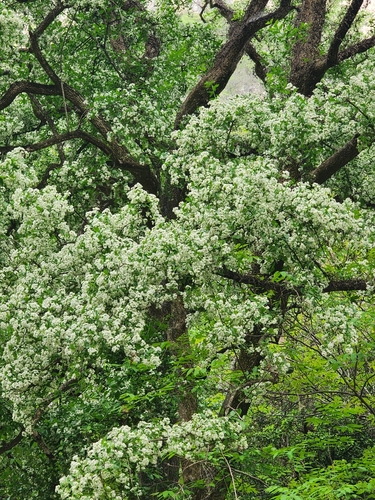
Ehretia is a genus of about 50 species of deciduous and evergreen trees and shrubs in the borage family, Boraginaceae, spread through the warmer parts of Asia, Africa, Australia, and the Americas. Most are small to medium trees 15 to 50 feet (5 to 15 m) tall with rounded crowns and simple, alternate leaves that are often rough to the touch. Small, white to cream, five-lobed flowers are carried in branched clusters and are usually fragrant, drawing bees and other insects in spring or summer. The flowers are followed by small, round, fleshy fruits that ripen yellow, orange, or red and are eaten by birds. E. anacua, the anacua or sandpaper tree of Texas and Mexico, is grown as a shade and street tree with sandpapery leaves and white flower clusters. The genus ranges through woodland, savanna, and dry forest, often on well-drained ground, and many species tolerate heat and drought once established. Most are frost tender to half-hardy and grow in warm-temperate to tropical climates. They are grown as shade trees, hedges, and bird-attracting plants for fruit and flowers.
Native Range
Ehretia is found across tropical and subtropical Asia, Africa, Australia, and the Americas. E. anacua is native to southern Texas and northeastern Mexico, while E. acuminata ranges from East Asia to Australia. Most species grow in warm woodland, savanna, and dry forest.Suggested Uses
Ehretias are grown as shade, street, and specimen trees in warm climates, and as informal flowering hedges or screens. The fragrant flowers draw bees and the leaves and fruit support birds and other wildlife. The fruiting species are planted in wildlife and naturalistic gardens where dropped fruit is not a problem on paving.How to Identify
Appearance
Size & Dimensions
Height15' - 50'
Width/Spread15' - 40'
Bloom Information
Flowering is mainly in spring and early summer, though tropical species may bloom at other times. The fragrant white flower clusters open over a few weeks and draw many insects. The small fruits ripen in summer and autumn and are quickly taken by birds.
Detailed Descriptions
Flower Description
White to creamFoliage Description
GreenGrowing Conditions
Sun Requirements
Requires 6-10 hours of direct sunlight daily
• Full Sun: 6+ hours of direct sunlight
• Partial Shade: 3-6 hours of direct sunlight
• Full Shade: Less than 3 hours of direct sunlight
