Edraianthus, Genus, graminifolius, Species,
- Genus & species
grassy bells
Mountains of southeastern Europe, from the Balkans through Greece and the Dinaric Alps
Overview
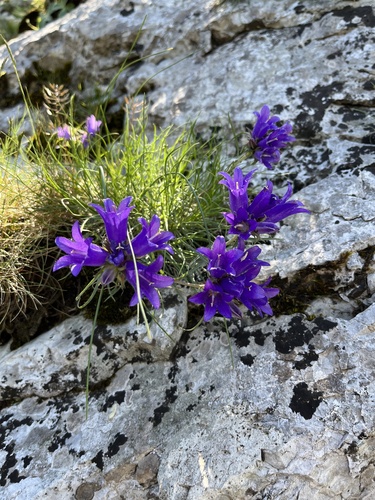
Edraianthus graminifolius is a miniature alpine perennial in the family Campanulaceae (bellflower family) forming a tight dome-shaped cushion 3-6 inches (8-15 cm) tall and 6-10 inches (15-25 cm) wide. The species name 'graminifolius' means 'grass-leaved', describing the very narrow dark green grass-like leaves that form the dense evergreen cushion. Clusters of 3-8 deep violet-blue bell-shaped flowers 0.75-1 inch (2-2.5 cm) long appear in terminal clusters at the cushion tips in May and June. The bell-shaped flowers resemble miniature campanula bells but are borne in tight terminal clusters (sessile heads) rather than on individual stalks, the key character separating Edraianthus from Campanula itself. The genus Edraianthus is closely related to Campanula and was formerly included within it by some taxonomists. The plant grows naturally on limestone cliffs, rock crevices, and scree in the mountains of southeastern Europe (Balkans, Dinaric Alps, Greece). In cultivation, the critical requirement is sharply drained lean gritty alkaline to neutral soil; the cushion rots from the center in wet, heavy, or fertile conditions. The species is long-lived (10+ years) in well-drained alpine conditions. In hot humid climates, the species struggles with crown rot. Cool summers and cold winters suit it. Deer do not graze the tiny cushion.
Native Range
Edraianthus graminifolius is native to the mountains of southeastern Europe, occurring in the Balkans, Dinaric Alps, and Greece. It grows on limestone cliffs, rock crevices, and scree at moderate to high elevations.Suggested Uses
Used in alpine troughs, crevice gardens, tufa walls, and between rocks in raised alpine beds. The miniature scale supports close-viewing placement near paths or at eye level on walls. Container culture works in shallow alpine pans with gritty media. A choice alpine for specialist growers.How to Identify
Appearance
Size & Dimensions
Height3" - 6"
Width/Spread6" - 10"
Bloom Information
Detailed Descriptions
Flower Description
Deep violet-blue; bell-shaped 0.75-1 inch (2-2.5 cm) in terminal clusters of 3-8Foliage Description
Dark green; very narrow grass-likeGrowing Conditions
Sun Requirements
Requires 6-12 hours of direct sunlight daily
• Full Sun: 6+ hours of direct sunlight
• Partial Shade: 3-6 hours of direct sunlight
• Full Shade: Less than 3 hours of direct sunlight
Care & Maintenance
Care Guide
Sited in full sun with at least 6 hours of direct light. Sharply drained lean gritty neutral to alkaline soil; the species grows on limestone in nature. Fertilization is not used. Top-dressed with gravel or stone chips around the cushion to keep the crown dry. Alpine troughs, crevice gardens, and tufa walls give the most reliable cultivation formats. Heavy, wet, or rich soil causes crown rot. Watered sparingly.Pruning
No pruning is needed. The evergreen cushion maintains itself. Brown or rotted rosettes within the dome are removed.Container Growing
Suitable for container growing
Minimum container size: 1 gallons