Image 1 of 17
1 / 17
Plant Reference
Edgeworthia, Genus, chrysantha, Species,
- Genus & species
edgeworthia, paperbush
Central China (Sichuan, Hubei provinces); long cultivated in Japan where it is called mitsumata
Overview
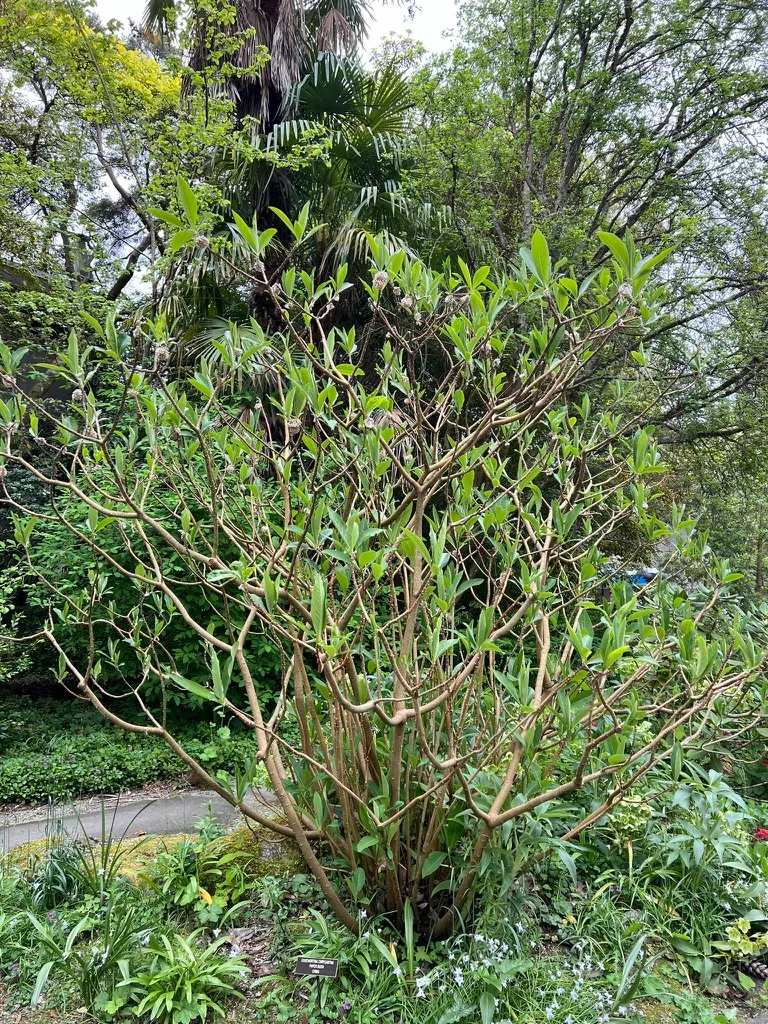
Edgeworthia chrysantha is paperbush (edgeworthia), a mounding deciduous shrub growing 4-6 feet (1.2-1.8 m) tall and 4-6 feet (1.2-1.8 m) wide with very flexible stems that do not break when bent. Yellow tubular flowers 0.3 inch (8 mm) opening from white silky buds in pendant spherical clusters 1-1.5 inches (2.5-4 cm) in February-March — strongly fragrant. The white silky buds are visible on bare branches from November onward. Blue-green lance-shaped leaves 4-6 inches (10-15 cm) with silky-hairy undersides. In Thymelaeaceae (same family as Daphne). Native to central China — long cultivated in Japan where the bark fiber (mitsumata) is used to make high-quality paper and banknotes. Limited cold hardiness — flower buds killed below approximately 5°F (-15°C). This cold sensitivity is the primary limitation. In zone 7 buds may be damaged in severe winters. In zone 6 the shrub survives but rarely blooms. Resents transplanting. Not drought-tolerant. All parts toxic. Deer-resistant. Zones 7-9. Part shade to morning sun. Growth rate is moderate.
Native Range
Native to central China — Sichuan and Hubei provinces. Long cultivated in Japan where it is called mitsumata (used for paper and banknote fiber).Suggested Uses
Grown as a specimen shrub near entryways, paths, and windows where the late winter fragrance and the pendant flower clusters can be observed, spaced 4-6 feet (1.2-1.8 m). Also in containers of at least 5 gallons (19 L) that can be moved to shelter in cold winters. Late winter fragrance. White silky winter buds. Toxic. Deer-resistant. Zones 7-9.How to Identify
Appearance
Size & Dimensions
Height4' - 6'
Width/Spread4' - 6'
Colors
Bloom Information
Late winter to early spring (February-March). Yellow tubular flowers 0.3 inch (8 mm) opening from white silky buds in pendant spherical clusters 1-1.5 inches (2.5-4 cm). Strongly fragrant. 4 weeks of bloom. Bee-pollinated. White silky buds visible on bare branches from November.
Detailed Descriptions
Flower Description
Yellow (opening from white silky buds), tubular, 0.3 inch (8 mm), in pendant spherical clusters 1-1.5 inches (2.5-4 cm) across; the white silky buds are visible on the bare branches through winter before openingFoliage Description
Blue-green, lance-shaped, 4-6 inches (10-15 cm) long, with silky-hairy undersides; turns yellow in fall before droppingGrowing Conditions
Sun Requirements
Requires 4-6 hours of direct sunlight daily
• Full Sun: 6+ hours of direct sunlight
• Partial Shade: 3-6 hours of direct sunlight
• Full Shade: Less than 3 hours of direct sunlight
Care & Maintenance
Care Guide
Part shade to morning sun (4-6 hours). Well-drained acidic soil pH 5.5-6.5. Not drought-tolerant. Flower buds killed below 5°F (-15°C) — marginal in zone 7. Resents transplanting — plant in permanent location. All parts toxic. Prune lightly after flowering (April). Deer-resistant. Zones 7-9.Pruning
Prune lightly after flowering (April) if shaping is needed. The flexible stems do not break when bent. The mounding multi-stemmed form is natural. Resents hard pruning. Remove dead or damaged stems only.Pruning Schedule
Prune: April
late spring
Container Growing
Suitable for container growing
Minimum container size: 5 gallons