Dysphania, Genus, ambrosioides, Species,
- Genus & species
Mexican tea
Mexico, Central America, and tropical South America
SunFull Sun
Overview
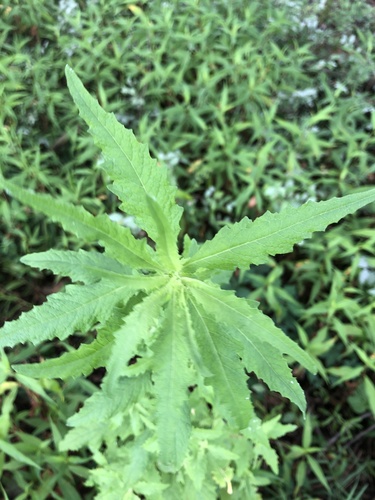
Dysphania ambrosioides, known as epazote or Mexican tea, is a strongly aromatic annual or short-lived perennial herb of the amaranth family, native to the warmer parts of the Americas. It grows erect and branching, 12-48 inches (30-120 cm) tall and 12-30 inches (30-75 cm) wide, with a reddish, ridged main stem. The lance-shaped to oblong leaves, 1-5 inches (2.5-12 cm) long, have coarsely toothed margins and release a pungent, resinous scent when bruised. Tiny green flowers without petals are packed into slender leafy spikes from summer into autumn, ripening large numbers of small black seeds that make the plant a persistent self-sower and a weed of warm regions worldwide. The crushed leaves are used in small amounts to flavor bean and corn dishes in Mexican cooking, and the plant has a long history as a folk vermifuge. Its essential oil is rich in ascaridole, which is toxic in quantity and can cause poisoning if leaves or oil are taken in excess. D. ambrosioides grows quickly in warm, sunny sites and tolerates poor soil and drought, but frost kills it and its heavy seeding can make it hard to contain.
Native Range
Native to Mexico, Central America, and tropical South America. It has naturalized across the warm temperate and tropical regions of every continent, growing as a weed of fields, roadsides, and waste ground.Suggested Uses
Grown in herb and vegetable gardens as the seasoning epazote for beans, soups, and corn dishes. It is also raised for its medicinal oil and as a traditional vermifuge. The aromatic foliage is dried for tea in some regions.How to Identify
Appearance
Size & Dimensions
Height1' - 4'
Width/Spread1' - 2'6"
Bloom Information
Small green flowers appear from midsummer through autumn until frost. The wind-pollinated flowers have no petals and little visual presence, clustered in narrow spikes among the upper leaves. Each plant can ripen tens of thousands of seeds over the season.
Detailed Descriptions
Foliage Description
greenGrowing Conditions
Sun Requirements
Requires 6-12 hours of direct sunlight daily
• Full Sun: 6+ hours of direct sunlight
• Partial Shade: 3-6 hours of direct sunlight
• Full Shade: Less than 3 hours of direct sunlight
Water & Climate
Water Needs
Drought Tolerance
Drought tolerant when established
Care & Maintenance
Care Guide
Plants grow in full sun and average, well-drained soil, and stand up to heat, poor ground, and drought once started. Seed is sown after the soil warms in spring, and germination is fast in warm conditions. Moderate watering keeps young plants growing, after which little is needed. The plant completes its cycle in a single warm season in cold climates and is killed by frost. Heavy self-seeding can turn it weedy, so spent spikes are often removed before seed sheds. In mild-winter areas it may persist a few years as a short-lived perennial.Pruning
Pinching the growing tips early makes bushier, leafier plants for kitchen use. Flower spikes are cut off before seed ripens to limit self-sowing. No other pruning is needed.Pruning Schedule
Prune: June–July
summer
Container Growing
Suitable for container growing
Minimum container size: 3 gallons
