Image 1 of 6
Plant Reference
1 / 6
Dypsis, Genus, lutescens, Species,
- Genus & species
areca palm
Madagascar — eastern coastal lowland forests; wild population is critically endangered
Overview
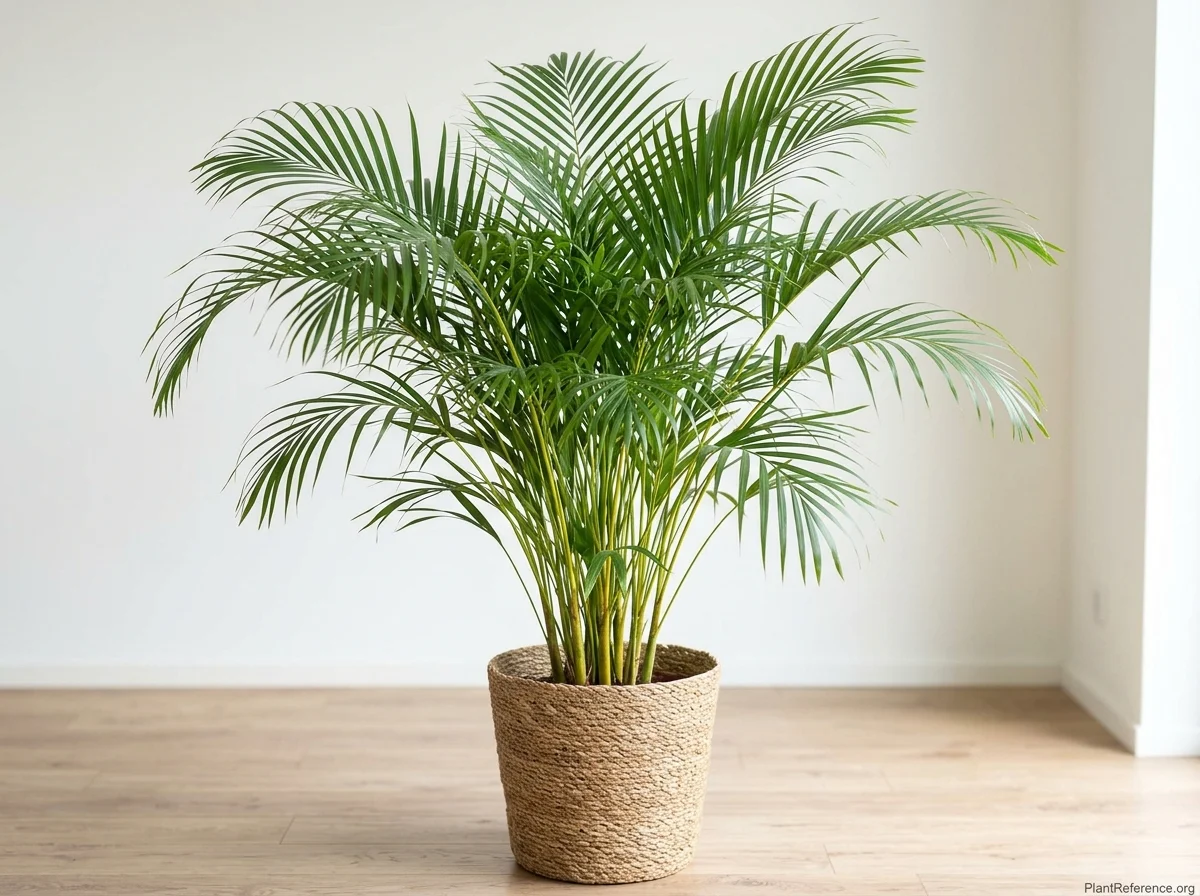
Dypsis lutescens is a clumping multi-stemmed palm from Madagascar grown indoors and as a tropical landscape plant, reaching 60–144 inches (150–360 cm) tall and 36–72 inches (90–180 cm) wide in container culture. The species was reclassified from Chrysalidocarpus lutescens into Dypsis in 1995 based on molecular phylogenetic work, though it is still sold under the older name. Each plant produces 6–15 thin yellow-green to gold cane-like stems 0.5–1 inch (1–2.5 cm) thick from a clumping crown, with arching pinnate fronds 24–36 inches (60–90 cm) long carrying 40–60 narrow leaflets per side; the species epithet 'lutescens' translates as 'becoming yellow' and refers to the gold-yellow cane color that develops in stronger light. The palm is non-toxic to dogs and cats and is on the ASPCA safe list, making it among the few large foliage houseplants suitable for households with pets that browse foliage. Cultural failure modes are well-documented: indoor specimens decline through brown leaf tips (humidity below 40 percent), spider mite infestations (dry indoor air), and root rot from soil that stays wet at the base of the pot. The palm is more demanding than the Dracaena houseplants in light, water, and humidity tolerance, but the clumping multi-stem form gives a fuller silhouette than single-stem palms such as Howea forsteriana (kentia palm) at the same height. Hardy outdoors only in USDA zones 10–11. Frost damage at 32°F (0°C) shows as browning of all foliage; the plant rebounds from light frost but dies in temperatures below 25°F (−4°C).
Native Range
Dypsis lutescens is native to Madagascar, where it grows along streams and on river floodplains in the eastern coastal lowland forests. The wild population is critically endangered due to habitat loss, even though the species is widely cultivated.Suggested Uses
Used as a tropical floor specimen for living rooms, sunrooms, and conservatories in containers of 10 gallons (38 liters) or larger. The non-toxic foliage suits households with cats and dogs that browse houseplants. Pairs with smaller foliage plants such as Calathea cultivars and Maranta leuconeura for layered tropical-style indoor plantings. Outdoors in USDA zones 10–11 used as a hedging or specimen palm in tropical landscapes.How to Identify
Appearance
Size & Dimensions
Height5' - 12'
Width/Spread3' - 6'
Colors
Bloom Information
Flowers rarely in container culture; outdoor specimens in tropical climates produce small yellow flowers in panicles followed by yellow-orange fruit. Indoor plants are grown for the foliage and clumping stem form, which is the year-round display.
Detailed Descriptions
Flower Description
Small yellow flowers in panicles (rare in container culture)Foliage Description
Bright green arching pinnate fronds 24-36 inches (60-90 cm) long with 40-60 narrow leaflets per side, on yellow-green to gold cane-like stemsGrowing Conditions
Sun Requirements
Requires 4-6 hours of direct sunlight daily
• Full Sun: 6+ hours of direct sunlight
• Partial Shade: 3-6 hours of direct sunlight
• Full Shade: Less than 3 hours of direct sunlight
Care & Maintenance
Care Guide
Place in bright indirect light at 200–500 foot-candles; the plant tolerates partial sun in the morning but scorches in afternoon sun above 4 hours of direct exposure. Water when the top one-third of the soil volume has dried; the palm prefers consistently moist soil and tolerates short dry periods less well than Dracaena species. Soil mix should be free-draining (peat-based potting mix amended with 25–30 percent perlite). Indoor humidity above 40 percent reduces brown leaf tips; running a humidifier or grouping the plant with other foliage plants helps. Feed at half the label rate with a balanced liquid fertilizer monthly during active growth (spring through early autumn) and skip feeding in winter. Repot every 2–3 years into a pot 2 inches (5 cm) larger than the previous; the clumping crown produces new stems more freely when not severely root-bound. Spider mites are the main indoor pest and respond to weekly foliar rinses or insecticidal soap.Pruning
Cut spent fronds at the base of the cane with clean pruners once they yellow. Cut individual canes at the base if the clump becomes overcrowded; new canes emerge from the basal crown to replace removed stems within 6–12 months. Brown leaf tips can be trimmed with scissors back to the green tissue.Container Growing
Suitable for container growing
Minimum container size: 10 gallons