Duma, Genus, spp., Multiple species,
- Genus
- Multiple species
lignum
Overview
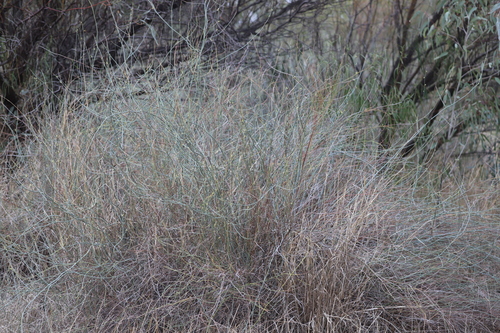
Duma is a genus of three species of wiry, tangled shrubs in the knotweed family, Polygonaceae, native to Australia, with one species reaching New Zealand and New Guinea. Segregated from Muehlenbeckia, the genus includes lignum (D. florulenta), a key plant of inland floodplains. Plants form dense, intricately branched mounds 1-3 m (3-10 ft) tall of greyish-green, almost leafless stems; small narrow leaves drop in dry conditions, leaving the green stems to carry out photosynthesis. Tiny cream to greenish flowers are borne in small clusters along the stems, mainly after rain or flooding, and are followed by small three-angled nutlets. D. horrida bears rigid, spine-tipped branchlets. The genus grows on floodplains, around swamps and lakes, and in arid drainage lines, surviving long dry spells and responding to flooding with a flush of growth and flowering. In cultivation it is grown for habitat, erosion control, and informal screening in dry and seasonally wet sites.
Native Range
Native to Australia, where lignum and its relatives are widespread across inland floodplains, with D. florulenta also reaching New Zealand and New Guinea. Plants grow on river floodplains, around swamps and ephemeral lakes, and along arid drainage lines.Suggested Uses
Grown for wildlife habitat, erosion control, and informal screening in dry and seasonally wet gardens. Used in floodplain and wetland restoration, where it forms nesting cover for birds, and as a tough hedge in low-rainfall areas.How to Identify
Appearance
Size & Dimensions
Height3' - 10'
Width/Spread5' - 13'
Bloom Information
Tiny cream to greenish flowers appear in small clusters along the stems, mainly after rain or flooding rather than in a fixed season. Flowering can occur from spring through autumn when moisture allows. Small three-angled nutlets follow and are spread by water.
Detailed Descriptions
Flower Description
cream to greenishFoliage Description
greyish greenGrowing Conditions
Sun Requirements
Requires 6-12 hours of direct sunlight daily
• Full Sun: 6+ hours of direct sunlight
• Partial Shade: 3-6 hours of direct sunlight
• Full Shade: Less than 3 hours of direct sunlight
Care & Maintenance
Care Guide
Grows in full sun in a wide range of soils, including heavy clay, and tolerates both prolonged drought and periodic flooding. Established plants need little water, drawing on deep roots and responding to rain with new growth. The genus is frost-hardy in mild-winter climates. Plants regrow strongly after grazing, fire, or cutting back. Little feeding is needed on most soils.Pruning
Plants tolerate hard cutting back and are trimmed in late winter to renew tangled, woody growth. Dead stems are removed at the same time. No regular pruning is otherwise needed.Pruning Schedule
Prune: February
winter