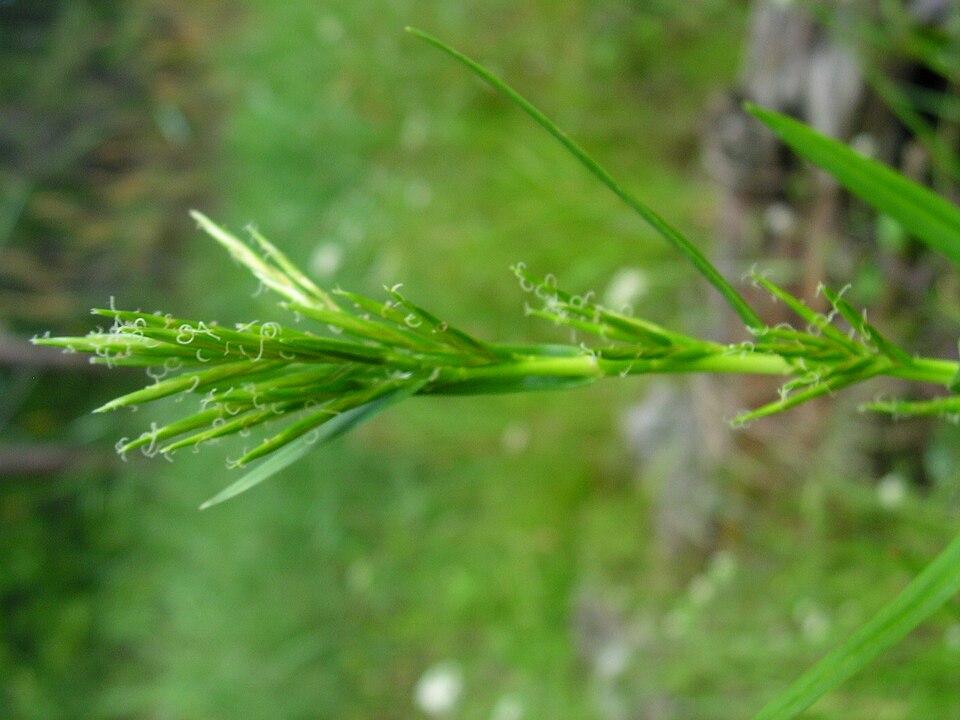
Dulichium, Genus, spp., Multiple species,
- Genus
- Multiple species
three-way sedge
Overview
Dulichium is a genus in the sedge family, Cyperaceae, containing the single species D. arundinaceum, known as three-way sedge for its leaves arranged in three distinct vertical ranks. It is a rhizomatous, emergent wetland perennial native to North America. Hollow, jointed, round stems grow 30-100 cm (12-40 in) tall from a creeping rhizome, clothed along their length in flat, grass-like leaves 4-15 cm (1.6-6 in) long. From mid to late summer, small spikelets of brownish flowers form in short axillary clusters along the upper stem rather than in a terminal head as in many sedges. The plant spreads steadily by rhizome to form colonies at the water edge. It grows in shallow water, marshes, pond margins, bogs, and wet ditches, usually in acidic conditions, and tolerates seasonal flooding. In cultivation three-way sedge is grown at pond margins and in rain gardens, where the spreading rhizomes can fill an area and may need confining.
Native Range
Native to North America, ranging across much of Canada and the eastern and western United States. It grows in shallow standing water and saturated ground at the margins of ponds, lakes, marshes, bogs, and slow streams, usually in acidic wetlands.Suggested Uses
Grown at pond and stream margins, in bog gardens, rain gardens, and wetland restoration plantings. Used for erosion control and cover at the water edge, and the colonies provide habitat for wetland wildlife.How to Identify
Appearance
Size & Dimensions
Height1' - 3'4"
Width/Spread1' - 2'
Bloom Information
Detailed Descriptions
Foliage Description
greenGrowing Conditions
Sun Requirements
Requires 4-10 hours of direct sunlight daily
• Full Sun: 6+ hours of direct sunlight
• Partial Shade: 3-6 hours of direct sunlight
• Full Shade: Less than 3 hours of direct sunlight
Care & Maintenance
Care Guide
Grows in full sun to part shade in constantly wet, acidic soil or shallow standing water up to about 15 cm (6 in) deep. It tolerates seasonal flooding and fluctuating water levels but not prolonged drought. The species is hardy through much of its range to about USDA zone 4. The creeping rhizome spreads to form colonies and may need a barrier or container to limit it. Stems are left over winter and cut back before new growth in spring.Pruning
Old stems are cut back to the base in late winter or early spring before new shoots appear. Spreading rhizomes are divided or trimmed to control colony size. No other pruning is needed.Pruning Schedule
Prune: March
early spring
Container Growing
Suitable for container growing
Minimum container size: 3 gallons