Drynaria, Genus, spp., Multiple species,
- Genus
- Multiple species
basket fern
Paleotropics (Africa, Asia, Australia, Pacific)
Overview
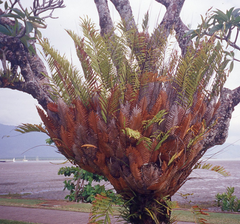
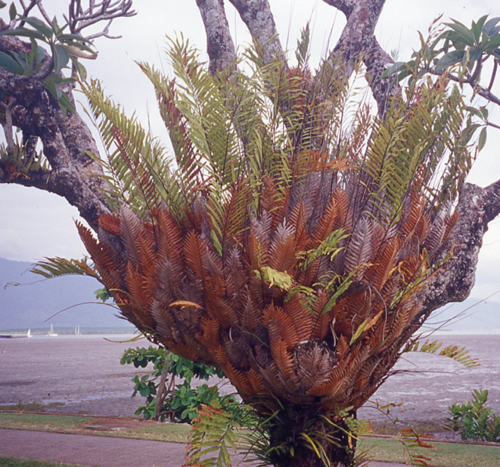
Drynaria is a genus of about 16 species of epiphytic and lithophytic ferns in the family Polypodiaceae, known as basket ferns and native to tropical Africa, southern and Southeast Asia, Australia, and the Pacific islands. Plants grow from a thick, scaly, creeping rhizome that clings to tree trunks and rocks. They bear two kinds of fronds: short, brown, papery nest fronds that clasp the rhizome and collect leaf litter and water, and large green foliage fronds 30-150 cm (12-60 in) long that are deeply lobed or pinnate. The persistent nest fronds build up a humus-filled basket that supports the plant in the canopy. Round to oblong sori are scattered or set in rows on the undersides of foliage fronds. Many species are deciduous in the dry season, dropping their green fronds while the nest fronds remain. The rhizomes of some species, such as D. quercifolia, are used in traditional medicine. In cultivation basket ferns are grown on slabs, in baskets, and on tree forks in warm, humid, shaded conditions.
Native Range
Native to tropical Africa, southern and Southeast Asia, Australia, and the Pacific islands, where plants grow as epiphytes on tree trunks and branches and as lithophytes on rocks in tropical and subtropical forest.Suggested Uses
Grown as a mounted or basket specimen in greenhouses, conservatories, and shaded patios in warm climates. Used on tree forks and slabs in tropical gardens and as a feature foliage plant indoors.How to Identify
Appearance
Size & Dimensions
Height1' - 5'
Width/Spread1' - 3'
Bloom Information
Ferns do not flower. Drynaria reproduces by spores borne in round to oblong sori on the undersides of the green foliage fronds, mainly in the warm, wet season. New foliage fronds flush at the start of the rains.
Detailed Descriptions
Foliage Description
green with brown nest frondsGrowing Conditions
Sun Requirements
Requires 2-5 hours of direct sunlight daily
• Full Sun: 6+ hours of direct sunlight
• Partial Shade: 3-6 hours of direct sunlight
• Full Shade: Less than 3 hours of direct sunlight
Care & Maintenance
Care Guide
Grows in bright, indirect light to part shade in a coarse, free-draining epiphyte mix or mounted on bark, with high humidity and warmth. The rhizome is kept on the surface rather than buried, and watering eases off when fronds drop in the dry season. Most species are frost-tender and are grown indoors or under cover where temperatures fall below about 5 C (41 F). Steady warmth and humidity keep foliage fronds in good condition. Old nest fronds are left in place because they anchor and feed the plant.Pruning
Only dead or damaged foliage fronds are trimmed away. Brown nest fronds are left intact, since they hold the plant and store nutrients. No other pruning is needed.Container Growing
Suitable for container growing
Minimum container size: 3 gallons