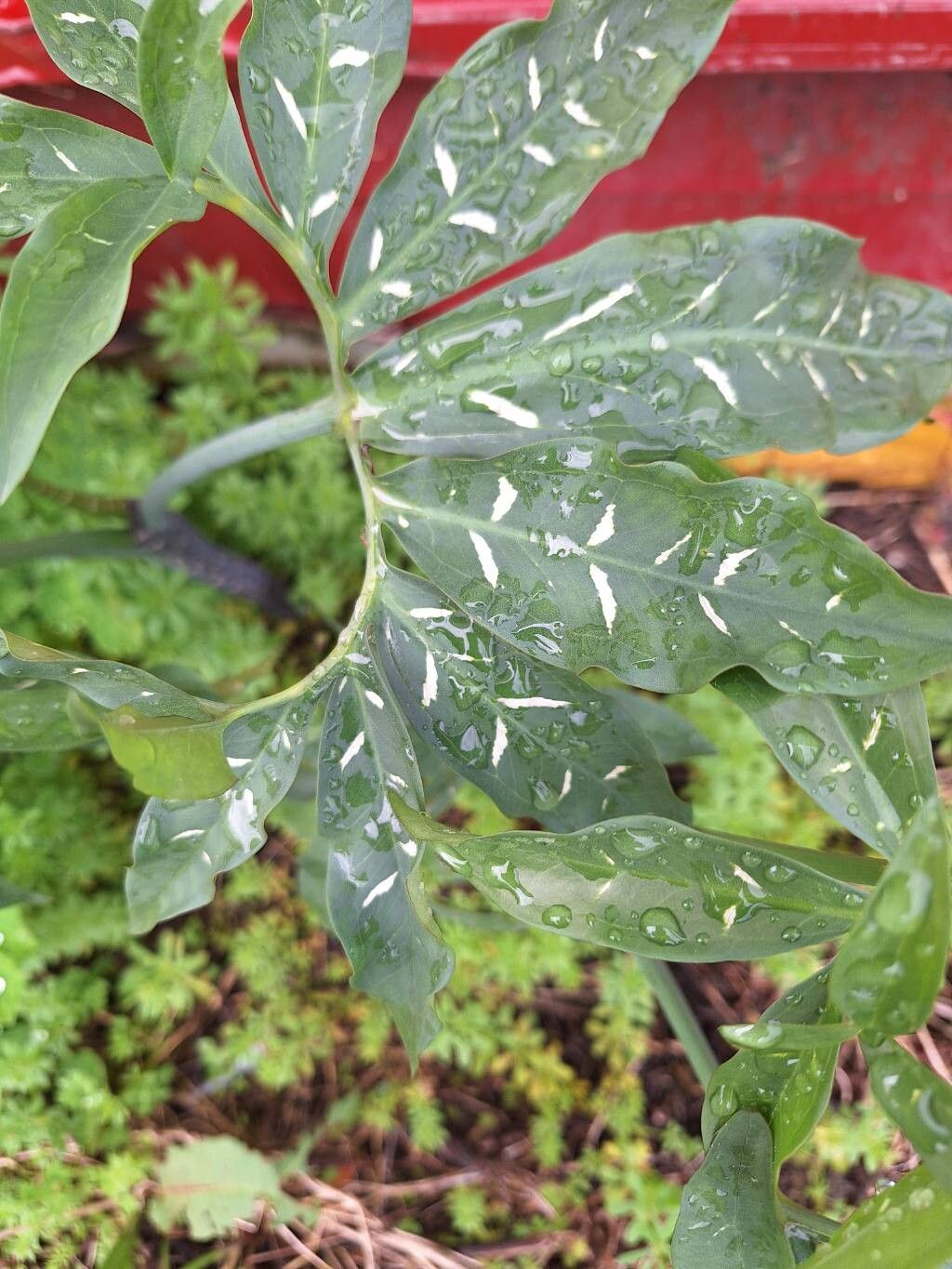
Dracunculus, Genus, vulgaris, Species,
- Genus & species
dragon arum
Southern Europe around the Mediterranean basin — Greece, Crete, Turkey, the Balkans, and southern Italy — and western Asia; rocky hillsides, disturbed ground, and olive groves at low elevations
Overview
Dracunculus vulgaris is an upright tuberous deciduous perennial in the family Araceae reaching 3–4 feet (0.9–1.2 m) tall and 18–24 inches (45–60 cm) wide from a fleshy round tuber. The plant has no true above-ground stem: the petiole sheaths of the large pedately compound leaves wrap around each other to form a mottled purple-green pseudostem that supports the foliage and the flowering structure. Leaves are pedately compound with 5–15 narrow dark green segments radiating from a central point and carried on long petioles that emerge from the tuber in early to mid spring. A single dark maroon-purple spathe 12–18 inches (30–45 cm) long unfurls from the center of the pseudostem in May or June to reveal a near-black spadix 12–15 inches (30–38 cm) long, and the interior of the spathe carries a velvety texture the color of clotted blood. The bloom lasts about one week and the spathe collapses within 7–10 days of opening. At the moment the spathe first opens, the spadix heats to 20 °F (11 °C) above ambient air temperature through thermogenesis and releases a powerful carrion (rotting meat) odor that persists for 24–48 hours before dissipating; the heat and the odor together attract carrion flies and beetles that crawl into the spathe chamber and pollinate the fertile flowers at the base of the spadix. The genus name Dracunculus means little dragon in Latin and refers to the serpent-like appearance of the spotted pseudostem and the darkly colored spathe, and the alternate common name stink lily refers to the carrion odor. A cluster of orange-red berries ripens at the base of the spadix in late summer after the spathe has withered. Limitation: the 24–48 hours of carrion odor at bloom opening is the main siting constraint for the species — positions near outdoor seating areas, open windows, patios, dining terraces, and entry walkways are unsuitable during the May and June bloom window because the odor is intense enough to be detected at distances of 30–50 feet (9–15 m) in still air, although the odor dissipates within 2 days and the species is otherwise an unobjectionable woodland garden subject for the remainder of its active season. The entire above-ground plant dies back by midsummer (June or July) and the tuber enters summer dormancy that lasts through fall and early winter. All parts of the plant contain calcium oxalate raphide crystals that cause intense burning of the mouth and throat if the tissues are chewed, and the plant is toxic to cats, dogs, and humans.
Native Range
Native to southern Europe around the Mediterranean basin — Greece, Crete, Turkey, the Balkans, southern Italy, and the Mediterranean islands — and extending into western Asia. Grows on rocky hillsides, in disturbed ground, and in olive groves at low elevations, typically on well-drained calcareous substrates. The species has been cultivated in European gardens since at least the 17th century and is naturalized in parts of the Pacific Northwest and coastal California, where the Mediterranean climate suits the growth cycle of the species.Suggested Uses
Used as a specimen perennial in Mediterranean-style gardens, dry borders, gravel beds, rocky slopes, and containers of at least 5 gallons (19 L) at 18–24 inch (45–60 cm) spacing between tubers. The dark maroon-purple spathe and near-black spadix supply a flower form and color rarely found among other garden perennials, and the mottled purple-green pseudostem with pedately compound foliage carries visual interest through the spring growing period before summer dormancy. Positions near outdoor seating areas, open windows, patios, and dining terraces are unsuitable because of the 24–48 hours of carrion odor at bloom opening, and gardens where pet access to the tubers and foliage is a concern are unsuitable because of the calcium oxalate toxicity.How to Identify
Appearance
Size & Dimensions
Height3' - 4'
Width/Spread1'6" - 2'
Bloom Information
A single dark maroon-purple spathe 12–18 inches (30–45 cm) long with a velvety interior texture unfurls in May or June from the center of the pseudostem to reveal a near-black spadix 12–15 inches (30–38 cm) long. The bloom lasts about one week and the spathe collapses within 7–10 days of opening. At the moment the spathe first opens, the spadix heats to 20 °F (11 °C) above ambient air temperature through thermogenesis and releases a powerful carrion (rotting meat) odor that persists for 24–48 hours before dissipating, and the heat and the odor together attract carrion flies and beetles that crawl into the spathe chamber and pollinate the fertile flowers at the base of the spadix. A cluster of orange-red berries ripens at the base of the spadix in late summer after the spathe has withered.
Detailed Descriptions
Flower Description
dark maroon-purple spathe 12-18 inches (30-45 cm) long with a velvety interior texture, unfurling to reveal a near-black spadix 12-15 inches (30-38 cm) longFoliage Description
dark green; pedately compound with 5-15 narrow segments radiating from a central point; the petiole sheaths form a mottled purple-green pseudostem because the plant has no true above-ground stemGrowing Conditions
Sun Requirements
Requires 4-8 hours of direct sunlight daily
• Full Sun: 6+ hours of direct sunlight
• Partial Shade: 3-6 hours of direct sunlight
• Full Shade: Less than 3 hours of direct sunlight
Care & Maintenance
Care Guide
Site in full sun to partial shade with 4–8 hours of direct sun per day in well-drained soil with a pH of 6.0–7.5; heavy clay and waterlogged positions cause tuber rot during summer dormancy. Tubers are planted 4–6 inches (10–15 cm) deep in fall with the growing point facing up, and the species is drought-tolerant during the summer dormancy period and calls for watering only during the spring growing and bloom period. Positions near outdoor seating areas, open windows, patios, dining terraces, and entry walkways are unsuitable because the 24–48 hours of carrion odor at bloom opening in May or June is intense enough to be detected at 30–50 feet (9–15 m) in still air, although the odor dissipates within 2 days and the species is otherwise a good woodland garden subject. The entire above-ground plant dies back by midsummer and the tuber enters summer dormancy through fall and early winter. The species spreads by tuber offsets and by self-sown seed from the orange-red berry clusters in zones 8 through 10, where the warm summers ripen viable seed; seedlings can establish in gravel beds and rocky ground within 10–20 feet (3–6 m) of the parent plant. All parts of the plant contain calcium oxalate raphide crystals and are toxic to cats, dogs, and humans if chewed. Hardy in USDA zones 7–10.Pruning
Dead foliage and the withered spathe are cut to the ground in early to midsummer (June or July) when the above-ground growth has yellowed and collapsed at the end of the active growing season. Orange-red berry clusters can be removed before seed ripens to prevent unwanted self-sowing in warm climates, or left on the plant to mature and drop seed for natural colony expansion. No winter pruning is needed because the tuber is fully dormant below the soil surface from midsummer through the following spring.Pruning Schedule
Prune: July
summer
Container Growing
Suitable for container growing
Minimum container size: 5 gallons