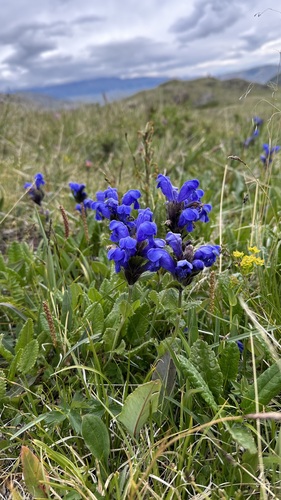
Dracocephalum, Genus, grandiflorum, Species,
- Genus & species
large-flowered dragonhead
Central Asia, Siberia, Mongolia, western China (alpine meadows, steppe, 5,000-12,000 feet / 1,500-3,600 m)
Overview
Dracocephalum grandiflorum is the large-flowered dragonhead, a compact deciduous perennial growing 8-12 inches (20-30 cm) tall and 12-15 inches (30-38 cm) wide. Deep blue to violet-blue tubular two-lipped flowers 1-1.5 inches (2.5-4 cm) in dense terminal whorled spikes in summer (June-July) — the flowers are among the largest in the genus. The genus name Dracocephalum means 'dragon head' (Greek drakon + kephale), referencing the two-lipped tubular flower shape. Medium green ovate to lance-shaped aromatic leaves 1-2 inches (2.5-5 cm) with crenate margins — the foliage releases a mild mint-like scent when crushed. In the mint family (Lamiaceae). Approximately 70 species in the genus, most from central Asia. Native to alpine meadows and steppe grasslands of central Asia, Siberia, Mongolia, and western China at 5,000-12,000 feet (1,500-3,600 m). Adapted to cold dry continental climates — extremely cold-hardy (zone 3). Tolerates alkaline soil (pH to 8.0). Sharp drainage required — crown rot in heavy wet winter soil. Short-lived perennial: 3-5 years typical — self-sows modestly to maintain the population. Non-toxic. Deer-resistant. Drought-tolerant once established. Full sun. Zones 3-8. Growth rate is moderate.
Native Range
Native to central Asia, Siberia, Mongolia, and western China, growing in alpine meadows and steppe grasslands at 5,000-12,000 feet (1,500-3,600 m).Suggested Uses
Commonly planted in rock gardens, alpine gardens, and dry borders in zones 3-8. The deep blue flowers and the compact habit suit scree beds and raised stone troughs. Tolerates alkaline soil. Extremely cold-hardy. Self-sows. Non-toxic. Deer-resistant.How to Identify
Appearance
Size & Dimensions
Height8" - 1'
Width/Spread1' - 1'3"
Bloom Information
Summer (June-July), lasting 3-4 weeks. Deep blue to violet-blue tubular two-lipped flowers in whorled spikes. The largest flowers in the genus. Pollinator nectar source. Self-sows modestly.
Detailed Descriptions
Flower Description
Deep blue to violet-blue, tubular two-lipped, 1-1.5 inches (2.5-4 cm), in dense terminal whorled spikesFoliage Description
Medium green, ovate to lance-shaped, crenate margins, aromatic when crushed, 1-2 inches (2.5-5 cm)Growing Conditions
Sun Requirements
Requires 6-12 hours of direct sunlight daily
• Full Sun: 6+ hours of direct sunlight
• Partial Shade: 3-6 hours of direct sunlight
• Full Shade: Less than 3 hours of direct sunlight
Care & Maintenance
Care Guide
Full sun. Sharp drainage required — crown rot in heavy wet winter soil. Tolerates alkaline soil (pH to 8.0). Extremely cold-hardy (zone 3). Short-lived (3-5 years) — allow self-sowing. Aromatic foliage. Non-toxic. Deer-resistant. Drought-tolerant. Zones 3-8.Pruning
Shear spent flower stems after bloom in late summer (August). Allow some seed set for self-sowing. Cut dead foliage to the ground in early spring.Pruning Schedule
Prune: August
summer
Container Growing
Suitable for container growing
Minimum container size: 1 gallons