Draba, Genus, aizoides, Species,
- Genus & species
yellow whitlow grass
{Draba aizoides} is native to the mountains of central and southern Europe, from the Pyrenees through the Alps to the Carpathians and the mountains of the Balkans; the species grows on limestone cliffs, rock crevices, and scree at elevations of 3,000-9,000 ft (900-2,700 m); the alpine origin and limestone-cliff habitat together account for the species' need for sharp drainage, cool conditions, and alkaline soil in cultivation
Overview
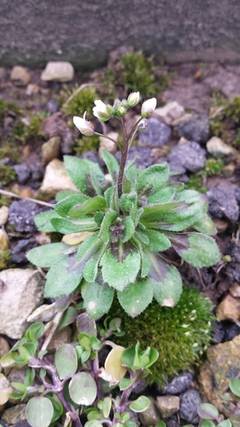
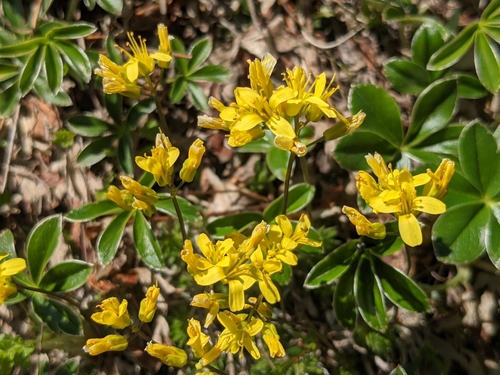
Draba aizoides is a miniature alpine cushion plant in the mustard family (Brassicaceae) growing just 2-4 inches (5-10 cm) tall and 4-8 inches (10-20 cm) wide. Bright yellow four-petaled flowers in compact clusters of 5-15 appear on short stems in March and April — among the very first perennials to bloom each year, often flowering while snow is still melting in the species' native alpine habitat. The species name 'aizoides' means 'resembling Aizoon' (now Sempervivum), referring to the tight rosette-forming evergreen growth that superficially resembles a houseleek. Tiny stiff dark green leaves with bristle tips form dense hard cushion rosettes that hug rock surfaces and crevices. The evergreen cushions are extremely long-lived — individual plants can persist 10-20 years in well-drained alpine conditions. The species grows naturally on limestone cliffs, rock faces, and scree in the Alps and related mountain ranges at elevations of 3,000-9,000 ft (900-2,700 m). In cultivation, the primary challenge is drainage — the tight cushion traps moisture against the crown, and in wet winter or humid summer conditions, the center rots. Gravel top-dressing, sloped planting, and alpine trough culture improve drainage around the crown. In hot humid climates, the species struggles. Cool dry conditions with cold winters suit it. Deer do not graze the tiny cushions.
Native Range
Draba aizoides is native to the mountains of central and southern Europe, from the Pyrenees through the Alps to the Carpathians and the mountains of the Balkans. The species grows on limestone cliffs, rock crevices, and scree at 3,000-9,000 ft (900-2,700 m) elevation.Suggested Uses
Used in alpine troughs, crevice gardens, tufa walls, and between rocks in raised alpine beds. The tiny scale requires close-viewing placement. Container culture works in shallow alpine pans or pots of 1 gallon (3.8 L) with gritty lean media. Among the earliest-blooming alpine plants for specialist collections.How to Identify
Appearance
Size & Dimensions
Height2" - 4"
Width/Spread4" - 8"
Colors
Bloom Information
Flowering in March and April, approximately 3 weeks. Bright yellow flower clusters are among the earliest perennial blooms. The early bloom often coincides with snowmelt in its alpine range.
Detailed Descriptions
Flower Description
Bright yellow four-petaled flowers in compact clusters of 5-15 carried on short stems above the cushion; among the very first perennials to bloom each year, often flowering while snow is still melting in the species' native alpine habitatFoliage Description
Dark green tiny stiff bristle-tipped leaves form dense rosettes that pack into hard cushion matsGrowing Conditions
Sun Requirements
Requires 6-12 hours of direct sunlight daily
• Full Sun: 6+ hours of direct sunlight
• Partial Shade: 3-6 hours of direct sunlight
• Full Shade: Less than 3 hours of direct sunlight
Care & Maintenance
Care Guide
Plant in full sun with at least 6 hours of direct light. Sharply drained lean gritty neutral to alkaline soil is essential — the species grows on limestone in nature. Avoid fertilizer. Top-dress with gravel to keep the cushion above moisture. Alpine troughs and crevice gardens are the most reliable cultivation format. Clay, heavy soil, and sites with summer humidity are unsuitable. Water sparingly.Pruning
No pruning is needed. The tight cushion maintains itself. Remove any brown or rotted rosettes within the cushion.Container Growing
Suitable for container growing
Minimum container size: 1 gallons