© No machine-readable author provided. PDH assumed (based on copyright claims)., some rights reserved (CC-BY-SA) · Wikimedia Commons
Doryanthes, Genus, spp., Multiple species,
- Genus
- Multiple species
spear lily
Overview
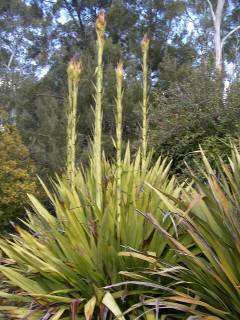
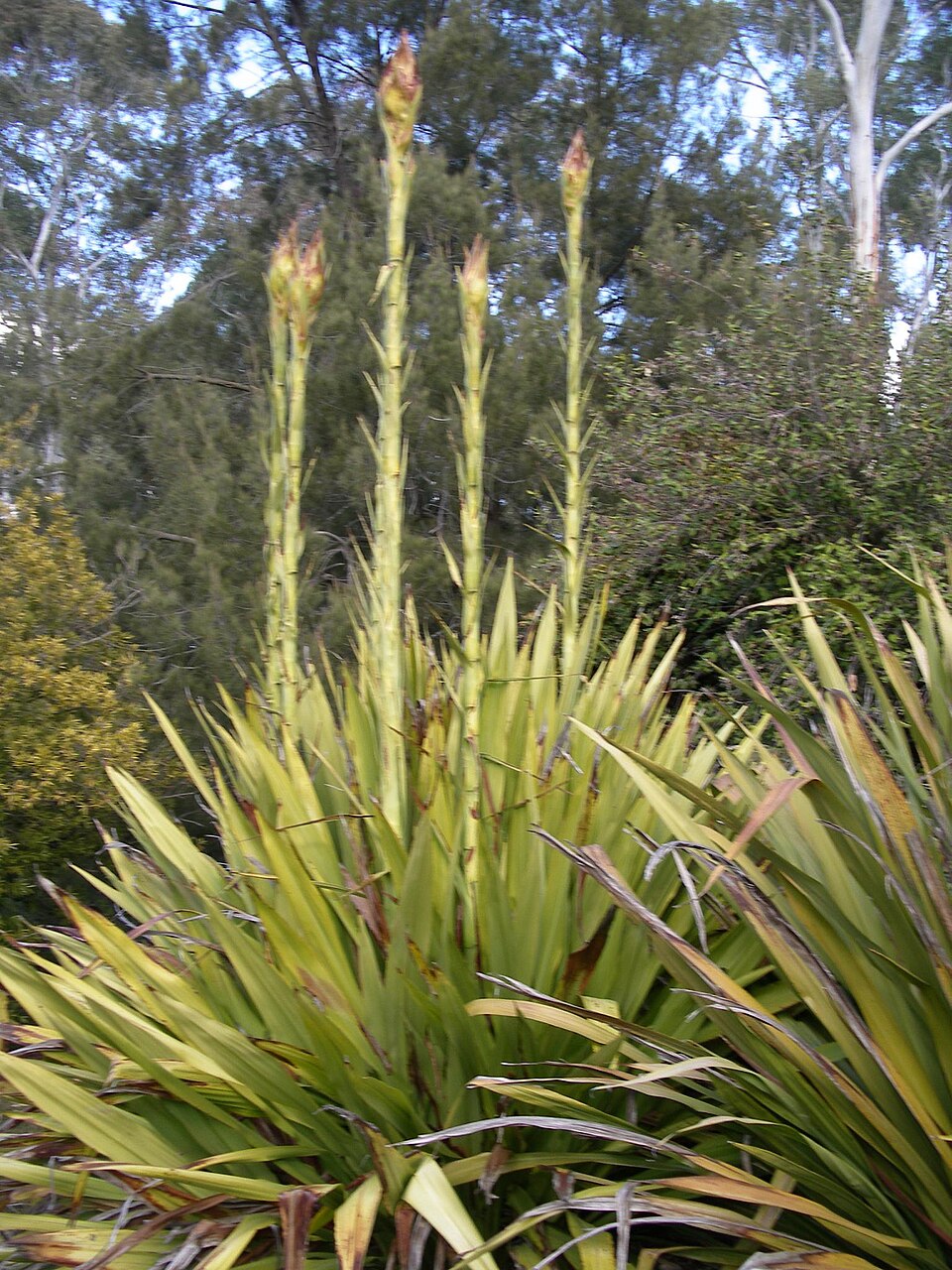
Doryanthes is a genus of two species of large evergreen perennials in the family Doryanthaceae, endemic to eastern Australia and known as spear lilies. Plants form a massive rosette of sword-shaped leaves 1-2.5 m (3-8 ft) long arising from a thick woody rootstock. From the centre rises a stout flowering stem: in D. excelsa, the Gymea lily, it reaches 2-6 m (7-20 ft) and ends in a dense rounded head of red flowers up to 30 cm (12 in) across, while in D. palmeri the flowers are carried along the upper length of an arching stem. Individual flowers are tubular, 8-10 cm (3-4 in) long, deep red with paler segment bases, and hold abundant nectar. Bloom occurs mainly in spring through early summer, and plants take several years to reach flowering size. After flowering, plantlets often form on the old stem. The genus grows on sandstone ridges and in open forest and tolerates poor soils, drought, and fire, regrowing from the rootstock. It is cultivated as a feature plant in large gardens and parks where there is room for the wide leaf rosette.
Native Range
Endemic to eastern Australia, where D. excelsa grows in coastal New South Wales and D. palmeri occurs in the ranges of northern New South Wales and southern Queensland. Both species favour sandstone ridges, open eucalypt forest, and heath.Suggested Uses
Grown as a large feature plant in spacious gardens, parks, and native landscapes. Used on embankments and rocky slopes for erosion control, and the long flower stems are cut for large-scale floral display.How to Identify
Appearance
Size & Dimensions
Height6'7" - 20'
Width/Spread7' - 10'
Bloom Information
Flowering occurs mainly in spring and early summer, with the tall stems developing over several weeks. Plants reach flowering size only after several years and may not bloom every season. The red, nectar-rich flowers draw nectar-feeding birds, and plantlets often form on spent stems.
Detailed Descriptions
Foliage Description
greenGrowing Conditions
Sun Requirements
Requires 6-10 hours of direct sunlight daily
• Full Sun: 6+ hours of direct sunlight
• Partial Shade: 3-6 hours of direct sunlight
• Full Shade: Less than 3 hours of direct sunlight
Care & Maintenance
Care Guide
Grows in full sun to light shade in well-drained sandy or rocky soil of low to moderate fertility. Established clumps are drought-tolerant and withstand poor soils, coastal exposure, and fire, regrowing from the woody rootstock. Young plants need regular water for the first few seasons to build the rosette. Frost tolerance is limited, and foliage is damaged by hard frost below about -3 C (27 F). The wide rosette needs 2-3 m (7-10 ft) of clear space, and plants are slow to recover from root disturbance once settled.Pruning
Spent flowering stems are cut to the base once flowering finishes, unless plantlets are being grown on. Old or damaged outer leaves are removed at the rosette to keep the clump tidy. No other regular pruning is required.Pruning Schedule
Prune: June
summer