Dodonaea, Genus, viscosa, Species,
- Genus & species
akeake
Pantropical; Australia, New Zealand, Africa, Asia, and the Americas
Overview
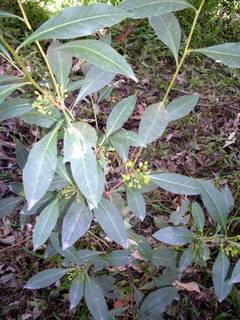
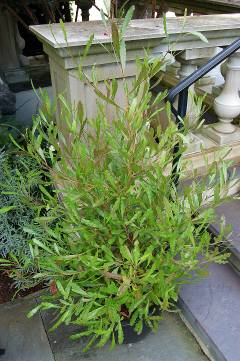
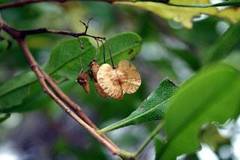
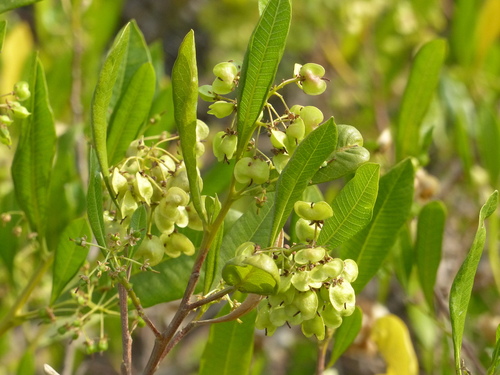
Dodonaea viscosa is an evergreen shrub or small tree reaching 6-15 feet (1.8-4.6 m) tall, occasionally to 25 feet (7.6 m) in tree form, with a spread of 6-10 feet (1.8-3 m). Stems are slender and upright, forming a dense rounded to vase-shaped crown. Leaves are simple, alternate, narrowly oblong to lance-shaped, 1.5-4 inches (4-10 cm) long and 0.3-0.8 inch (8-20 mm) wide, with a sticky resinous coating that gives the foliage a varnished sheen. Foliage is yellow-green to bronze-green, and reddish-purple forms occur in some populations. The species is dioecious, with separate male and female plants; flowers are small, greenish-yellow, and lack petals, appearing in clusters at the branch tips from spring to early summer. Female plants produce papery three- to four-winged seed capsules 0.5-0.9 inch (12-22 mm) wide that mature from green through pink to red-brown over several weeks. Growth is moderate to fast, with plants reaching mature height in 4-6 years. It tolerates wind, salt spray, and drought once established, but foliage is damaged by temperatures below 25 F (-4 C). Lower stems become bare with age, exposing the trunk structure.
Native Range
Native across tropical and subtropical regions worldwide, including Australia, New Zealand, southern Africa, southern Asia, and the Americas from the southwestern United States through Central and South America. It grows on coastal dunes, rocky slopes, open woodland, and disturbed ground from sea level to about 7,500 feet (2,300 m).Suggested Uses
Commonly planted as an informal hedge, windbreak, or screen spaced 3-5 feet (0.9-1.5 m) apart, and used for erosion control on slopes and coastal sites. Tolerant of salt spray and grown in seaside gardens. Reddish-leaved forms are grown as single specimens.How to Identify
Appearance
Size & Dimensions
Height6' - 15'
Width/Spread6' - 10'
Bloom Information
Flowers appear from spring to early summer, mainly March to May in the Northern Hemisphere and September to November in the Southern Hemisphere. Individual flower clusters are inconspicuous and last 1-2 weeks. The winged capsules that follow persist on female plants for 2-3 months and are the main visible seasonal change.
Detailed Descriptions
Foliage Description
yellow-green to bronze-greenGrowing Conditions
Sun Requirements
Requires 6-12 hours of direct sunlight daily
• Full Sun: 6+ hours of direct sunlight
• Partial Shade: 3-6 hours of direct sunlight
• Full Shade: Less than 3 hours of direct sunlight
Care & Maintenance
Care Guide
Grows in full sun in a wide range of soils, including sandy, rocky, and clay types where drainage is adequate. Water regularly through the first growing season to establish roots; established plants tolerate extended dry periods and coastal salt exposure. Growth is fastest in well-drained soil with occasional summer water, though plants survive on rainfall alone in zones 9-11. Few pests affect it, though root rot develops in waterlogged soil. Foliage may brown at the margins after frost below 25 F (-4 C). Plants are relatively short-lived, declining after 15-20 years.Pruning
Tolerates hard pruning and shearing; trim in late winter or early spring before new growth to hold a hedge form. Removing the lowest branches exposes the trunk for a small-tree shape. Without pruning, plants develop an open, irregular crown with bare lower stems.Pruning Schedule
Prune: February–March
winterearly spring
Container Growing
Suitable for container growing
Minimum container size: 5 gallons