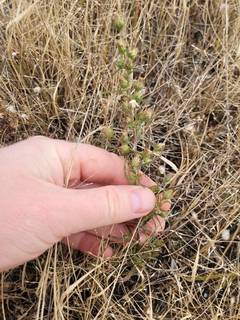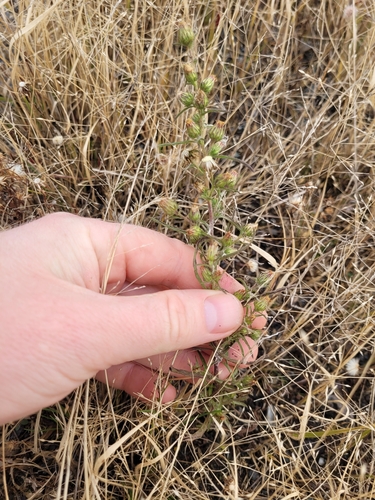
Dittrichia, Genus, spp., Multiple species,
- Genus
- Multiple species
stinkwort
Mediterranean Basin and western Asia
Overview
Dittrichia is a genus of two species of aromatic, sticky-glandular herbs and subshrubs in the daisy family (Asteraceae), native to the Mediterranean region and western Asia. Plants are densely covered in sticky glandular hairs that give off a strong camphor- or turpentine-like scent and coat the foliage in a resinous film. D. graveolens, stinkwort, is a much-branched annual 8-28 inches (20-70 cm) tall, while D. viscosa, false yellowhead, is a woody-based perennial reaching 1.6-4.3 feet (0.5-1.3 m). Both bear narrow, alternate leaves and many small yellow daisy flower heads with short rays, opening in late summer and autumn. Seeds carry a pappus of hairs and disperse on wind, clothing, and animals. D. graveolens has spread as an invasive weed along roadsides and disturbed ground in Australia, California, and elsewhere. The sticky foliage can cause skin irritation and taints the milk and meat of livestock that eat it.
Native Range
Dittrichia is native to the Mediterranean Basin and western Asia, in dry, open, disturbed ground, field margins, and coastal scrub. D. graveolens has naturalised widely as a weed in Australia, North America, and other warm-temperate regions.Suggested Uses
D. viscosa is sometimes grown in dry Mediterranean and gravel gardens for late-season yellow flowers and aromatic foliage, and is used in habitat plantings for late pollinators. D. graveolens is treated as a weed and is rarely planted.How to Identify
Appearance
Size & Dimensions
Height8" - 4'4"
Width/Spread1' - 3'
Bloom Information
Flowering comes late in the season, from late summer into autumn, when stems carry many small yellow daisy heads. The late bloom lets the plants set seed after summer-flowering vegetation has finished. Wind- and animal-dispersed seed follows quickly.
Detailed Descriptions
Foliage Description
green, stickyGrowing Conditions
Sun Requirements
Requires 6-12 hours of direct sunlight daily
• Full Sun: 6+ hours of direct sunlight
• Partial Shade: 3-6 hours of direct sunlight
• Full Shade: Less than 3 hours of direct sunlight