Distichlis, Genus, spicata, Species,
- Genus & species
saltgrass
Overview
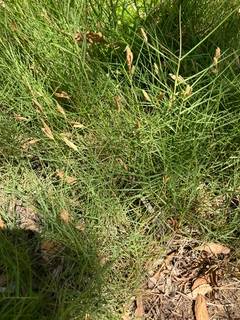
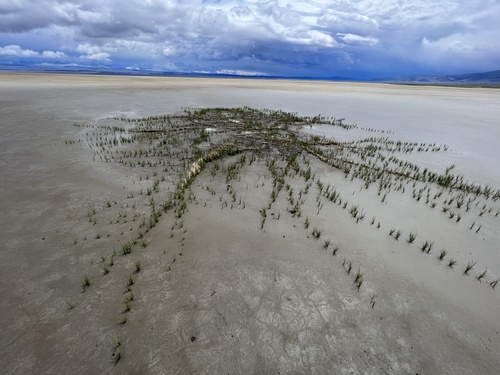
Distichlis spicata, commonly called saltgrass, is a low, wiry perennial grass in the Poaceae, usually 4-16 inches (10-40 cm) tall, that spreads aggressively by tough rhizomes and stolons to form dense sod. The stiff, narrow leaves are 1-4 inches (2.5-10 cm) long, grey-green, and arranged in two neat rows along the stem, giving a flattened, comb-like shoot. It is dioecious, with male and female spikelets on separate plants in compact, straw-coloured to pale-green seed heads through summer. As a halophyte it tolerates salt that kills most plants, excreting excess salt through tiny leaf glands that leave a thin white crust on the foliage. It grows on salt marshes, coastal flats, alkaline and saline soils, beach edges, and disturbed roadsides, often in pure stands where little else survives. The rhizomes bind soil strongly, which suits erosion control but makes the grass hard to remove once established and able to overrun smaller plants.
Native Range
Native across much of North America, along the Atlantic and Pacific coasts and through interior salt flats and alkaline basins of the western United States, Mexico, and beyond. It grows on coastal salt marshes, tidal flats, inland saline and alkaline soils, and disturbed ground where salinity is high.Suggested Uses
Used for erosion control, soil stabilisation, and revegetation of salt marshes, coastal dunes, and saline or alkaline ground, as well as for low-water turf alternatives, planted or plugged 12-18 inches (30-45 cm) apart. It suits sites too salty or alkaline for most plants. The aggressive rhizomatous spread makes it poorly suited to mixed borders or small gardens.How to Identify
Appearance
Size & Dimensions
Height4" - 1'4"
Bloom Information
Seed heads form in summer, mainly June through August, on separate male and female plants. Wind-pollinated and without showy flowers, the compact spikelets ripen from green to straw colour. The dried heads persist into autumn before shattering.
Detailed Descriptions
Flower Description
pale green to strawFoliage Description
grey-greenGrowing Conditions
Sun Requirements
Requires 6-12 hours of direct sunlight daily
• Full Sun: 6+ hours of direct sunlight
• Partial Shade: 3-6 hours of direct sunlight
• Full Shade: Less than 3 hours of direct sunlight
Care & Maintenance
Care Guide
Grows in full sun on a wide range of soils, including sandy, clay, saline, and strongly alkaline ground, over a pH from about 6.0 to 9.0. It tolerates salt spray, brackish flooding, drought, and compacted soil, conditions that exclude most grasses. Water needs are low once established, though it also withstands periodic inundation. It spreads quickly by rhizome and needs no fertiliser on saline sites. Hardy in USDA zones 6-10, it is grown chiefly for erosion control and salt-tolerant ground cover rather than ornament.Pruning
Needs little maintenance. Old top growth is mowed or cut back in late winter before new shoots emerge. Rhizomes that spread beyond the intended area are cut off or edged to limit the colony.Pruning Schedule
Prune: March
winter