Disphyma, Genus, crassifolium, Species,
- Genus & species
purple dewplant
Overview
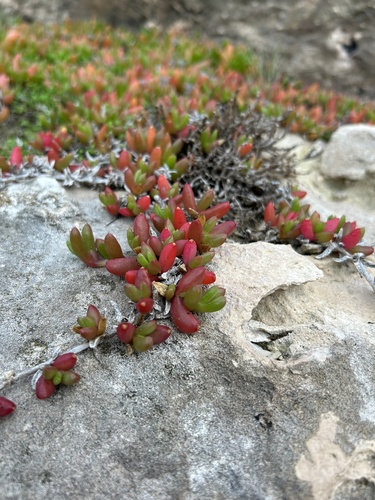
Disphyma crassifolium is an evergreen succulent groundcover in the Aizoaceae forming dense mats 2-4 inches (5-10 cm) tall and spreading 3-6 feet (0.9-1.8 m) wide. Trailing stems root where they touch the soil. Leaves are fleshy and three-angled in cross-section, 0.8-1.6 inches (2-4 cm) long, green to grey-green, often flushed red under drought or salt stress. Daisy-like flowers 0.6-1 inch (1.5-2.5 cm) across open on sunny days from spring into summer, with many narrow petals in shades of pink to purple surrounding a paler centre. Flowers close in dull weather and at night. The fruit is a woody capsule that opens when wet to release seed. Growth is rapid in warm conditions, with stems extending several inches per month. The shallow root system tolerates salt spray and saline soils. Mats can smother low neighbouring plants, and old centres become bare and woody with age.
Native Range
Native to southern Australia, including coastal South Australia, Victoria, Tasmania, and southern Western Australia, and also occurring in South Africa. Grows on coastal cliffs, dunes, saltmarsh margins, and saline flats in full sun.Suggested Uses
Planted as a groundcover and soil binder on coastal banks, dunes, and dry slopes, spaced 18-24 inches (45-60 cm) apart for cover within a season. Used in rock gardens, green roofs, and saline or seaside plantings. Grows in containers and hanging baskets where the stems trail over the edge.How to Identify
Appearance
Size & Dimensions
Height2" - 4"
Width/Spread3' - 6'
Colors
Bloom Information
Flowers from September to January, with peak bloom in spring and early summer. Individual flowers last several days, opening in sun and closing at night; the overall display extends 8-12 weeks. Flowering is sparse in shade and in cool coastal summers.
Detailed Descriptions
Flower Description
Pink to purpleFoliage Description
Green to grey-greenGrowing Conditions
Sun Requirements
Requires 6-12 hours of direct sunlight daily
• Full Sun: 6+ hours of direct sunlight
• Partial Shade: 3-6 hours of direct sunlight
• Full Shade: Less than 3 hours of direct sunlight
Care & Maintenance
Care Guide
Grows in full sun in sandy, sharply drained soil, including saline and alkaline sites. Water occasionally to establish, then little to no irrigation is needed; the plant stores water in its leaves and tolerates extended drought. Wet, poorly drained soils and high humidity cause stem and root rot. Salt spray and coastal wind cause no damage to the foliage. Frost burns exposed foliage in inland areas. Mats can be trimmed back from paths and neighbouring plants as they spread.Pruning
Trim runners at any time during the growing season to contain spread. Cut back bare, woody centres in spring to bring fresh growth from the margins. Removed stem sections root readily when pressed into moist soil.Pruning Schedule
Prune: September–October
spring
Container Growing
Suitable for container growing
Minimum container size: 2 gallons