Dipogon, Genus, lignosus, Species,
- Genus & species
okie bean
Overview
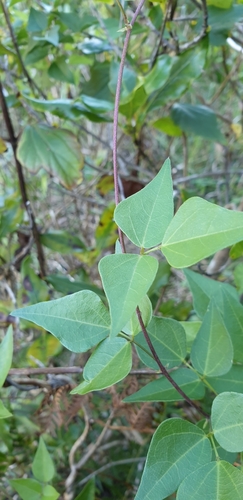
Dipogon lignosus is an evergreen twining vine in the family Fabaceae, native to South Africa. Stems are slender and woody at the base, climbing 6–10 feet (1.8–3 m) by twining over supports and other vegetation. The leaves are divided into three diamond-shaped leaflets, each 1–2 inches (2.5–5 cm) long, on slender stalks. Pea-shaped flowers are pink to rose-purple, about 0.5 inch (12–15 mm) long, carried in small clusters of three to twelve through spring and summer. Flat seed pods 1.5–2 inches (4–5 cm) long follow and contain several hard seeds. The vine grows quickly and forms dense tangles over fences, shrubs, and small trees. In Australia it is naturalised and listed as an environmental weed in parts of New South Wales, Victoria, South Australia, and Western Australia, where it smothers native vegetation. It tolerates a range of soils and dry periods once established. Because it climbs and self-seeds without restraint, it spreads well beyond where it is planted and is difficult to remove once settled.
Native Range
Dipogon lignosus is native to the Cape region of South Africa. It has naturalised in several mild-climate regions, including parts of Australia, New Zealand, and the western United States, where it grows along forest margins, roadsides, and disturbed ground.Suggested Uses
Historically grown as an ornamental climber on fences and trellises in mild-climate gardens. In many regions its weed status has ended its use in cultivation. Where grown, it covers fences and screens within a single season.How to Identify
Appearance
Size & Dimensions
Height6' - 10'
Width/Spread3' - 6'
Bloom Information
Detailed Descriptions
Flower Description
pink to rose-purpleFoliage Description
greenGrowing Conditions
Sun Requirements
Requires 4-8 hours of direct sunlight daily
• Full Sun: 6+ hours of direct sunlight
• Partial Shade: 3-6 hours of direct sunlight
• Full Shade: Less than 3 hours of direct sunlight
Care & Maintenance
Care Guide
Dipogon lignosus grows in full sun to part shade in most well-drained soils and climbs on a fence, trellis, or other support. It is drought-tolerant once established and tolerates coastal exposure. The vine grows rapidly and self-seeds, so it spreads into surrounding vegetation without containment. Cutting stems back hard and taking off seed pods limits its spread. It is frost-tender and damaged by hard frost. In regions where it is a declared weed, planting is restricted under state laws.Pruning
Cut Dipogon lignosus back hard at any time of year to control its size and spread. Take off seed pods before they ripen to reduce self-seeding. Stems regrow quickly from the woody base after cutting.Pruning Schedule
Prune: June–July
winterearly spring