Dipodium, Genus, spp., Multiple species,
- Genus
- Multiple species
hyacinth orchid
Australia, Southeast Asia, New Guinea, Pacific
Overview
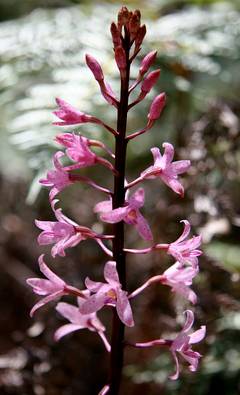
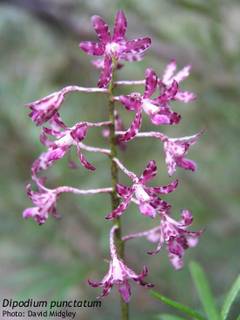
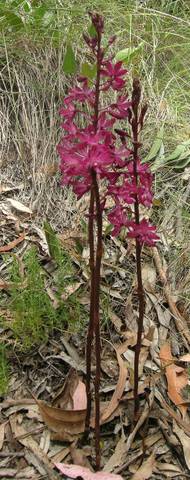
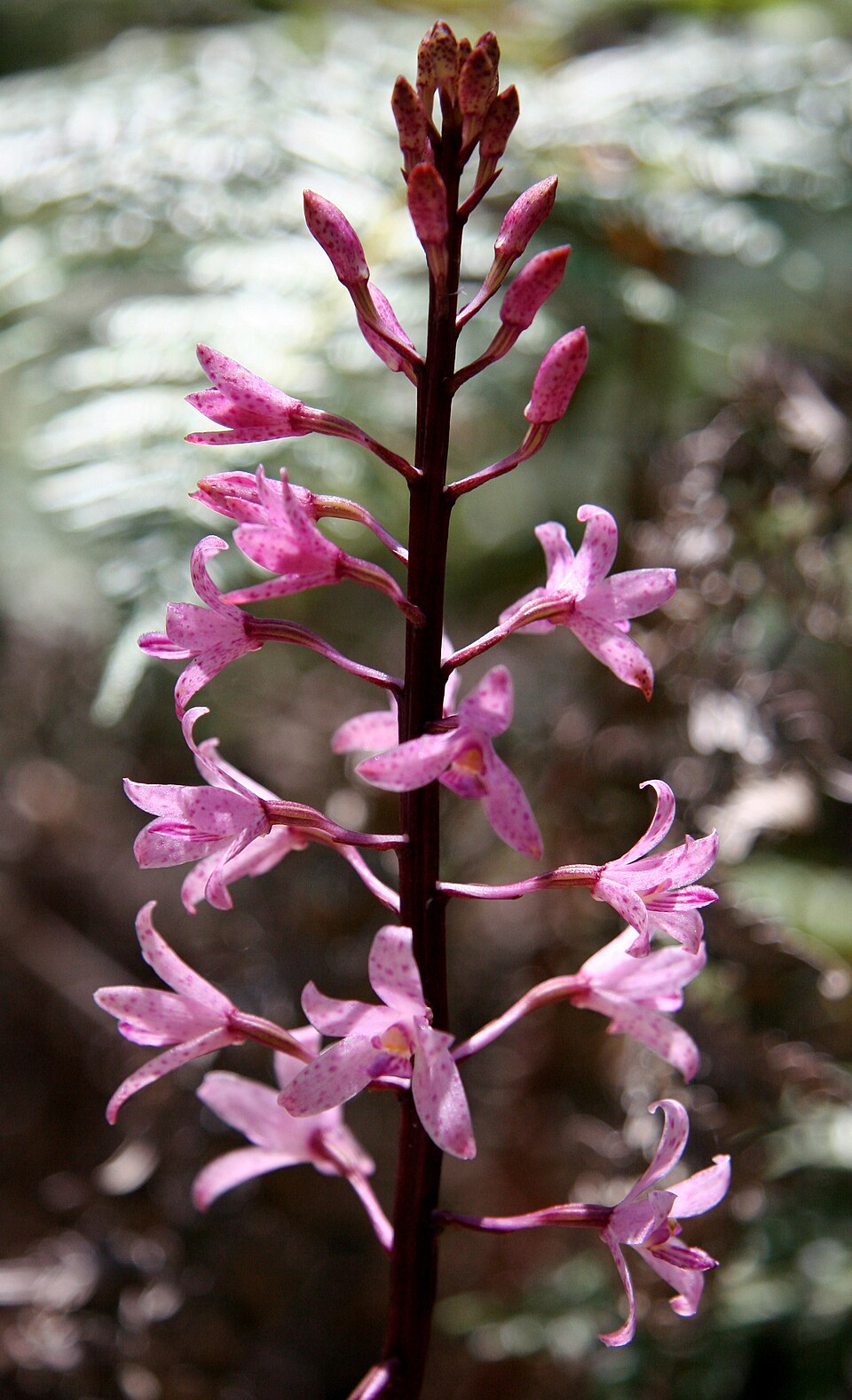
Dipodium is a genus of about 25 orchid species in Australia, Southeast Asia, and the western Pacific, made up of two contrasting groups. Most Australian species, such as D. punctatum and D. roseum (hyacinth orchids), are leafless mycoheterotrophs that draw carbon from soil fungi linked to tree roots and appear only as flowering spikes 12-39 inches (30-100 cm) tall in summer. The remaining species, including D. pictum and D. ensifolium, are leafy plants with cane-like stems that climb or scramble over rocks and trees in tropical forest. Flowers are carried in upright or arching racemes and range from pink with darker spots to cream, white, and yellow-spotted forms. The leafless mycoheterotrophic species cannot be transplanted or cultivated because they depend on a specific fungal partner. Leafy species grow as terrestrial or epiphytic orchids in warm, humid forest. Capsules release dust-like seed dispersed by wind.
Native Range
Dipodium is native to Australia, Southeast Asia, New Guinea, and Pacific islands, in habitats from dry eucalypt woodland to tropical rainforest. The leafless species are tied to forests where their host fungi and associated trees grow.Suggested Uses
Leafy Dipodium species are grown by orchid specialists as potted or mounted plants in warm, humid conditions. The leafless hyacinth orchids are seen in the wild, where their summer spikes rise in eucalypt woodland, rather than in cultivation.How to Identify
Appearance
Size & Dimensions
Height1' - 6'
Width/Spread1' - 2'
Bloom Information
The leafless Australian species flower in summer, December to February in their native range, sending up spotted spikes after warm rains. Leafy tropical species flower across the warmer months, often more than once a year. Each spike carries many flowers that open in succession over several weeks.
Detailed Descriptions
Flower Description
pink with darker spots, cream, white, or yellow-spottedFoliage Description
green in leafy species; leafless in mycoheterotrophic speciesGrowing Conditions
Sun Requirements
Requires 2-6 hours of direct sunlight daily
• Full Sun: 6+ hours of direct sunlight
• Partial Shade: 3-6 hours of direct sunlight
• Full Shade: Less than 3 hours of direct sunlight
Care & Maintenance
Care Guide
Across Dipodium cultivation depends on the group. The leafless mycoheterotrophic species cannot be grown in gardens because they rely on a living link to soil fungi and host trees and die when dug or disturbed. Leafy species grow as warm-climate terrestrial or epiphytic orchids in coarse, free-draining orchid media or mounted on bark, in bright shade with high humidity and regular watering during growth. All species need frost-free conditions and steady warmth. Drainage is sharp and stagnant moisture around roots leads to rot. The leafless species are left undisturbed where they appear in native woodland.Pruning
No pruning applies to the leafless species, which consist only of seasonal flower spikes. On leafy species, spent flower spikes can be cut back once flowering ends, and dead canes removed at the base. Damaged or diseased growth is trimmed with clean tools to limit infection.Container Growing
Suitable for container growing
Minimum container size: 2 gallons