Dietes, Genus, spp., Multiple species,
- Genus
- Multiple species
fortnight lilies
Eastern and southern Africa, and Lord Howe Island
Overview
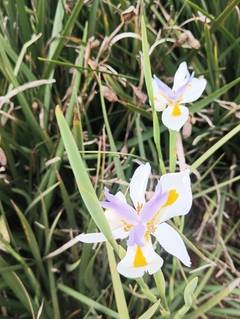
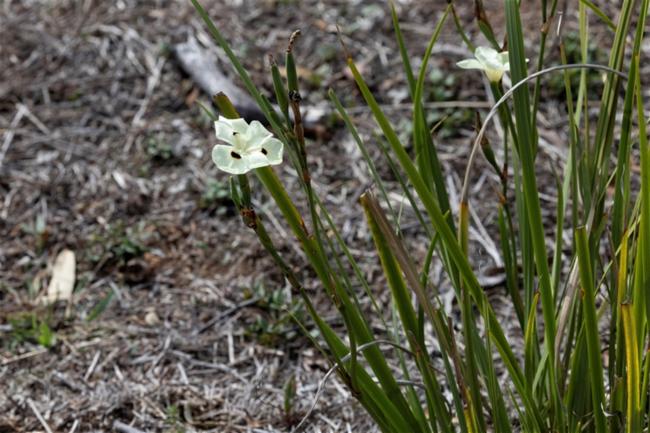
Dietes is a genus of six species of rhizomatous evergreen perennials in the iris family (Iridaceae), commonly called fortnight lilies or African irises. Five species are native to eastern and southern Africa, and one, D. robinsoniana, is restricted to Lord Howe Island. Plants form upright clumps of stiff, sword-shaped leaves arranged in a flat fan, reaching 24-48 inches (60-120 cm) tall. The iris-like flowers are 2-4 inches (5-10 cm) across, in white, cream, or yellow, with contrasting orange, brown, or violet markings at the base of the outer segments. Each flower lasts a single day, but plants open new flowers in flushes roughly every one to two weeks through the warm season, which gives rise to the common name. Branched flower stalks persist for several seasons and produce buds in successive years. The genus tolerates drought, poor soil, and low maintenance once established, and stays evergreen in mild climates. Frost below about 25F (-4C) damages the foliage, limiting outdoor use to USDA zones 8-11. Plants spread slowly by rhizome to form dense colonies and can self-sow where conditions suit.
Native Range
Five of the six species are native to eastern and southern Africa, ranging from Ethiopia south to South Africa in grassland, woodland, and forest margins. The sixth species, D. robinsoniana, occurs only on Lord Howe Island in the Tasman Sea.Suggested Uses
Fortnight lilies are planted in mixed borders, mass plantings, and low-water and coastal gardens, spaced 18-24 inches (45-60 cm) apart. The upright evergreen fans are used along driveways, in median strips, and around pools where tough, low-maintenance plants are wanted. Compact clumps grow in large containers on patios and terraces.How to Identify
Appearance
Size & Dimensions
Height2' - 4'
Width/Spread1'6" - 3'
Bloom Information
Flowering occurs mainly in spring and summer, and continues nearly year-round in frost-free climates. Flushes of bloom open at intervals of one to two weeks, each individual flower lasting only a day. Cooler weather slows or halts the flushes until warmth returns.
Detailed Descriptions
Flower Description
white, cream, or yellow with orange, brown, or violet markingsFoliage Description
greenGrowing Conditions
Sun Requirements
Requires 5-10 hours of direct sunlight daily
• Full Sun: 6+ hours of direct sunlight
• Partial Shade: 3-6 hours of direct sunlight
• Full Shade: Less than 3 hours of direct sunlight
Care & Maintenance
Care Guide
Dietes species grow in full sun to part shade in most well-drained soils across a pH range of 5.5-7.5 and tolerate clay, sand, and periods of drought once established. Plants are watered to establish but afterward need little added irrigation, which suits them to low-water and coastal plantings. They are hardy in USDA zones 8-11 and recover from frost damage by resprouting from the rhizome in spring. Few pests trouble them, though crown rot can occur in waterlogged ground. The old flower stems are left in place because they re-bloom, and clumps are lifted and divided every few years to manage size. Plants in containers grow well in zones below 8 if sheltered over winter.Pruning
Spent individual flowers drop on their own, while the branched flower stems are retained rather than cut, since they produce buds again the following year. Old, browned outer leaves are pulled or trimmed at the base to tidy the fan. Overgrown clumps are divided in spring or autumn to renew them.Pruning Schedule
Prune: March & October
early springfall
Container Growing
Suitable for container growing
Minimum container size: 3 gallons