Image 1 of 14
1 / 14
Plant Reference
Dierama, Genus, pulcherrimum, Species,
- Genus & species
Angel's fishing rod
Eastern South Africa (Eastern Cape, KwaZulu-Natal) and adjacent Lesotho and Eswatini (moist grasslands at 3,000-6,500 feet / 900-2,000 m)
Overview
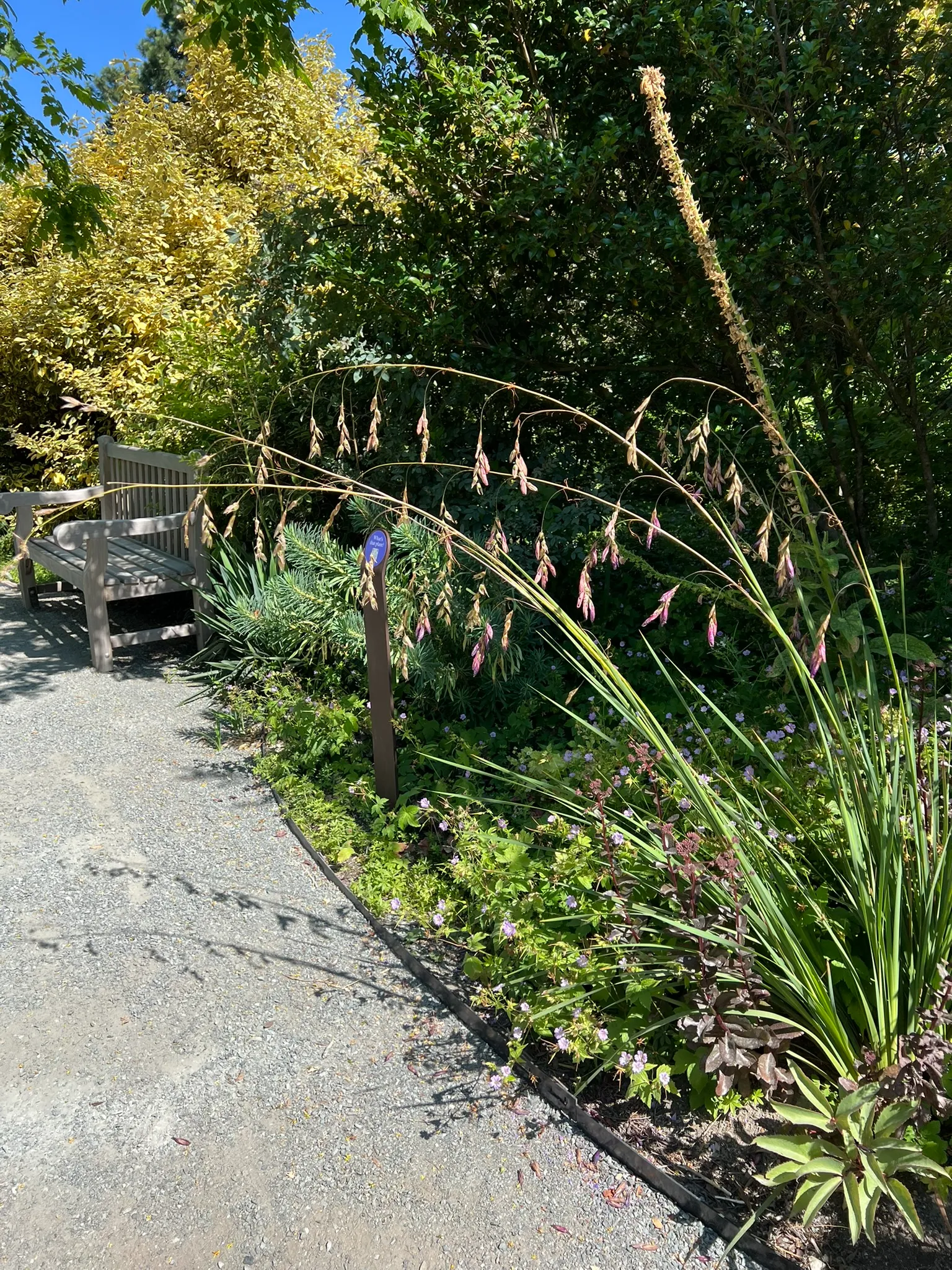
Dierama pulcherrimum is a cormous evergreen perennial in the iris family (Iridaceae) reaching 36–60 inches (90–150 cm) tall with a spread of 18–24 inches (45–60 cm). Pendant bell-shaped magenta-pink to purple-pink flowers 1 inch (2.5 cm) long hang on long arching wiry stems that sway in the slightest air movement in summer (June–August). The common name 'angel's fishing rod' and the alternate name 'wandflower' both reference the arching stem architecture that resembles a fishing rod. The specific epithet 'pulcherrimum' is a Latin superlative form. Dark green narrow grass-like evergreen foliage 18–24 inches (45–60 cm) long arises in clumps from deep-set corms. The genus contains approximately 44 species, all native to sub-Saharan Africa. Corms are deep-set and fragile — the plant resents transplanting and root disturbance once established, and post-division re-establishment can take 2–3 years before flowering resumes. Consistent moisture is required during the growing season, reflecting the moist-grassland native habitat of eastern South Africa; prolonged drought is not tolerated. The species self-sows in garden conditions where seedlings can find suitable germination sites. Hummingbird-visited. Non-toxic. Deer-resistant. Growth rate is slow to moderate. Hardy to zone 7.
Native Range
Dierama pulcherrimum is native to eastern South Africa (Eastern Cape and KwaZulu-Natal provinces) and adjacent Lesotho and Eswatini, where it occurs in moist grasslands at elevations of 3,000–6,500 feet (900–2,000 m).Suggested Uses
Grown at water-feature edges, in mixed borders, and in container culture in 7 gallon (26 L) or larger pots in zones 7–10. Planting positions with air movement produce the characteristic stem-sway motion that defines the ornamental effect of the species; sheltered still-air positions still flower but lose the kinetic quality that makes this species memorable in the garden. Once installed, the plant is not moved — permanent placement at installation avoids the 2–3 year flowering delay that follows transplanting or division. Consistent moisture is required through the growing season, so drought-prone beds and xeric garden contexts are not suitable. Hummingbird visitation suits this species to wildlife-garden planting schemes alongside Salvia and Monarda.How to Identify
Appearance
Size & Dimensions
Height3' - 5'
Width/Spread1'6" - 2'
Bloom Information
Pendant magenta-pink to purple-pink bell-shaped flowers 1 inch (2.5 cm) long open on long arching wiry stems in June–August. Bloom duration is 4–5 weeks. Stems sway in the slightest air movement, which produces constant motion in the bloom display that reads differently from static flower forms. Hummingbird-visited. Self-sowing occurs where soil and moisture conditions suit germination.
Detailed Descriptions
Flower Description
Magenta-pink to purple-pink; pendant bell-shaped 1 inch long on arching wiry stemsFoliage Description
Dark green, narrow grass-like 18-24 inches long, evergreen, arising in clumps from deep-set cormsGrowing Conditions
Sun Requirements
Requires 6-10 hours of direct sunlight daily
• Full Sun: 6+ hours of direct sunlight
• Partial Shade: 3-6 hours of direct sunlight
• Full Shade: Less than 3 hours of direct sunlight
Care & Maintenance
Care Guide
Grows in full sun in moist well-drained soil at pH 5.5–7.0, tolerating loam. Hardy to zone 7. Consistent moisture is required during the growing season, reflecting the moist-grassland native habitat; summer drought produces stress that shortens bloom display and weakens the corm over time. The deep-set corms are fragile and resent transplanting — once the plant is established, root disturbance and division should be deferred indefinitely unless colony crowding forces the issue. Post-division re-establishment takes 2–3 years before flowering resumes. The grass-like foliage is evergreen and stays at 18–24 inches through winter in zone-7 gardens where hard freezes do not kill the top growth. Non-toxic. Deer-resistant. No serious pest or disease problems.Pruning
Spent flower stems are cut at the base after bloom to tidy the clump and prevent seed dispersal in gardens where self-sowing is not wanted. Tattered foliage is trimmed in late winter (February). The evergreen foliage is otherwise left intact; cutting to the ground removes the photosynthetic structure the corms need to rebuild reserves for the next bloom cycle.Pruning Schedule
Prune: February
winter
Container Growing
Suitable for container growing
Minimum container size: 7 gallons