Dicranum, Genus, spp., Multiple species,
- Genus
- Multiple species
Forkmosses
Northern Hemisphere temperate and boreal forests
Overview
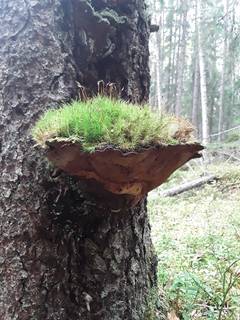
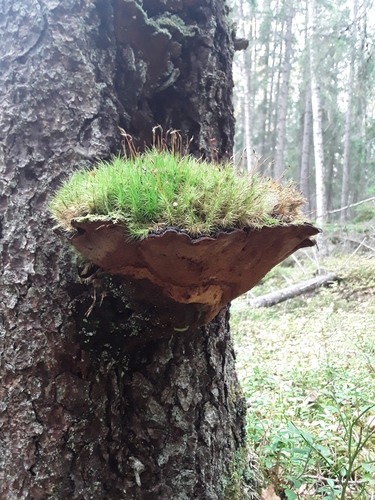
Dicranum is a genus of about 90 to 160 species of mosses in the family Dicranaceae, found chiefly in the temperate and boreal forests of the Northern Hemisphere, with scattered species elsewhere. These are non-vascular plants that form dense cushions, turfs, and mats 0.4-6 inches (1-15 cm) deep on soil, rotting logs, tree bases, and rock in shaded, humid, often acidic habitats. The narrow leaves are 0.2-0.5 inch (5-13 mm) long and frequently curved and swept to one side, giving the cushions a combed or windblown look that is the source of the broom-moss and forkmoss names. Like all mosses, Dicranum has no true roots, flowers, or seeds; it anchors by thread-like rhizoids and reproduces through spores. Spore capsules are raised on slender stalks (setae) 0.4-1.6 inches (1-4 cm) tall and are cylindrical and often curved and inclined, ripening from green to brown. The plants take up water and nutrients directly over their surfaces and depend on rainfall and humidity rather than soil moisture. D. scoparium, the broom forkmoss, is a frequently encountered woodland species. Cushions can be slow to recover where they are trampled or stripped.
Native Range
Dicranum species occur across the Northern Hemisphere, with the greatest number in the temperate and boreal forests of North America, Europe, and Asia, and a smaller number in cool montane regions of the Southern Hemisphere. They grow naturally in coniferous and mixed woodland, on heaths, and in bogs.Suggested Uses
Dicranum is used in shade and woodland moss gardens, on the floor of terrariums and vivariums, and to green logs, stone, and bonsai displays in humid settings. The dense cushions form a low evergreen carpet where grass will not grow. Collected sustainably, the genus is used in Japanese-style moss gardens.How to Identify
Appearance
Size & Dimensions
Height1" - 6"
Width/Spread6" - 2'
Colors
Foliage Colors
Fall Foliage Colors
Bloom Information
As a moss, Dicranum does not flower; it reproduces by spores rather than seed. Spore capsules mature mainly in summer and autumn, releasing spores when the air is dry. Fertilization of egg by sperm occurs earlier, in moist spring and autumn conditions, before the stalked capsules develop.
Detailed Descriptions
Foliage Description
green to yellow-greenGrowing Conditions
Sun Requirements
Tolerates up to 4 hours of direct sunlight daily
• Full Sun: 6+ hours of direct sunlight
• Partial Shade: 3-6 hours of direct sunlight
• Full Shade: Less than 3 hours of direct sunlight
Care & Maintenance
Care Guide
These mosses grow in shade to part shade and constant humidity, on acidic substrates such as peaty soil, decaying wood, and rock, at a pH near 4.5 to 6.0. They draw moisture from rain, dew, and humid air over their whole surface and need no fertile soil or feeding. Steady moisture and low foot traffic keep cushions intact, while drought, deep shade with stagnant air, and pollution thin them. In cultivated moss gardens they are laid on firmed, weed-free ground and misted until established. Direct hot sun and alkaline conditions damage the cushions. Recovery after disturbance is slow because growth adds only a small amount each year.Pruning
Mosses are not pruned. Maintenance consists of clearing fallen leaves and debris that would smother the cushions and block light. Torn or lifted patches are pressed back onto the surface, where they re-anchor by rhizoids over time.Container Growing
Suitable for container growing