Dichondra, Genus, carolinensis, Species,
- Genus & species
Carolina ponysfoot
Overview
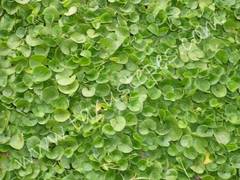
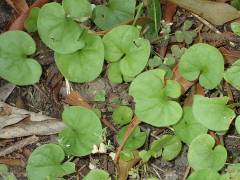
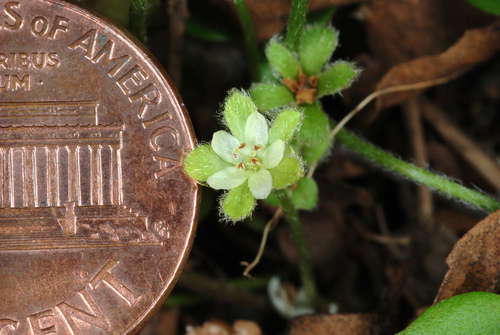
Dichondra carolinensis is a low, mat-forming perennial in the morning glory family, spreading by creeping stems that root at the nodes to form a dense ground layer rarely more than 2-3 inches (5-8 cm) tall. The leaves are kidney- to fan-shaped, 0.4-1 inch (1-2.5 cm) wide, bright green, and held more or less flat on slender stalks. Tiny greenish-white flowers about 0.1 inch (2-3 mm) across appear singly in the leaf axils from spring through summer and are easily overlooked. It grows in moist, shaded to partly sunny ground, including lawns, woodland edges, ditches, and disturbed soil across the southeastern United States. The plant spreads by stolons and seed, forming patches that knit together over moist soil. It often appears as a volunteer in irrigated lawns and beds, where it can spread between other plantings. Foliage stays green through mild winters in the South and may die back in colder spells. It tolerates light foot traffic and mowing but needs steady moisture, thinning in hot, dry, fully exposed sites. The two rounded carpels of its small fruit distinguish it from similar creeping plants.
Native Range
Native to the southeastern United States, from Virginia and Kentucky south to Florida and west to Texas, with related species in warmer regions.Suggested Uses
Used as a low groundcover or lawn substitute in shaded to partly sunny areas of the warm South. Planted between stepping stones and along moist, shaded paths. Suited to filling bare ground where steady moisture is available.How to Identify
Appearance
Size & Dimensions
Height2" - 3"
Width/Spread1' - 2'
Bloom Information
Detailed Descriptions
Foliage Description
bright greenGrowing Conditions
Sun Requirements
Requires 3-6 hours of direct sunlight daily
• Full Sun: 6+ hours of direct sunlight
• Partial Shade: 3-6 hours of direct sunlight
• Full Shade: Less than 3 hours of direct sunlight
Care & Maintenance
Care Guide
Grows in part shade to full sun in moist, well-drained soil, holding color most fully with steady moisture. It tolerates light foot traffic and low mowing, which suits it to use as a lawn substitute in mild regions. Plants spread by rooting stems to fill in bare ground and need little feeding. In hot, dry, exposed sites the foliage thins and browns. It can spread into adjacent beds, so its edges are trimmed to keep it contained. Propagation is from seed or by separating rooted stems.Pruning
No formal pruning is required. Creeping stems can be trimmed at bed edges to limit spread. Mowing or shearing keeps a planted patch low and even.Container Growing
Suitable for container growing
Minimum container size: 1 gallons