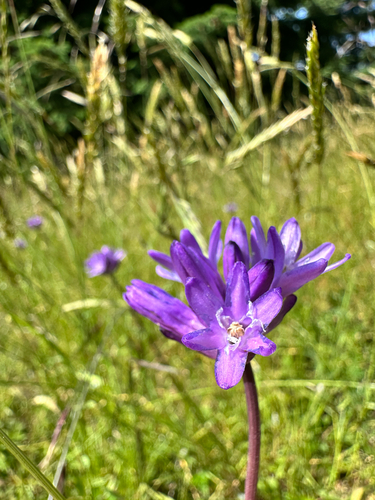
Dichelostemma, Genus, congestum, Species,
- Genus & species
Ookow
Western North America (British Columbia to N California; dry meadows, oak savannas)
Overview
Dichelostemma congestum is an upright, cormous, herbaceous perennial reaching 24–36 inches (60–90 cm) tall with a spread of 3–4 inches (8–10 cm) per corm. This Pacific Northwest native bulb produces dense, rounded umbels 1.5–2 inches (4–5 cm) across of tubular, blue-violet to purple-blue flowers atop slender, leafless stems in May–June. Each flower is 0.5–0.75 inch (1–2 cm) long with six tepals. The narrow, grass-like basal leaves 12–18 inches (30–45 cm) long emerge in early spring and die back before or during flowering—by bloom time the foliage may already be yellowing. The corms are small, 0.5–1 inch (1–2.5 cm), and multiply slowly by offsets. Goes completely dormant by midsummer—requires dry summer conditions (the corm rots in summer-irrigated gardens). Growth rate is slow. Native to dry, grassy meadows where summers are rainless.
Native Range
Dichelostemma congestum is native to western North America, from British Columbia south through Washington, Oregon, and northern California, in dry, grassy meadows, oak savannas, and rocky prairies below 5,000 feet (1,500 m). The common name 'ookow' derives from the Maidu people of California.Suggested Uses
Planted in native meadow restorations, dry rock gardens, and unirrigated borders at 4–6 inch (10–15 cm) spacing (plant in groups of 10–25 for visual effect). The blue-violet flowers fill the late spring gap in dry-summer gardens. Functions in gravel gardens and green roofs with summer-dry regimes. Interplant with grasses and other dry-summer-dormant bulbs (Triteleia, Brodiaea, Calochortus). Not suitable for irrigated beds, moist soils, or shade.How to Identify
Appearance
Size & Dimensions
Height2' - 3'
Width/Spread3" - 4"
Bloom Information
Dense, rounded umbels 1.5–2 inches (4–5 cm) across of tubular, blue-violet to purple-blue flowers appear in May–June. Bloom duration is 2–3 weeks. The foliage may be senescent by bloom time.
Detailed Descriptions
Flower Description
Blue-violet to purple-blue, tubular, dense rounded umbelsFoliage Description
Green, narrow grass-like basal leaves (senesce before/during bloom)Growing Conditions
Sun Requirements
Requires 6-12 hours of direct sunlight daily
• Full Sun: 6+ hours of direct sunlight
• Partial Shade: 3-6 hours of direct sunlight
• Full Shade: Less than 3 hours of direct sunlight
Care & Maintenance
Care Guide
Plant corms 3–4 inches (8–10 cm) deep in fall in full sun in well-drained soil. Dry summer dormancy is essential—summer irrigation rots the corms. Suited to unirrigated areas, rock gardens with dry summers, and meadow restorations. Hardy to zone 5. No fertilization needed. No serious pest or disease problems. Gopher-resistant (corms are reportedly unpalatable).Pruning
No pruning required. Allow the foliage to die back naturally—do not remove green leaves. The plant is completely dormant from midsummer through winter.Container Growing
Suitable for container growing
Minimum container size: 1 gallons