Desmanthus, Genus, illinoensis, Species,
- Genus & species
Illinois bundleflower
Central United States, Great Plains and prairies
Overview
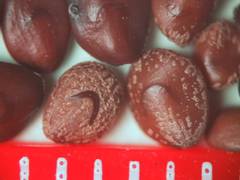
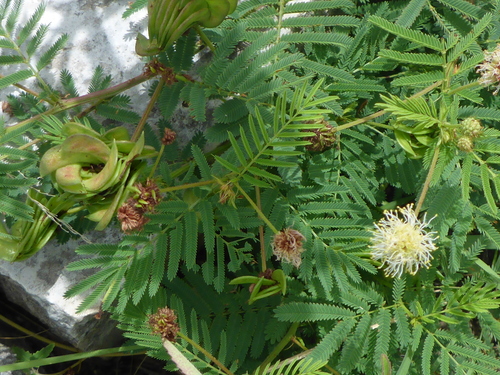
Desmanthus illinoensis is an upright herbaceous perennial legume 2-4 feet (60-120 cm) tall, growing in clumps from a deep taproot. The bipinnately compound leaves are fern-like, 2-4 inches (5-10 cm) long, divided into many small leaflets that fold partly closed when touched or at night. From early to mid summer, small white to greenish-white flowers gather in dense round heads about 0.5 inch (1.3 cm) across on long stalks from the leaf axils. Each pollinated head develops into a tight cluster of flat, curved, dark brown seedpods that twist and curl as they dry, rattling in wind and holding through winter. As a legume it fixes nitrogen and grows on lean prairie soils. The plant is high in protein and grazed by livestock and wildlife, and the seeds feed birds and small mammals. It spreads by seed and colonizes prairies, roadsides, and stream banks across the central United States. One trade-off is the loose, open habit, since stems lean and sprawl in rich soil or shade and stand upright only on lean, sunny sites.
Native Range
Native to the central United States, from the Great Plains east to Ohio and south to Texas, with scattered populations beyond. It grows on prairies, glades, roadsides, stream banks, and disturbed open ground.Suggested Uses
Used in prairie restorations, native meadows, erosion control, and forage and wildlife plantings. It is grown as a nitrogen-fixing legume in mixed grassland seedings and as winter seed for birds.How to Identify
Appearance
Size & Dimensions
Height2' - 4'
Width/Spread1'6" - 3'
Bloom Information
Round white to greenish-white flower heads open from June to August on stalks rising from the leaf axils. Each head blooms briefly, and a plant flowers over several weeks. Pods begin forming soon after and ripen to dark brown by fall.
Detailed Descriptions
Flower Description
White to greenish-whiteFoliage Description
GreenGrowing Conditions
Sun Requirements
Requires 6-12 hours of direct sunlight daily
• Full Sun: 6+ hours of direct sunlight
• Partial Shade: 3-6 hours of direct sunlight
• Full Shade: Less than 3 hours of direct sunlight
Care & Maintenance
Care Guide
Grows in full sun in well-drained sandy, loamy, or rocky soils at pH 6.0-8.0, and tolerates drought and lean ground once the taproot is set. It fixes its own nitrogen and needs no fertilizer, leaning and sprawling on rich or shaded sites. Hardy in zones 4-8, it dies back to the root each winter and returns in spring. Seed sprouts more readily after scarification, and seedlings build root before much top growth. Established clumps reseed and persist for years.Pruning
Maintenance is minimal. Old stems are cut to the ground in late winter before new shoots rise. Seed heads can be left for winter interest and for birds or removed to limit self-sowing.Pruning Schedule
Prune: February–March
winter