Image 1 of 20
1 / 20
Plant Reference
Davidia, Genus, involucrata, Species,
- Genus & species
dove tree
Central and western China in Sichuan, Hubei, and Yunnan provinces; mountain forests at 3,000-7,500 feet (900-2,300 m) elevation
Overview
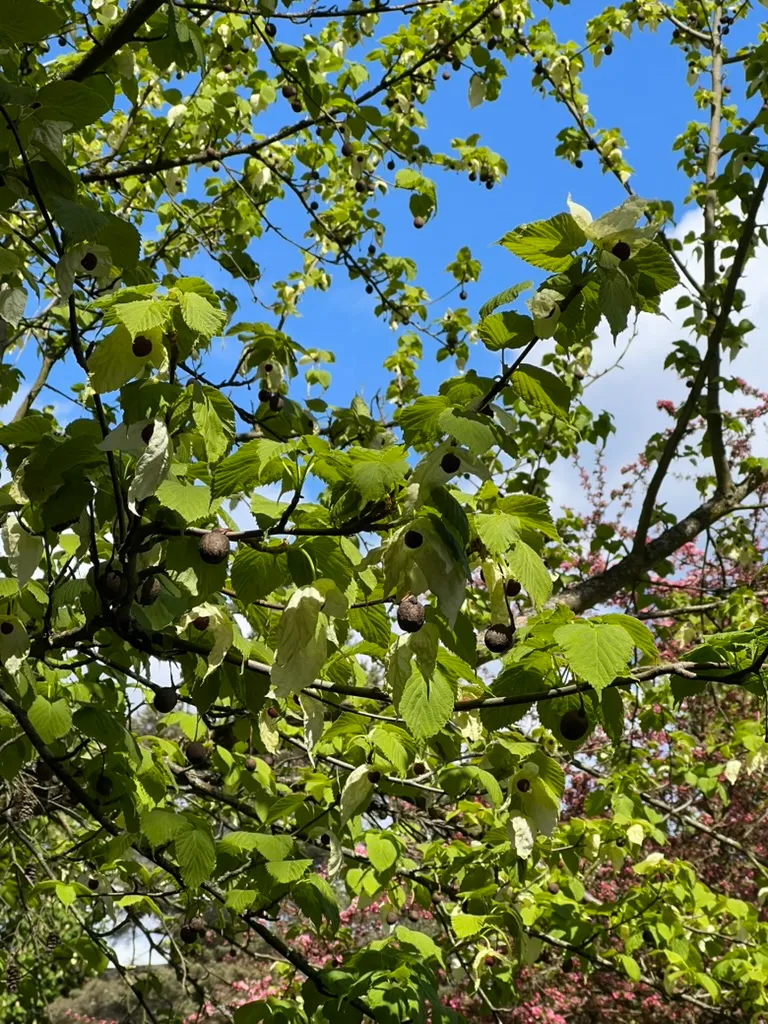
Davidia involucrata is a deciduous tree in the family Cornaceae (occasionally placed in Nyssaceae in earlier classifications) reaching 40–60 feet (12–18 m) tall and 25–40 feet (7.5–12 m) wide with an upright pyramidal to broadly oval crown. The genus is monotypic, meaning Davidia involucrata is the only species. Leaves are heart-shaped, 3–6 inches (7–15 cm) long, dark green on the upper surface with a downy white underside, and carry coarsely serrated margins. The inflorescence is the feature that has carried the tree into cultivation: each small red-purple flower cluster 0.75 inch (2 cm) across is subtended by two asymmetric white papery bracts, one short at about 3 inches (7 cm) and one long at about 7 inches (18 cm), that hang below the flower ball and flutter in the slightest breeze across a 2-week bloom in May, giving the branches the appearance of white doves or hanging handkerchiefs. Round green-brown drupes 1.5 inches (4 cm) across on long pendant stalks develop through summer and persist into fall. The species was first described to Western science by the French missionary and naturalist Père Armand David in 1869 and introduced to Western cultivation by Ernest Wilson in 1901. Variety vilmoriniana, distinguished by smoother (rather than downy) leaf undersides, is the form in general horticultural cultivation. Limitation: seed-grown trees take 10–20 years to reach first bloom, grafted trees shorten this juvenile phase to 5–7 years, and the species is not drought-tolerant, so established trees require supplemental irrigation during extended dry periods.
Native Range
Native to central and western China in Sichuan, Hubei, and Yunnan provinces, growing in mountain forests at 3,000–7,500 feet (900–2,300 m) elevation. The genus is monotypic and D. involucrata is the only species.Suggested Uses
Used as a specimen tree in large residential gardens, parks, and public landscapes with 25–40 feet (7.5–12 m) of lateral space and protection from drought. The May bracts supply a single-feature spring display that develops at an age dependent on propagation method (10–20 years from seed, 5–7 years from grafted stock), and the tree is positioned where the fluttering bracts will be noticed against a darker background of conifers or walls. Small gardens, drought-prone sites, and hedge or screen plantings are unsuitable because of the mature size and the water requirement.How to Identify
Appearance
Size & Dimensions
Height40' - 60'
Width/Spread25' - 40'
Bloom Information
Inflorescences open in May over about 2 weeks. Each small red-purple flower ball 0.75 inch (2 cm) across is subtended by two asymmetric white papery bracts, one 3 inches (7 cm) long and one 7 inches (18 cm) long, that hang below the flower cluster and flutter in wind through the bloom period. Round green-brown drupes 1.5 inches (4 cm) across develop through summer on long pendant stalks and persist into fall.
Detailed Descriptions
Flower Description
two asymmetric white papery bracts (one 3 inches / 7 cm long, one 7 inches / 18 cm long) hanging below a central ball of red-purple true flowers 0.75 inch (2 cm) acrossFoliage Description
dark green; heart-shaped with coarsely serrated margins, 3-6 inches (7-15 cm) long, with a downy white underside; turns yellow in fallGrowing Conditions
Sun Requirements
Requires 4-8 hours of direct sunlight daily
• Full Sun: 6+ hours of direct sunlight
• Partial Shade: 3-6 hours of direct sunlight
• Full Shade: Less than 3 hours of direct sunlight
Care & Maintenance
Care Guide
Site in full sun to partial shade with 4–8 hours of direct sun per day in well-drained acidic to neutral soil with a pH of 5.5–7.0. The species is not drought-tolerant, and established trees require supplemental irrigation during extended dry periods. No significant diseases or pests affect D. involucrata in cultivation. Seed-grown trees take 10–20 years to reach first bloom from germination, while grafted trees shorten this juvenile phase to 5–7 years, so grafted stock is chosen for gardens where the bracts are the reason for planting. Hardy in USDA zones 6–9.Pruning
Pruning is done in late winter (February and March) while the tree is dormant. A strong central leader is developed in the first 5–10 years to build an upright pyramidal framework, and dead, crossing, or damaged branches can be removed at the same time. Mature trees require little pruning because the natural upright form develops without shaping.Pruning Schedule
Prune: February–March
early spring