Dasyochloa, Genus, pulchella, Species,
- Genus & species
fluffgrass
Southwestern United States and northern Mexico
Overview
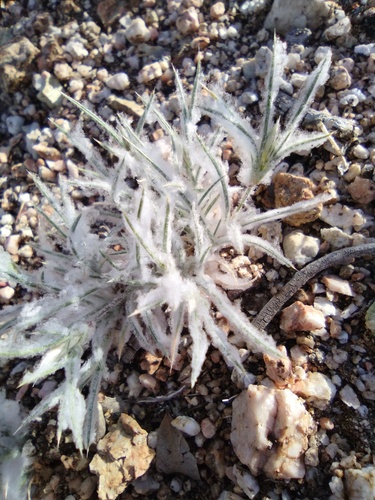
Dasyochloa pulchella is a small, tufted perennial grass of North American deserts, forming low cushions usually 2-6 inches (5-15 cm) tall that spread by short, arching stolons rooting at the tips to create open mats. The narrow leaf blades are stiff, gray-green, 0.4-1.5 inches (1-4 cm) long, with rough margins and curled tips, and they cluster at the bases and stolon nodes. Dense, woolly white flower clusters sit nearly hidden among the upper leaves, giving the plant its fluffgrass name; the soft hairs surround small spikelets and persist as the seed ripens. D. pulchella grows from shallow fibrous roots on gravelly and rocky desert soils, calcareous flats, and slopes, often on disturbed or eroded ground where larger plants are sparse. It greens up and flowers in response to rainfall at almost any season and turns straw-colored and dormant during drought. Its very low stature and sparse cover give little forage value and modest erosion control. In cultivation it is grown mainly in desert and gravel plantings, where it tolerates intense heat, drought, and poor soil but resents irrigation and rich ground.
Native Range
Dasyochloa pulchella is native to the arid southwestern United States and northern Mexico, including the Mojave, Sonoran, and Chihuahuan deserts from California east to Texas. It grows on gravelly and rocky desert flats, calcareous slopes, and disturbed ground.Suggested Uses
D. pulchella is used in desert gardens, gravel plantings, and restoration seeding of arid, eroded sites where few other grasses persist. Its low mats help bind loose mineral soil on slopes. The small stature and sparse cover suit ground-level desert plantings rather than ornamental borders.How to Identify
Appearance
Size & Dimensions
Height2" - 6"
Width/Spread6" - 1'
Bloom Information
D. pulchella flowers opportunistically after rainfall, which can fall in spring, summer, or autumn depending on the desert region. The woolly white clusters appear among the leaves within weeks of soaking rain and persist as dry tufts after the seed ripens. Between rains the plant turns straw-colored and pauses growth.
Detailed Descriptions
Foliage Description
Gray-greenGrowing Conditions
Sun Requirements
Requires 6-12 hours of direct sunlight daily
• Full Sun: 6+ hours of direct sunlight
• Partial Shade: 3-6 hours of direct sunlight
• Full Shade: Less than 3 hours of direct sunlight
Care & Maintenance
Care Guide
D. pulchella grows in full sun on sharply drained gravelly, rocky, or calcareous soil with a neutral to alkaline pH of 7.0-8.5. It withstands extreme heat, drought, and nutrient-poor ground, greening up only when rain arrives. Irrigation, rich soil, and shade weaken it and shorten its life. It establishes from seed scattered on bare mineral soil and spreads slowly by rooting stolons. No fertilizer is needed in its native desert soils. Pests and diseases are rare in its dry, open habitat.Pruning
D. pulchella needs no pruning. The dried tufts can be cleared after seed drops, though leaving them allows reseeding and protects the soil surface. Spreading stolons can be trimmed to keep the mat within bounds.Container Growing
Suitable for container growing
Minimum container size: 1 gallons