Dasylirion, Genus, spp., Multiple species,
- Genus
- Multiple species
sotols
Overview
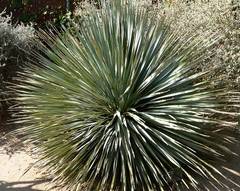
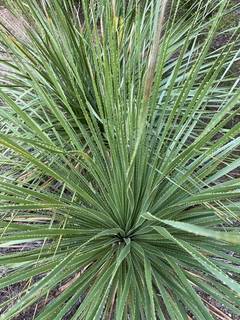
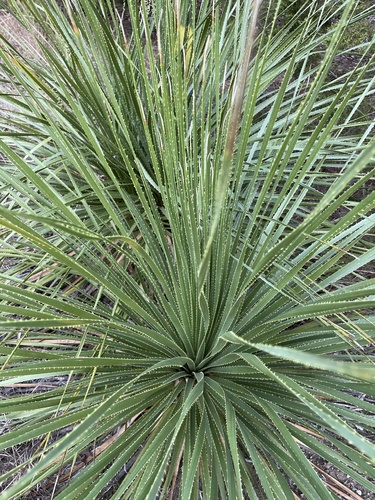
Dasylirion is a genus of about 20 species of evergreen, rosette-forming plants in the family Asparagaceae, native to the arid grasslands and rocky slopes of the southwestern United States and Mexico. Known as sotols or desert spoons, plants form a dense, near-spherical rosette of many narrow, stiff leaves rising from a short, slowly thickening trunk that may reach 3-6 feet (0.9-1.8 m) over decades. Leaves are 2-3 feet (60-90 cm) long, less than 1 inch (2.5 cm) wide, and edged with curved teeth; the expanded, spoon-shaped leaf bases give the common name desert spoon. Mature rosettes span 3-5 feet (0.9-1.5 m) across. The genus is dioecious, with male and female flowers on separate plants. Flowering rosettes send up a slender stalk 9-20 feet (2.7-6 m) tall carrying thousands of small cream to pale yellow flowers in a dense plume. Unlike agaves, a sotol rosette survives after flowering and blooms again in later years. D. wheeleri is harvested in Mexico to distil the spirit sotol. Plants grow slowly, tolerate intense heat and drought, and withstand cold to about 0 to 10 degrees F (minus 18 to minus 12 C) once established. Sharp leaf teeth limit placement near walkways.
Native Range
Dasylirion is native to northern and central Mexico and the adjacent southwestern United States, including Texas, New Mexico, and Arizona. Plants grow on rocky desert slopes, limestone hills, and arid grassland between roughly 3,000 and 7,000 feet (900-2,100 m). The genus does not occur naturally outside this region.Suggested Uses
Dasylirion is planted as an accent in xeriscape, gravel, and desert gardens, and in large containers. The rosette form is used in rock gardens and along arid borders. D. wheeleri is also grown and harvested for sotol production in Mexico.How to Identify
Appearance
Size & Dimensions
Height3' - 6'
Width/Spread3' - 5'
Colors
Bloom Information
Mature plants flower in late spring and summer, often May to July, though individual rosettes may skip years between blooms. The tall flowering stalk holds cream to pale yellow flowers for several weeks. Male and female flowers occur on separate plants, so seed forms only where both sexes grow nearby.
Detailed Descriptions
Flower Description
cream to pale yellowFoliage Description
blue-green to gray-greenGrowing Conditions
Sun Requirements
Requires 6-12 hours of direct sunlight daily
• Full Sun: 6+ hours of direct sunlight
• Partial Shade: 3-6 hours of direct sunlight
• Full Shade: Less than 3 hours of direct sunlight
Care & Maintenance
Care Guide
Dasylirion species grow in full sun on sharply drained, gritty or rocky soil and tolerate prolonged drought once established. They withstand intense summer heat and reflected heat near paving. Water needs are very low, and soggy soil causes root and crown rot. Most species accept soil pH from about 6.0 to 8.0. Cold hardiness varies, with D. wheeleri and D. texanum hardy to roughly 0 degrees F (minus 18 C) and other species more frost-sensitive. Growth is slow, and plants need little feeding.Pruning
Old, dried lower leaves can be removed to expose the developing trunk. Spent flower stalks are cut near the base after seed drops. Routine pruning is otherwise unnecessary.Container Growing
Suitable for container growing
Minimum container size: 10 gallons