Image 1 of 18
1 / 18
Plant Reference
Dasiphora, Genus, fruticosa, Species,
- Genus & species
potentilla, cinquefoil
Circumpolar across North America, Europe, and Asia; arctic, subarctic, and alpine habitats including meadows, stream banks, and rocky slopes
Overview
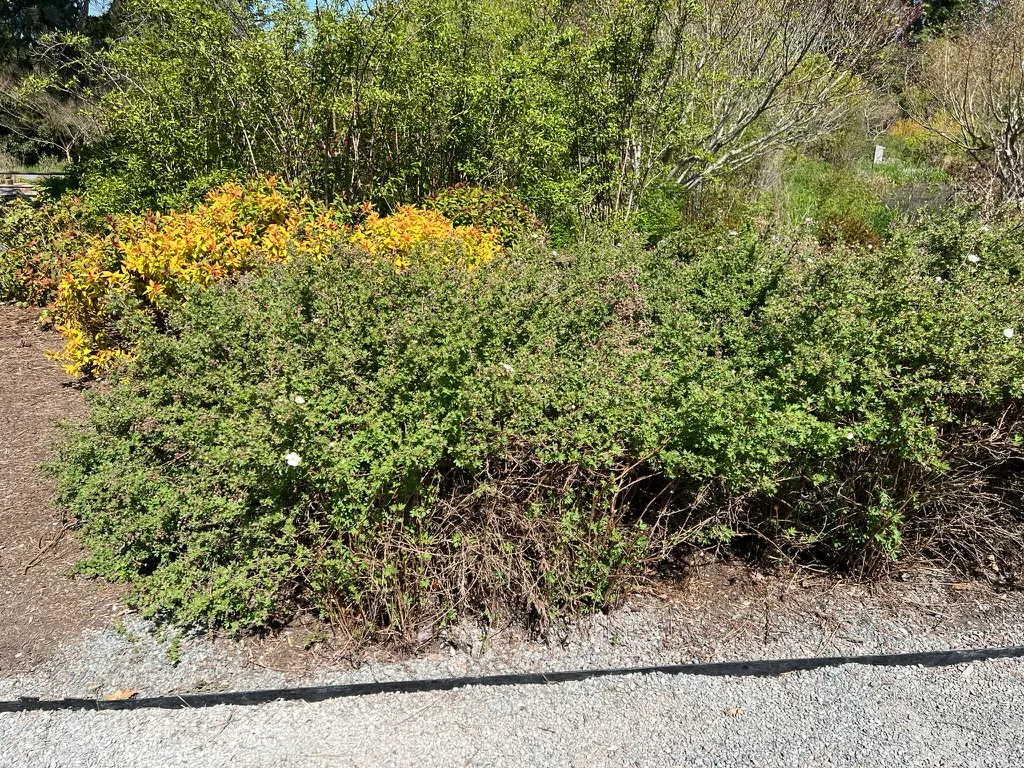
Dasiphora fruticosa is a compact mounding deciduous shrub in the family Rosaceae, formerly classified as Potentilla fruticosa and still commonly sold under that name in the nursery trade, reaching 2–4 feet (60–120 cm) tall and 3–5 feet (90–150 cm) wide. Leaves are pinnately compound with 5–7 leaflets each 0.5–0.75 inch (1.3–2 cm) long, gray-green, silky-hairy, and finely textured; the foliage turns yellow in fall. Five-petaled flowers 0.75–1 inch (2–2.5 cm) across appear in clear yellow in the species and in white, cream, pink, or orange in named cultivars. Blooms continuously from June through October, a span of 20 weeks on current-season wood, and the flowers draw bees and butterflies across the full period. The species is circumpolar across North America, Europe, and Asia in arctic, subarctic, and alpine habitats and is hardy to USDA zone 2, withstanding extreme cold, alkaline soil, drought, wind, and poor rocky substrates. Limitation: pink and orange cultivars including 'Pink Beauty' and 'Tangerine' fade toward white or pale yellow in sustained summer heat above 85°F (29°C), yellow cultivars and the species type hold their color in heat, and spider mites cause stippled foliage in hot dry conditions without overhead irrigation or rainfall to rinse the leaves.
Native Range
Circumpolar across the Northern Hemisphere, native to North America, Europe, and Asia. Grows in arctic, subarctic, and alpine habitats including mountain meadows, stream banks, rocky slopes, and tundra, ranging from sea level in high-latitude regions to 12,000 feet (3,650 m) in temperate mountain ranges.Suggested Uses
Used as a low hedge, mass planting, foundation planting, and rock garden specimen at 3–5 foot (0.9–1.5 m) spacing. Container culture is possible in pots of at least 5 gallons (19 L). The continuous summer-through-fall bloom period supplies 20 weeks of flower color in climates where most summer-flowering shrubs bloom for 4–6 weeks. Yellow cultivars and the species type are the stable choices for hot-summer climates because the pink and orange cultivars fade in sustained heat.How to Identify
Appearance
Size & Dimensions
Height2' - 4'
Width/Spread3' - 5'
Bloom Information
Five-petaled flowers 0.75–1 inch (2–2.5 cm) across open continuously from June through October on current-season wood, a span of about 20 weeks. Flower color is clear yellow in the species and white, cream, pink, or orange in named cultivars. Pollination is by bees and butterflies. No ornamental fruit follows.
Detailed Descriptions
Flower Description
clear yellow in the species; 5-petaled, 0.75-1 inch (2-2.5 cm) across; cultivars range through white, cream, pink, and orangeFoliage Description
gray-green; silky-hairy, pinnately compound with 5-7 leaflets each 0.5-0.75 inch (1.3-2 cm) long; finely textured; turns yellow in fallGrowing Conditions
Sun Requirements
Requires 4-12 hours of direct sunlight daily
• Full Sun: 6+ hours of direct sunlight
• Partial Shade: 3-6 hours of direct sunlight
• Full Shade: Less than 3 hours of direct sunlight
Care & Maintenance
Care Guide
Site in full sun to partial shade with 4–12 hours of direct sun per day in well-drained soil with a pH of 5.5–7.5. The species tolerates alkaline, rocky, clay, sandy, and poor soils and is drought-tolerant once established. Full sun produces the most saturated cultivar color; pink and orange cultivars shift toward white or pale yellow in sustained heat above 85°F (29°C), while yellow cultivars hold color through summer. Spider mites cause stippled foliage in hot dry conditions. Bloom occurs on current-season wood, so pruning is done in early spring (February and March) before new growth emerges. Hardy in USDA zones 2–7. Routine fertilization is not required.Pruning
Pruning is done in early spring (February and March) before new growth emerges because the shrub blooms on current-season wood. Hard renewal pruning cuts all stems back to 6–12 inches (15–30 cm) above ground to rebuild a compact framework, or one-third of the oldest stems can be removed each year as gradual renovation. Shearing is tolerated for formal low hedges; the species recovers from heavy pruning and replaces stems within a single growing season.Pruning Schedule
Prune: February–March
early spring
Container Growing
Suitable for container growing
Minimum container size: 5 gallons