Image 1 of 16
1 / 16
Plant Reference
Darmera, Genus, peltata, Species,
- Genus & species
umbrella plant
Pacific Coast mountains — southwestern Oregon (Klamath Mountains) to northern California; stream banks, wet meadows, and waterfall spray zones at mid-elevations
Overview
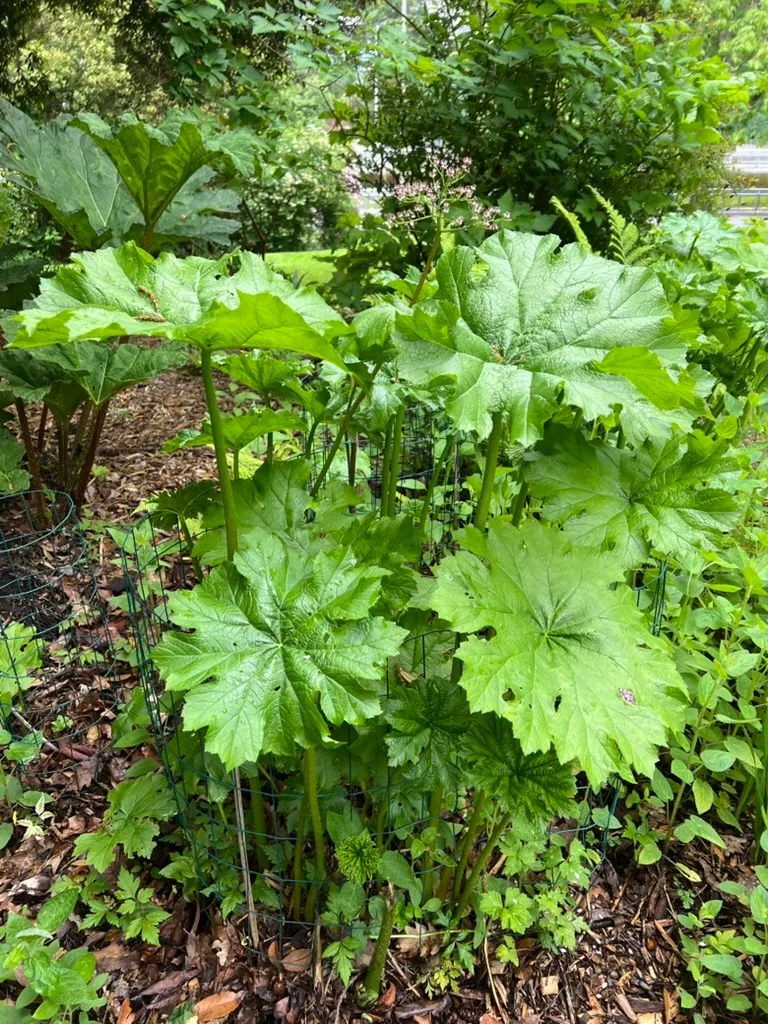
Darmera peltata is umbrella plant (Indian rhubarb), a large spreading deciduous perennial growing 3-6 feet (0.9-1.8 m) tall and 3-6 feet (0.9-1.8 m) wide. Pink flowers in rounded clusters 4-6 inches (10-15 cm) on bare leafless stalks 2-3 feet (0.6-0.9 m) in March-April (2 weeks) — the flowers appear before the leaves. Very large dark green rounded peltate (umbrella-shaped) leaves 12-24 inches (30-60 cm) across — the leaf stalk attaches to the center of the blade. Turns red, copper, and bronze in fall. In Saxifragaceae. Peltata = shield-shaped. Formerly Peltiphyllum peltatum. Native to stream banks in the Klamath Mountains of southwestern Oregon and northern California. Spreads by thick surface rhizomes 2-4 inches (5-10 cm) in diameter. Requires consistently wet to boggy soil — not drought-tolerant. This wet-soil requirement is the primary limitation. The very large leaf size (12-24 inches / 30-60 cm) and the spreading rhizomes demand ample space. A monotypic genus (one species only). Deer-resistant. Non-toxic. Zones 5-9. Part shade to full sun (with consistent moisture). Growth rate is moderate.
Native Range
Native to the Pacific Coast mountains — southwestern Oregon (Klamath Mountains) to northern California. Found on stream banks, wet meadows, and waterfall spray zones at mid-elevations.Suggested Uses
Grown along stream banks, pond margins, rain gardens, and boggy sites spaced 3-6 feet (0.9-1.8 m). Giant umbrella leaves. Red-copper-bronze fall color. Requires wet soil. Native to Pacific Northwest. Non-toxic. Zones 5-9.How to Identify
Appearance
Size & Dimensions
Height3' - 6'
Width/Spread3' - 6'
Bloom Information
Early to mid spring (March-April). Pink flowers in rounded clusters 4-6 inches (10-15 cm) on bare leafless stalks. 2 weeks. Flowers appear before the umbrella leaves emerge. Bee-visited.
Detailed Descriptions
Flower Description
Pink, in rounded clusters 4-6 inches (10-15 cm) on bare leafless stalks 2-3 feet (0.6-0.9 m) in March-April — the flowers appear before the leaves emergeFoliage Description
Dark green, very large, rounded, peltate (umbrella-shaped — the stalk attaches to the center of the leaf blade), 12-24 inches (30-60 cm) across, with scalloped margins; turns red, copper, and bronze in fallGrowing Conditions
Sun Requirements
Requires 4-6 hours of direct sunlight daily
• Full Sun: 6+ hours of direct sunlight
• Partial Shade: 3-6 hours of direct sunlight
• Full Shade: Less than 3 hours of direct sunlight
Care & Maintenance
Care Guide
Part shade to full sun (4-6 hours — full sun only with consistently wet soil). Consistently wet to boggy soil pH 5.5-7.0. Not drought-tolerant. Spreads by thick surface rhizomes — allow ample space. Cut dead foliage in late fall (November) or early spring (February). Deer-resistant. Non-toxic. Zones 5-9.Pruning
Cut dead foliage to ground in late fall (November) or early spring (February). No other pruning needed. Thin rhizome spread if the colony exceeds desired area — cut sections of the thick surface rhizome with a sharp spade.Pruning Schedule
Prune: February & November
fallearly spring