Daphniphyllum, Genus, macropodum, Species,
- Genus & species
Himalayan daphniphyllum
Japan, Korea, China (understory positions in temperate and subtropical forests)
Overview
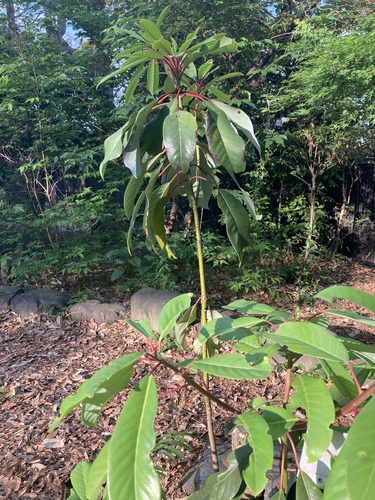
Daphniphyllum macropodum is a large upright-to-rounded broadleaf evergreen shrub or small tree in its own family (Daphniphyllaceae) reaching 15–25 feet (4.5–7.5 m) tall with a spread of 10–20 feet (3–6 m). The genus is unrelated to Daphne despite the common name; the botanical name refers to the laurel-like (daphne-like) leaf shape, not to taxonomic proximity. Leaves are the primary ornamental feature: oblong-elliptic, 4–8 inches (10–20 cm) long and 1.5–2.5 inches (4–6 cm) wide, dark green above with a blue-green to glaucous underside, arranged in whorls at the branch tips that read as rhododendron-like in leaf arrangement. New growth emerges with reddish-pink petioles and midribs, which produces a subtle color accent against the dark mature foliage. Flowers are small inconspicuous greenish axillary clusters in May; the species is dioecious (male and female flowers on separate plants). Female plants produce small blue-black drupes 0.3 inch (8 mm) in fall when a male pollinator is within flight range. Growth rate is moderate. Hardy to zone 7. The species tolerates deep shade, which places it above most large broadleaf evergreens in shade-tolerance rating. No serious pest or disease problems.
Native Range
Daphniphyllum macropodum is native to Japan, Korea, and China, where it occurs as an understory shrub or small tree in temperate and subtropical forests.Suggested Uses
Grown as a shade-tolerant screen, background plant, or understory specimen at 8–12 foot (2.4–3.6 m) spacing. The large rhododendron-like evergreen foliage with blue-green leaf undersides carries year-round structure in deep-shade garden positions where few large evergreens thrive, which positions this species as a functional replacement for rhododendrons on neutral-to-slightly-alkaline soils where the ericaceous plants fail. The clean pest-free foliage requires minimal maintenance and holds through the growing season without spotting or dieback. Full-sun positions, exposed windy sites, and cold zones below 7 are not suitable given the shade-adapted leaf structure, the wind-desiccation sensitivity, and the borderline cold-hardiness.How to Identify
Appearance
Size & Dimensions
Height15' - 25'
Width/Spread10' - 20'
Bloom Information
Small inconspicuous greenish flowers open in axillary clusters in May. The species is dioecious — male flowers carry prominent stamens and female flowers are smaller. Female plants produce small blue-black drupes 0.3 inch (8 mm) in fall when a male plant is within pollinator flight range. Bloom duration is 2 weeks. Flower display is secondary to the year-round foliage interest.
Detailed Descriptions
Foliage Description
Dark green above with blue-green to glaucous undersides; reddish-pink new petioles and midribs; oblong-elliptic 4-8 inches longGrowing Conditions
Sun Requirements
Requires 1-4 hours of direct sunlight daily
• Full Sun: 6+ hours of direct sunlight
• Partial Shade: 3-6 hours of direct sunlight
• Full Shade: Less than 3 hours of direct sunlight
Care & Maintenance
Care Guide
Grows in partial to full shade in moist well-drained humus-rich soil at pH 5.5–7.5, tolerating loam. Hardy to zone 7. The species tolerates deep shade, which places it above most large broadleaf evergreens in shade-tolerance; few evergreens of this mature scale carry deep-shade tolerance as a reliable trait. Cold dry winter winds produce desiccation damage on the large leaves, and sheltered positions hold the foliage in better condition through the dormant season. The pH tolerance range at 5.5–7.5 is wider than the ericaceous acid-only range of rhododendrons, which extends planting contexts to neutral to slightly alkaline soils. No serious pest or disease problems. Slow to establish — 3–5 years of steady growth before the plant reaches visible form.Pruning
Minimal pruning is required. Dead or damaged branches are removed as they appear. The plant can be limbed up progressively over 5–10 years to expose the trunk and reveal the whorled branching pattern, which converts a shrub form into a small-tree presentation. The species responds to rejuvenation pruning when older specimens decline. Pruning is done in early spring (February–March) before bud break.Pruning Schedule
Prune: March
early spring