Image 1 of 17
1 / 17
Plant Reference
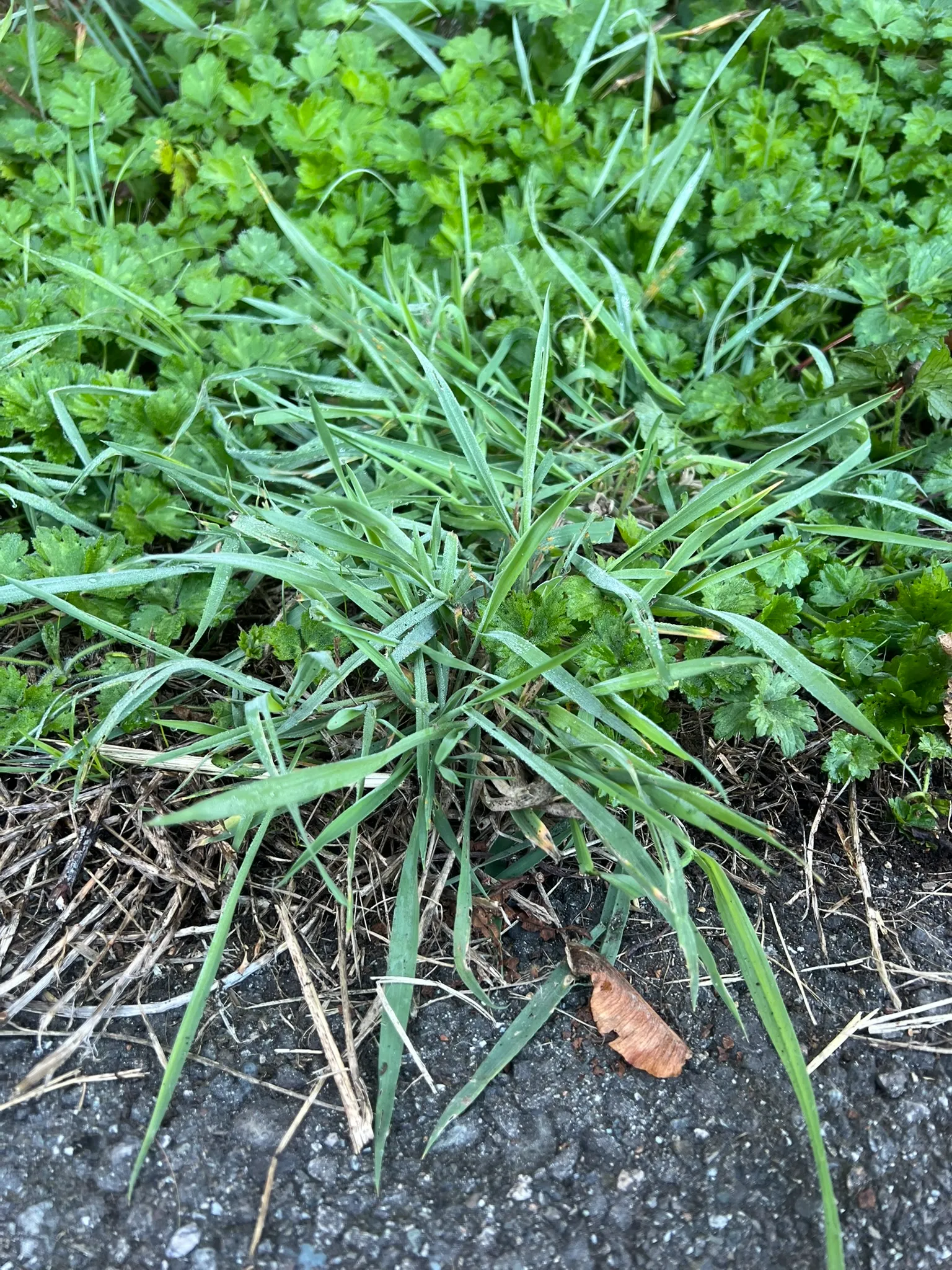
Dactylis, Genus, glomerata, Species,
- Genus & species
orchard grass
Europe, western Asia, North Africa; naturalized across temperate regions globally; introduced to North America in the 1750s
Overview
Dactylis glomerata is a cool-season perennial grass in the family Poaceae forming dense clumps (tussocks) 24–48 inches (60–120 cm) tall and 12–18 inches (30–45 cm) wide, globally cultivated as a major pasture and hay species and widely naturalized across temperate regions. Stems are erect, slender, and terminate in dense one-sided panicles 3–6 inches (8–15 cm) long with spikelets bunched in tight glomerules — the specific epithet 'glomerata' translates as 'clustered' and references this tight glomerule arrangement. Leaves are flat, conduplicate (V-folded) in the bud, 0.2–0.4 inch (5–10 mm) wide, blue-green to medium green, and carry a rough texture on the upper surface from minute silica hairs. The genus Dactylis is monotypic, containing only this one species. The pollen is a major grass allergen responsible for a substantial proportion of seasonal hay fever across temperate North America and Europe. The British common name 'cock's foot' references the resemblance of the spikelet cluster to a rooster's foot. More shade-tolerant than most cool-season grasses, a trait carried in the American common name 'orchard grass' — the species grows beneath fruit-tree canopies where other pasture grasses fail. Established tussocks can exclude other grass species through canopy shading and dense root occupation. The species was introduced to North America in the 1750s and is now established across all 50 U.S. states and all Canadian provinces. Not known to be toxic to pets or humans — a major livestock forage.
Native Range
Dactylis glomerata is native to Europe, western Asia, and North Africa, occurring in meadows, pastures, and woodland margins from sea level to approximately 8,000 feet (2,400 m) elevation. The species was introduced to North America in the 1750s as a pasture grass and has naturalized across all 50 U.S. states and all Canadian provinces. It is globally naturalized across temperate regions including Australia, New Zealand, and temperate South America.Suggested Uses
Grown as a major temperate-region pasture and hay grass on several million acres globally — alongside Lolium perenne, Festuca arundinacea, and Phleum pratense in the principal cool-season forage species. Used for erosion control on slopes through the tussock-forming root mass, and in orchard-understory plantings where the species's shade tolerance exceeds other pasture grasses. In Pacific Northwest Douglas-fir regeneration sites, the species is a persistent early-successional colonizer that competes with conifer seedlings and requires mechanical or herbicide control during the first 2–3 years after planting. The species is unsuitable for positions near outdoor living areas due to the major hay-fever pollen load and for ornamental landscape plantings where grass diversity is the goal.How to Identify
Appearance
Size & Dimensions
Height2' - 4'
Width/Spread1' - 1'6"
Bloom Information
Dense one-sided panicles 3–6 inches (8–15 cm) long with spikelets bunched in tight glomerules appear from May through July in USDA zones 3–9 over a 3–4 week window. Individual panicles bloom over 5–10 days. The pollen release is heavy and wind-dispersed during the morning hours of warm dry days and carries a major allergenic load for hay-fever sufferers across temperate North America and Europe. Cool Pacific Northwest summers extend the flowering into late July in shaded sites.
Detailed Descriptions
Flower Description
Green to purplish-green; dense one-sided panicles 3-6 inches long with spikelets in tight glomerules; wind-pollinated May-JulyFoliage Description
Blue-green to medium green; flat 0.2-0.4 inch wide; conduplicate (V-folded) in the bud — the principal vegetative identification characterGrowing Conditions
Sun Requirements
Requires 4-10 hours of direct sunlight daily
• Full Sun: 6+ hours of direct sunlight
• Partial Shade: 3-6 hours of direct sunlight
• Full Shade: Less than 3 hours of direct sunlight
Care & Maintenance
Care Guide
Grow in full sun to partial shade with 4 or more hours of direct light in well-drained loam, sandy loam, or clay loam at pH 6.0–7.5. The species is more shade-tolerant than most cool-season pasture grasses, producing acceptable pasture biomass at 30–40% full sun under orchard canopies where Lolium perenne or Festuca rubra would fail. In pasture management, rotational grazing at 6-week intervals maintains productive tussocks; continuous grazing depletes root reserves and thins the stand. In meadow-restoration use, the species is cut once annually in August after seed set and cut material is removed to prevent soil enrichment. The pollen is a major hay-fever allergen across temperate regions, so the species is unsuitable for positions near outdoor living areas in residential settings. Established plants are drought-tolerant once the tussock is fully rooted after the second growing season.Pruning
Mowing to 3–4 inch (8–10 cm) stubble after flowering in July reduces self-seeding and maintains pasture productivity. In meadow-restoration plantings, the species is left standing through winter for structural interest and bird cover, then cut to ground level in March before new growth resumes. Cut plant material is removed from the site in meadow-restoration contexts to prevent soil nitrogen enrichment that favors nitrophile weed species over meadow diversity.Pruning Schedule
Prune: March
early spring