Image 1 of 14
1 / 14
Plant Reference
Daboecia, Genus, cantabrica, Species,
- Genus & species
Irish heath
Atlantic coast of western Europe — western Ireland (Connemara in County Galway), the Iberian Peninsula (the Cantabrian Mountains of northern Spain and parts of Portugal), and the Azores; acidic heathlands, bogs, and rocky moorlands at low to middle elevations
Overview
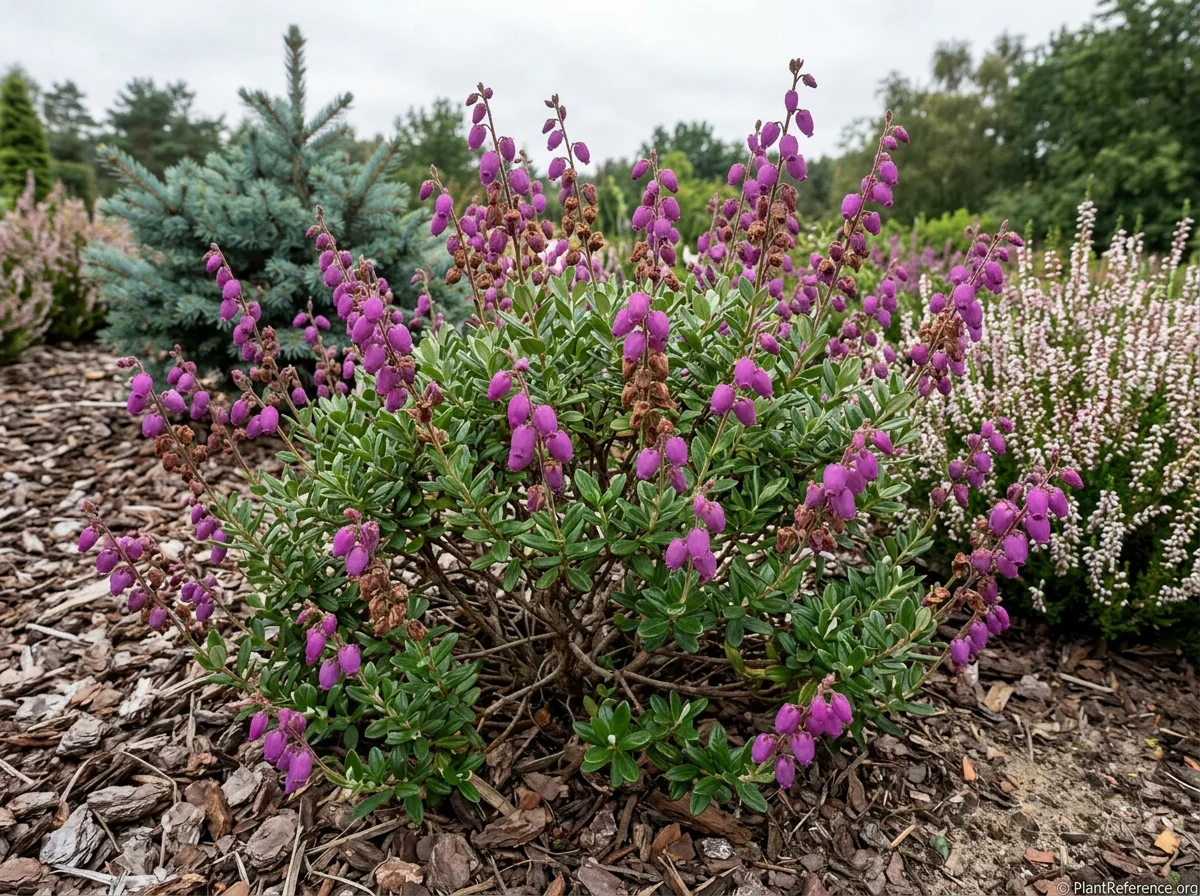
Daboecia cantabrica is a low mounding broadleaf evergreen shrub in the heath family Ericaceae growing 12–18 inches (30–45 cm) tall and 18–24 inches (45–60 cm) wide. The common name St. Dabeoc's heath and the genus name Daboecia commemorate Saint Dabeoc (an early Irish saint of uncertain date who is associated with the Connemara region of western Ireland where the species grows), and the specific epithet cantabrica refers to the Cantabrian Mountains of northern Spain where the species also occurs in its second main native range. The urn-shaped flowers are 0.4–0.5 inch (10–13 mm) long — 3–4 times the length of the bells of the related heather-family genera Erica and Calluna, and this larger flower size is the main field character that separates Daboecia from those two genera in mixed heather plantings. Leaves are glossy dark green on the upper surface and strikingly white beneath from a dense covering of glandular hairs on the leaf underside, small, elliptic, 0.3–0.5 inch (8–13 mm) long, and arranged alternately along wiry stems — the green-above and white-beneath leaf contrast is visible when the wind lifts the foliage and is the secondary field character for identification. Purple to rosy-magenta urn-shaped flowers open in terminal racemes of 3–10 nodding flowers along the stem tips from June through October across a 16-week bloom period — this extended bloom window spans summer and fall and exceeds the 6–8 week bloom of Calluna vulgaris and the more variable 6–10 week blooms of most Erica species. Limitation: the species calls for strictly acidic soil with a pH of 4.5–6.0 and is intolerant of alkaline and neutral soils where the species develops chlorosis and decline, and this strict acid-soil requirement is the main cultural limitation and restricts garden use to sites with naturally acidic soil or to peat-based raised beds. The species is not drought-tolerant and calls for consistent moisture through the growing season. Shearing by half in early spring (March or April) before new growth prevents the low mounding form from becoming leggy over time. The species is part of the Lusitanian flora — a biogeographic group of plants shared between the Iberian Peninsula and the Atlantic coast of Ireland that are absent from the intervening regions of northern France and Britain and that represent a distribution pattern predating the last glacial period. Native to the Atlantic coast of western Europe (western Ireland, the Iberian Peninsula, and the Azores). Non-toxic and deer-resistant.
Native Range
Native to the Atlantic coast of western Europe — western Ireland (Connemara in County Galway), the Iberian Peninsula (the Cantabrian Mountains of northern Spain and parts of Portugal), and the Azores — growing on acidic heathlands, bogs, and rocky moorlands at low to middle elevations. The species is part of the Lusitanian flora, a biogeographic group of plants shared between the Iberian Peninsula and the Atlantic coast of Ireland that are absent from the intervening regions of northern France and Britain, and the disjunct distribution pattern predates the last glacial period and reflects the refugial biogeography of the Atlantic fringe during the Pleistocene.Suggested Uses
Used in heather gardens, mixed acidic-soil borders, rock gardens, ground-cover mass plantings, and containers of at least 3 gallons (11 L) with acidic potting mix at 18–24 inch (45–60 cm) spacing between plants in USDA zones 5 through 8. The 16-week summer through fall bloom fills the mid-to-late season bloom gap that separates the spring-flowering Erica species and the late-summer-flowering Calluna vulgaris in the traditional heather garden composition, and companion plantings with Calluna, Erica, dwarf conifers, and Vaccinium build the extended-season heather garden palette. Alkaline or neutral soil positions, dry positions that dry out during the growing season, and sites with hard winter cold below USDA zone 5 are unsuitable because of the strict acid-soil requirement, the moisture requirement, and the cold hardiness limit of the species.How to Identify
Appearance
Size & Dimensions
Height1' - 1'6"
Width/Spread1'6" - 2'
Bloom Information
Purple to rosy-magenta urn-shaped (urceolate) flowers 0.4–0.5 inch (10–13 mm) long open in terminal racemes of 3–10 nodding flowers along the stem tips from June through October across a 16-week bloom period. The extended summer through fall bloom window is longer than the 6–8 week bloom of Calluna vulgaris and the more variable 6–10 week blooms of most Erica species. Honeybees and bumblebees work the flowers heavily during the long bloom window, and butterflies visit the flowers in warm summer conditions.
Detailed Descriptions
Flower Description
purple to rosy-magenta urn-shaped (urceolate) flowers 0.4-0.5 inch (10-13 mm) long — 3-4 times the size of the bells of the related genera Erica and Calluna; carried in terminal racemes of 3-10 nodding flowers along the stem tips from June through OctoberFoliage Description
glossy dark green on the upper surface and strikingly white beneath from dense glandular hairs that cover the leaf underside; small elliptic leaves 0.3-0.5 inch (8-13 mm) long arranged alternately along wiry stems; evergreen year-roundGrowing Conditions
Sun Requirements
Requires 4-8 hours of direct sunlight daily
• Full Sun: 6+ hours of direct sunlight
• Partial Shade: 3-6 hours of direct sunlight
• Full Shade: Less than 3 hours of direct sunlight
Care & Maintenance
Care Guide
Site in part sun to full sun with 4–8 hours of direct sun per day in well-drained acidic soil with a pH of 4.5–6.0. The species is intolerant of alkaline and neutral soils where chlorosis and decline develop, and gardens with naturally high-pH soil call for peat-based raised beds or container culture with acidic potting mix to maintain the acid pH at the root zone. The species is not drought-tolerant and calls for consistent moisture through the growing season — supplemental irrigation during summer dry spells supports foliage and flower production. Shearing by half in early spring (March or April) before new growth emerges prevents the low mounding form from becoming leggy over time, and the shearing cut stays in the live-wood zone above any bare lower stems because the species does not regenerate from cuts into old bare wood. Non-toxic and deer-resistant. Hardy in USDA zones 5–8.Pruning
Shearing by half in early spring (March or April) before new growth emerges from the crown prevents the low mounding form from becoming leggy over time and maintains a compact plant shape across multiple years. The shearing cut stays in the live-wood zone above any bare lower stems because the species does not regenerate from cuts into old bare wood, and cutting into bare stems produces permanent bare gaps in the plant.Pruning Schedule
Prune: March–April
early spring
Container Growing
Suitable for container growing
Minimum container size: 3 gallons