Cystopteris, Genus, bulbifera, Species,
- Genus & species
bulblet fern
Overview
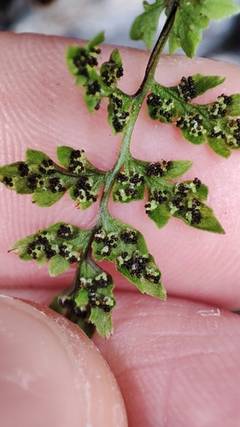
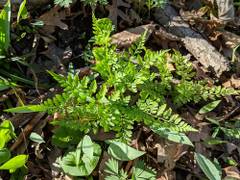
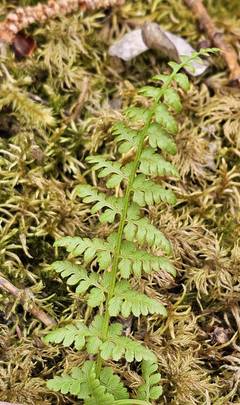
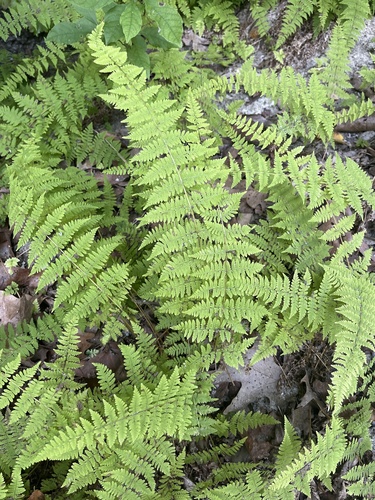
Cystopteris bulbifera is a deciduous fern with arching to drooping fronds 10-30 inches (25-75 cm) long that taper to a long, narrow tip. The fronds are twice-divided into many small segments, light green and thin, on a stalk that is often pink to reddish at the base. On the underside of the central frond stalk, the plant forms small green, pea-like bulblets that drop to the ground and grow into new ferns, a means of spread separate from spores. Spore cases also develop on the segment undersides and ripen in summer. New fronds appear in spring, and the foliage dies back after frost. The fern grows on shaded, moist rock, ledges, and slopes, often on limestone. Fronds are thin and break or brown in dry air or direct sun. Colonies build up over time from dropped bulblets.
Native Range
Native to eastern and central North America from Quebec and Ontario south to Georgia and west to the Great Plains and into the southwestern mountains. Grows on shaded, moist, often limestone rock, cliffs, ledges, and ravine slopes, usually in cool, humid sites.Suggested Uses
Grown in shaded rock gardens, on moist stone walls and ledges, and in woodland plantings, spaced 12-18 inches (30-45 cm) apart. It suits limestone and alkaline sites where many ferns do not grow. The dropped bulblets can spread it into surrounding crevices.How to Identify
Appearance
Size & Dimensions
Height10" - 2'6"
Width/Spread1' - 1'6"
Bloom Information
Ferns do not flower. Spore cases on the frond undersides ripen and release spores in summer, from about June to August. The plant also spreads through bulblets that form on the frond stalks and drop to root nearby.
Detailed Descriptions
Foliage Description
light greenGrowing Conditions
Sun Requirements
Tolerates up to 4 hours of direct sunlight daily
• Full Sun: 6+ hours of direct sunlight
• Partial Shade: 3-6 hours of direct sunlight
• Full Shade: Less than 3 hours of direct sunlight
Care & Maintenance
Care Guide
Grows in partial to full shade in moist, well-drained soil rich in organic matter, and grows naturally on limestone, so it tolerates neutral to alkaline conditions. Water to keep the soil consistently moist; the thin fronds brown and die back in drought or dry wind. Cool, humid air suits it, and it declines in hot, exposed sites. It spreads by dropped bulblets, forming colonies on rock and shaded ground. Full sun scorches the foliage. Few pests or diseases affect it in shade.Pruning
Remove dead fronds in late fall or early spring before new growth appears. Browned or torn fronds can be cut away during the season. No other pruning is needed.Pruning Schedule
Prune: March
early spring
Container Growing
Suitable for container growing
Minimum container size: 2 gallons