Cynara, Genus, cardunculus, Species,
- Genus & species
artichoke, cardoon
Native to the Mediterranean region, North Africa, and the Canary Islands; the wild progenitor of both the globe artichoke ({C. cardunculus} var. {scolymus} — edible immature flower bud) and the cultivated cardoon ({C. cardunculus} var. {altilis} — blanched leaf stalks)
Overview
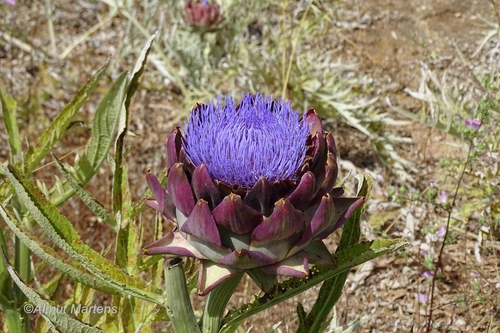
Cynara cardunculus is a herbaceous perennial reaching 4-6 feet (1.2-1.8 m) tall with a spread of 4-6 feet (1.2-1.8 m) and an upright architectural habit. The species carries gray-green deeply lobed arching leaves 24-36 inches (60-90 cm) long with silvery-white undersides and spiny margins. The silver-gray foliage is the primary garden feature — the leaf size and architectural form give the plant a strong visual presence that fills a large border position. Blue-violet to purple thistle-like composite flower heads 3-5 inches (7-13 cm) across open on tall stems in July-August and can be harvested as immature buds for culinary use or left to flower for pollinator visits. Growth rate is fast. Hardy to USDA zone 7 with winter mulch over the crown; prolonged freezes below 15°F (-9°C) may kill unmulched plants. The species is the wild progenitor of both the globe artichoke (C. cardunculus var. scolymus — the edible immature flower bud) and the cultivated cardoon (C. cardunculus var. altilis — the blanched leaf stalks), which explains the dual common-name usage. The spiny leaf margins require protective handling during pruning and harvest — thick leather gloves handle the foliage safely. Classified as invasive in parts of California and Australia, where the species self-seeds freely in Mediterranean-climate conditions; in colder climates self-seeding is less aggressive and more manageable. Dried flower heads persist through fall and feed goldfinches.
Native Range
Cynara cardunculus is native to the Mediterranean region, North Africa, and the Canary Islands.Suggested Uses
Used as an architectural foliage specimen in large borders and kitchen gardens in zones 7-10 at 4-5 foot (1.2-1.5 m) spacing. The silver-gray 24-36 inch (60-90 cm) arching leaves anchor the middle or back of a deep border as a single strong foliage element, and the blue-violet thistle flowers extend the interest through midsummer. Suits Mediterranean-style plantings, gravel gardens, and large-scale kitchen gardens where the species can be grown both ornamentally and for culinary harvest. Invasive classification in parts of California and Australia rules the species out of natural-area plantings in those regions. Small-space positions and tight borders cannot accommodate the 4-6 foot (1.2-1.8 m) mature size. Spiny margins rule out positions along paths or near seating where contact with foliage is likely.How to Identify
Appearance
Size & Dimensions
Height4' - 6'
Width/Spread4' - 6'
Bloom Information
Blue-violet to purple thistle-like composite flower heads 3-5 inches (7-13 cm) across on tall stems, July-August. Bloom duration is 3-4 weeks. Immature buds can be harvested before opening for culinary use (artichoke hearts), or left to open for pollinator visits. Dried flower heads persist through fall and feed goldfinches.
Detailed Descriptions
Flower Description
Blue-violet to purple thistle-like composite flower heads 3-5 inches (7-13 cm) across carried on tall stems in July-AugustFoliage Description
Gray-green arching deeply lobed leaves 24-36 inches (60-90 cm) long with silvery-white undersides and spiny margins; the silver-gray architectural foliage is the primary garden featureGrowing Conditions
Sun Requirements
Requires 6-10 hours of direct sunlight daily
• Full Sun: 6+ hours of direct sunlight
• Partial Shade: 3-6 hours of direct sunlight
• Full Shade: Less than 3 hours of direct sunlight
Care & Maintenance
Care Guide
Grows in full sun in well-drained soil at pH 6.0-7.0. Hardy to USDA zone 7 with winter mulch over the crown; plants may not survive prolonged freezes below 15°F (-9°C) without protection. Drought tolerant once established. The spiny leaf margins require protective handling — thick leather gloves manage pruning and harvest safely. Self-seeds freely in Mediterranean-climate zones and is classified as invasive in parts of California and Australia; removing spent flower heads before seeds mature controls unwanted spread. Non-toxic — both the immature flower buds and the blanched leaf stalks are edible.Pruning
Harvest flower buds in early summer (June) for culinary use, or leave the buds to open for the thistle flowers and pollinator activity. Cut dead foliage to the ground in fall (October) after frost. Mulch the crown 3-4 inches (8-10 cm) deep with straw or leaf mould for winter protection in zones 7-8. Thick leather gloves are required when working with the spiny foliage.Pruning Schedule
Prune: June & October
summerfall