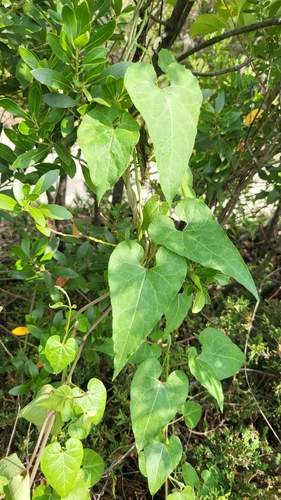
Cynanchum, Genus, laeve, Species,
- Genus & species
honey-vine climbing milkweed
Overview
Cynanchum laeve is a fast-growing perennial vine in the dogbane and milkweed family, native to the central and eastern United States. From deep, spreading rhizomes, twining stems climb 10-30 feet (3-9 m) over fences, shrubs, and other supports in a single season. The opposite leaves are heart-shaped, 2-5 inches (5-13 cm) long, with a deep notch at the base and a pointed tip; broken stems and leaves bleed a white, milky sap. From June to August, dense clusters of small white to cream flowers open along the stems, each about 0.25 inch (6 mm) wide and sweetly scented. The flowers form smooth, plump seedpods 3-5 inches (8-13 cm) long that split to release flat seeds with silky parachutes of hair, in the manner of true milkweeds. The species grows in full sun on a range of soils and spreads aggressively by rhizome and seed, which makes it weedy in gardens and croplands. Monarch caterpillars sometimes feed on the foliage. Top growth dies back after frost.
Native Range
Native to the central and eastern United States, from the Great Plains east to the Atlantic and south to the Gulf. It grows in floodplains, thickets, fence rows, field edges, and disturbed ground.Suggested Uses
Grown rarely as an ornamental because of its spread; mostly noted on fences, thickets, and wild edges. Where used, it covers a sturdy fence or trellis in one season. The flowers support bees and other pollinators in summer.How to Identify
Appearance
Size & Dimensions
Height10' - 30'
Width/Spread2' - 5'
Bloom Information
Flowers open from June to August, lasting about eight weeks. The clustered blooms open over several weeks and carry a sweet, honey-like scent. Seedpods follow and ripen by autumn.
Detailed Descriptions
Flower Description
Small white to cream, in clustersFoliage Description
Green, heart-shaped, oppositeGrowing Conditions
Sun Requirements
Requires 5-10 hours of direct sunlight daily
• Full Sun: 6+ hours of direct sunlight
• Partial Shade: 3-6 hours of direct sunlight
• Full Shade: Less than 3 hours of direct sunlight
Care & Maintenance
Care Guide
Grows in full sun to light shade on most soils, from sand to clay, with average moisture. Water is rarely needed once the deep root system forms. Vigorous rhizomes and wind-borne seed let the plant spread quickly, so cut stems back and remove pods before they ripen where containment matters. Pull or dig rhizome fragments to slow its spread, as small pieces resprout. Top growth dies back after frost and regrows from the roots each spring. No fertilizer is needed.Pruning
Cut stems back through the season to control the rampant growth. Remove developing seedpods before they split to limit wind-blown seeding. Cut dead top growth to the ground after frost.Pruning Schedule
Prune: November
fall