Image 1 of 15
1 / 15
Plant Reference
Cunninghamia, Genus, lanceolata, Species,
- Genus & species
China fir
Southern China, Taiwan, northern Vietnam
Overview
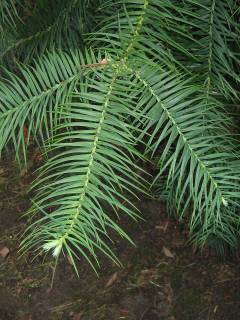
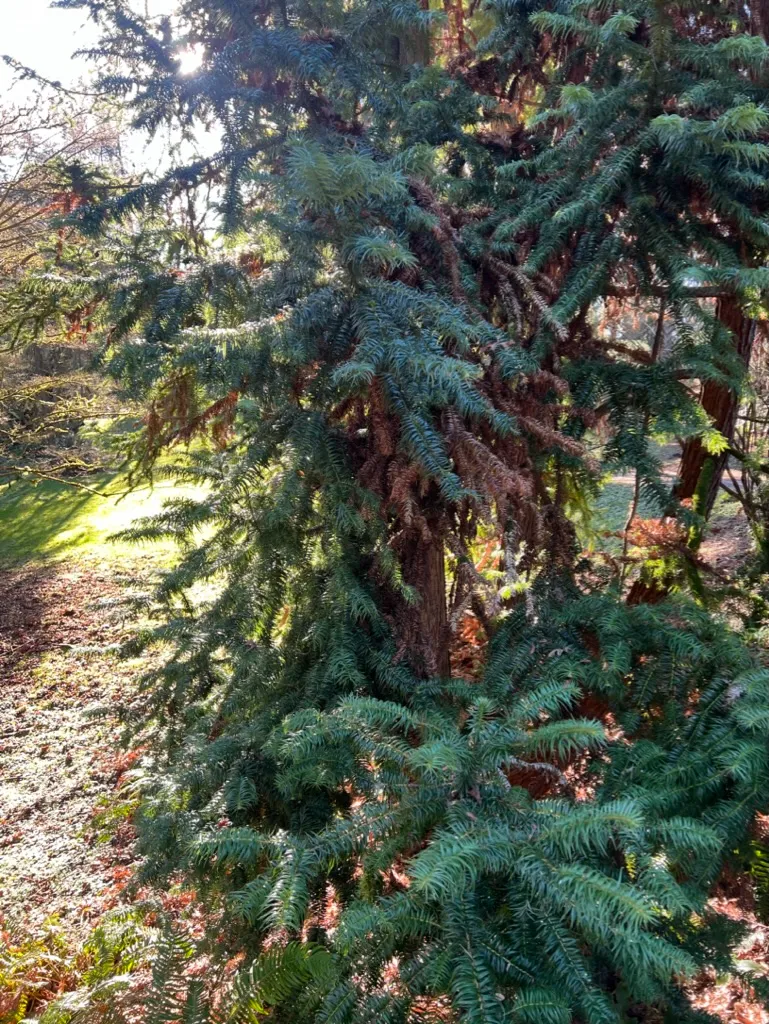
Cunninghamia lanceolata is a large coniferous evergreen tree growing 30-75 feet (9-23 m) tall and 15-25 feet (4.5-7.5 m) wide with a broadly pyramidal to conical crown and strongly whorled horizontal branch tiers. The genus name commemorates James Cunningham, a Scottish surgeon who collected plants in China in the early 18th century; lanceolata means lance-shaped. Needles differ from typical Cupressaceae: stiff, lance-shaped, sharply pointed, 1-2.5 inches (2.5-6 cm) long, arranged in two ranks along the branchlets in flat sprays — mid to dark green above with two white stomatal bands beneath. Reddish-brown bark exfoliates in fibrous vertical strips, exposing orange-red inner bark. Dead brown inner foliage persists on branches before dropping, which is a normal species character rather than dieback. Ovoid cones, 1-2 inches (2.5-5 cm), ripen brown and persist on the tree for several years. The species regenerates from old wood after hard pruning — a trait not shared by most conifers. Native to montane humid subtropical to warm-temperate forests of southern China, Taiwan, and northern Vietnam at 600-4,900 feet (200-1,500 m); widely cultivated in China as a timber tree. Drought-tolerant once established. Non-toxic. Deer-resistant.
Native Range
Native to montane forests of southern China, Taiwan, and northern Vietnam at 600-4,900 feet (200-1,500 m) elevation in humid subtropical to warm-temperate habitats. Widely cultivated in China as a timber species.Suggested Uses
Grown as a large specimen or screen tree on sites with room for 30-75 foot (9-23 m) height and 15-25 foot (4.5-7.5 m) spread, spaced 15-25 feet (4.5-7.5 m) apart. The lance-needle foliage and whorled branch architecture separate it from other cultivated conifers in the landscape. Non-toxic. Hardy in zones 7-9.How to Identify
Appearance
Size & Dimensions
Height30' - 75'
Width/Spread15' - 25'
Bloom Information
Male and female cones appear in late winter to early spring (February-March). Male cones cluster at branch tips. Female cones are ovoid, 1-2 inches (2.5-5 cm), ripen brown in fall, and persist on the tree for several years before disintegrating.
Detailed Descriptions
Foliage Description
mid to dark green above; two white stomatal bands beneathGrowing Conditions
Sun Requirements
Requires 6-10 hours of direct sunlight daily
• Full Sun: 6+ hours of direct sunlight
• Partial Shade: 3-6 hours of direct sunlight
• Full Shade: Less than 3 hours of direct sunlight
Care & Maintenance
Care Guide
Site in full sun in moist, well-drained, acidic to neutral soil with a pH of 5.0-7.0; tolerates partial shade but develops a more open crown. Water consistently during the first two to three growing seasons. Moderate drought tolerance once established. Tolerates hard pruning and regenerates from old wood. Dead brown inner foliage is a normal species character and does not require removal. Waterlogged soils cause root decline. Non-toxic. Deer-resistant. Hardy in zones 7-9.Pruning
No routine pruning is required to maintain the pyramidal form. Lower branches may be removed to expose the ornamental bark. Hard pruning is tolerated and regeneration from old wood follows. Remove dead exterior branches in late spring (May); inner dead foliage is normal and need not be removed.Pruning Schedule
Prune: May
late spring