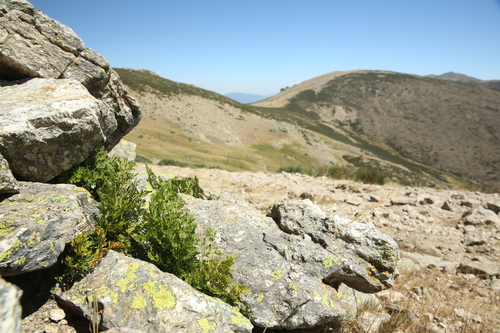
Cryptogramma, Genus, crispa, Species,
- Genus & species
parsley fern
Mountains of Europe and parts of Asia
Overview
Cryptogramma crispa is a deciduous, tuft-forming fern reaching 4-12 inches (10-30 cm) tall, growing from a short, branched rhizome that builds dense clumps. It carries two kinds of frond. The outer sterile fronds are bright green, two to three times pinnately divided into small, crisped segments that give a parsley-like look. The inner fertile fronds stand taller on longer stalks, with narrower segments whose rolled-under margins enclose the spore cases. Fronds die back to the rootstock in autumn and unfurl fresh in spring. The plant is slow to spread and forms tight cushions among stones rather than running colonies. It is tied to acidic, free-draining rock and does not grow on lime. Spores ripen in late summer and are shed from the protected margins of the fertile fronds.
Native Range
Native to the mountains of Europe, from Britain and Scandinavia south to the Alps and Pyrenees, with related populations in parts of Asia. Grows on acidic block scree, boulder fields, rock crevices, and old stone walls, mostly at upland and montane elevations on lime-free rock.Suggested Uses
Grown in scree gardens, alpine troughs, crevice plantings, and acidic rock gardens, set among stones with sharp drainage. It suits cool, lime-free sites where its low tufts knit between rocks. Its slow growth and need for acidic, gritty conditions limit its use in general borders.How to Identify
Growing Conditions
Sun Requirements
Requires 3-8 hours of direct sunlight daily
• Full Sun: 6+ hours of direct sunlight
• Partial Shade: 3-6 hours of direct sunlight
• Full Shade: Less than 3 hours of direct sunlight
Care & Maintenance
Care Guide
Grows in full sun to partial shade on acidic, sharply drained, gritty or rocky ground that stays cool and moist at the roots. It needs lime-free conditions and fails on chalky or alkaline soils. Establishment from spores or division is slow, and clumps take several years to build. Waterlogged or rich soils cause the rhizome to rot. In cultivation it is grown in scree beds, troughs, and crevice gardens where drainage and acidity can be controlled. Frost is tolerated, matching its mountain origin.Pruning
Remove dead fronds in late autumn or early spring as new growth appears. No other pruning is required. Old fronds left in place break down slowly and give some cover to the rootstock over winter.Container Growing
Suitable for container growing
Minimum container size: 1 gallons