Image 1 of 13
1 / 13
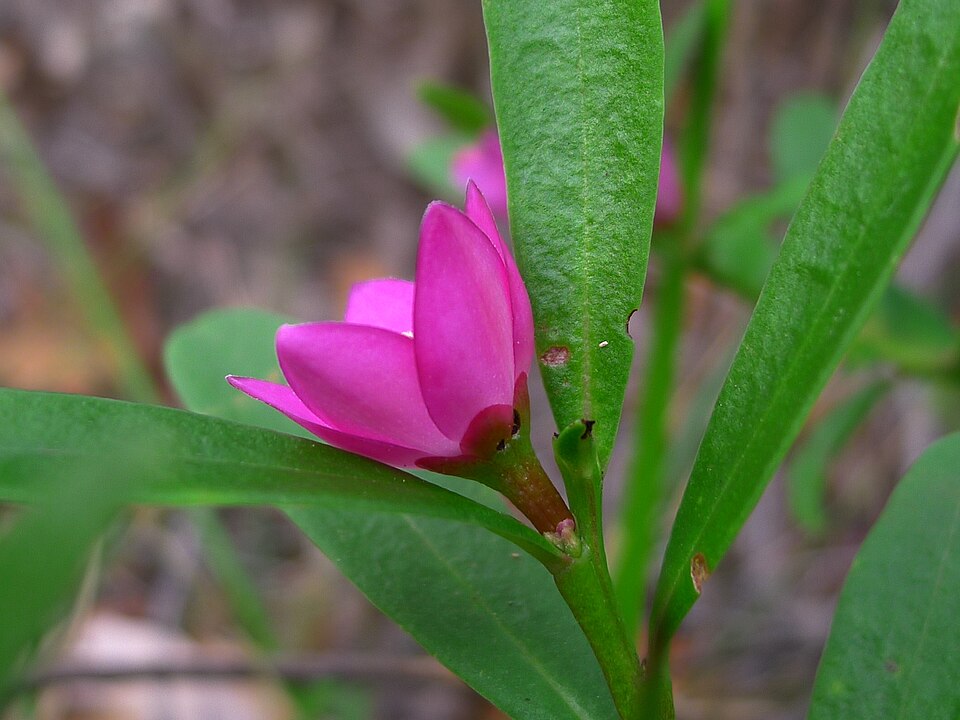
© John Tann from Sydney, Australia, some rights reserved (CC-BY) · Wikimedia Commons
Crowea, Genus, saligna, Species,
- Genus & species
willow-leaved crowea
Overview
Crowea saligna is a small evergreen shrub in the citrus family, reaching 12-40 inches (30-100 cm) tall and 24-40 inches (60-100 cm) wide with an upright to rounded habit. The narrow, willow-like leaves are 1-3 inches (2.5-7 cm) long, smooth, mid to deep green, and aromatic when crushed, with oil glands typical of the family. Star-shaped flowers 0.8-1.2 inches (2-3 cm) across open from five waxy pink petals, carried singly along the stems mainly in autumn and into winter. The flowers last well on the plant, and a single shrub can carry blooms over two to three months. Small dry fruits follow but are inconspicuous. Growth is moderate, and plants reach full size in three to four years. The species needs sharp drainage and is sensitive to root disturbance and prolonged wet soil.
Native Range
Native to New South Wales in eastern Australia, mainly in the Sydney region and adjacent ranges. It grows in open forest and heath on sandstone, typically on well-drained sandy or rocky soils in dappled light.Suggested Uses
Used in native gardens, rockeries, and shrub borders on well-drained soils, spaced 24-36 inches (60-90 cm) apart. Suits containers of at least 5 gallons (19 L) with free-draining mix. The long autumn-to-winter flowering brings colour when many shrubs are dormant.How to Identify
Appearance
Size & Dimensions
Height1' - 3'4"
Width/Spread2' - 3'4"
Bloom Information
Detailed Descriptions
Foliage Description
mid to deep greenGrowing Conditions
Sun Requirements
Requires 3-6 hours of direct sunlight daily
• Full Sun: 6+ hours of direct sunlight
• Partial Shade: 3-6 hours of direct sunlight
• Full Shade: Less than 3 hours of direct sunlight
Care & Maintenance
Care Guide
Grows in part shade to filtered sun on sharply drained sandy or gravelly soils that are slightly acid and low in phosphorus. Regular light watering suits it in dry spells, but the roots rot in heavy, wet, or poorly drained soil. It performs poorly in deep shade and in hot, exposed full sun, and grows well with morning sun or dappled light. Tip pruning after flowering keeps the shrub compact and prevents the open, woody growth that develops with age. Low-phosphorus native fertilizer can be applied lightly in spring. Root-rot fungi are the main cause of plant loss on heavy soils.Pruning
Light tip pruning after the main flush, and again lightly through the year, keeps the shrub dense and rounded. The plant tolerates pruning into green wood but reshoots slowly from bare older stems. Regular light trimming is more reliable than occasional hard cutting back.Pruning Schedule
Prune: June–July
winter
Container Growing
Suitable for container growing
Minimum container size: 5 gallons