Crithmum, Genus, maritimum, Species,
- Genus & species
rock samphire
Coasts of Europe, the Mediterranean, and Atlantic islands
Overview
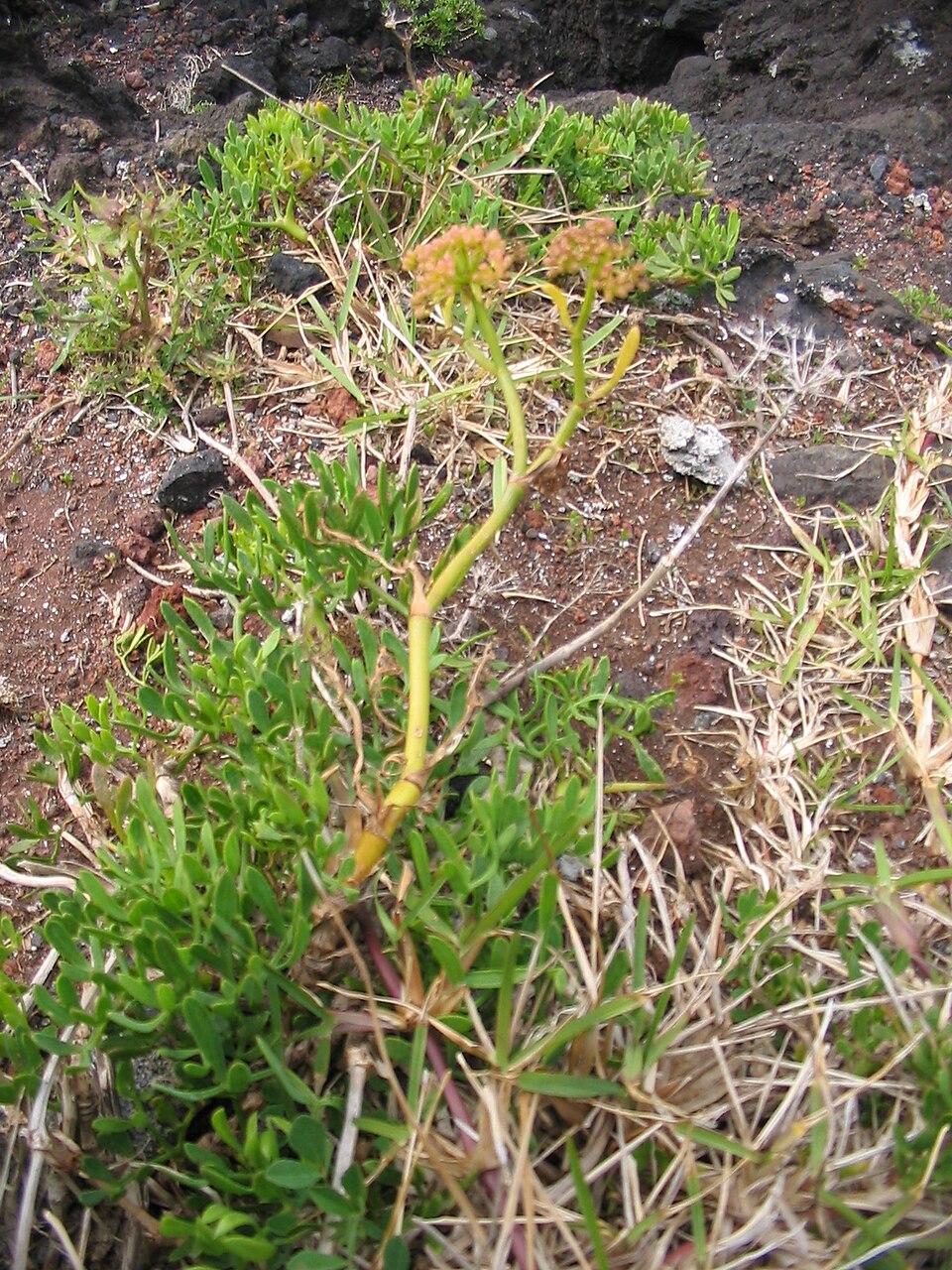
Crithmum maritimum is a fleshy, salt-tolerant perennial of the carrot family, forming a bushy, somewhat woody-based clump 6-18 inches (15-45 cm) tall and as wide. The blue-green leaves are succulent, twice divided into narrow, cylindrical segments that store water and resist salt spray. From midsummer to autumn it bears flat-topped umbels 1.5-2.5 inches (4-6 cm) across of small yellow-green flowers, followed by corky, aromatic seeds that float and disperse on seawater. The whole plant has a strong, resinous scent when crushed. It grows in rock crevices, on sea cliffs, shingle, and old sea walls, rooting into thin pockets of soil within reach of salt spray. The succulent leaves are gathered and pickled or eaten cooked as a coastal vegetable. Native to the rocky coasts of western and southern Europe, the Mediterranean, the Black Sea, and the Atlantic islands, it is confined almost entirely to the coast. It tolerates wind, drought, and salt but fails on heavy, wet, or inland soils, where the roots rot.
Native Range
Crithmum maritimum is native to the coasts of western and southern Europe, the Mediterranean and Black Sea, North Africa, and the Atlantic islands. It grows along the shores of the British Isles, mainly in the south and west.Suggested Uses
Grown in coastal and gravel gardens, in rock crevices, and in containers of gritty compost, where it withstands wind and salt. The young succulent shoots are also cultivated as the edible vegetable samphire.How to Identify
Appearance
Size & Dimensions
Height6" - 1'6"
Width/Spread1' - 1'6"
Colors
Bloom Information
Detailed Descriptions
Foliage Description
blue-greenGrowing Conditions
Sun Requirements
Requires 6-12 hours of direct sunlight daily
• Full Sun: 6+ hours of direct sunlight
• Partial Shade: 3-6 hours of direct sunlight
• Full Shade: Less than 3 hours of direct sunlight
Care & Maintenance
Care Guide
Grows in full sun on sharply drained, gritty or rocky soil and needs salt-laden coastal air or occasional saline watering to grow well. A soil pH from 7.0 to 8.5 suits it, and it tolerates very low fertility. Plants resist drought through their succulent leaves and deep roots, but waterlogging and rich soils cause root rot. Seed is slow to germinate and is sown fresh in autumn. Established clumps resist disturbance and are difficult to move. It is hardy to about USDA zone 7 in free-draining positions.Pruning
No pruning is required. Old flower stems and seed heads can be cut back in late autumn or left for winter structure. Dead leaves can be cleared in spring.Container Growing
Suitable for container growing
Minimum container size: 2 gallons